SN2 Reaction Mechanism - Double Inversion
TL;DR
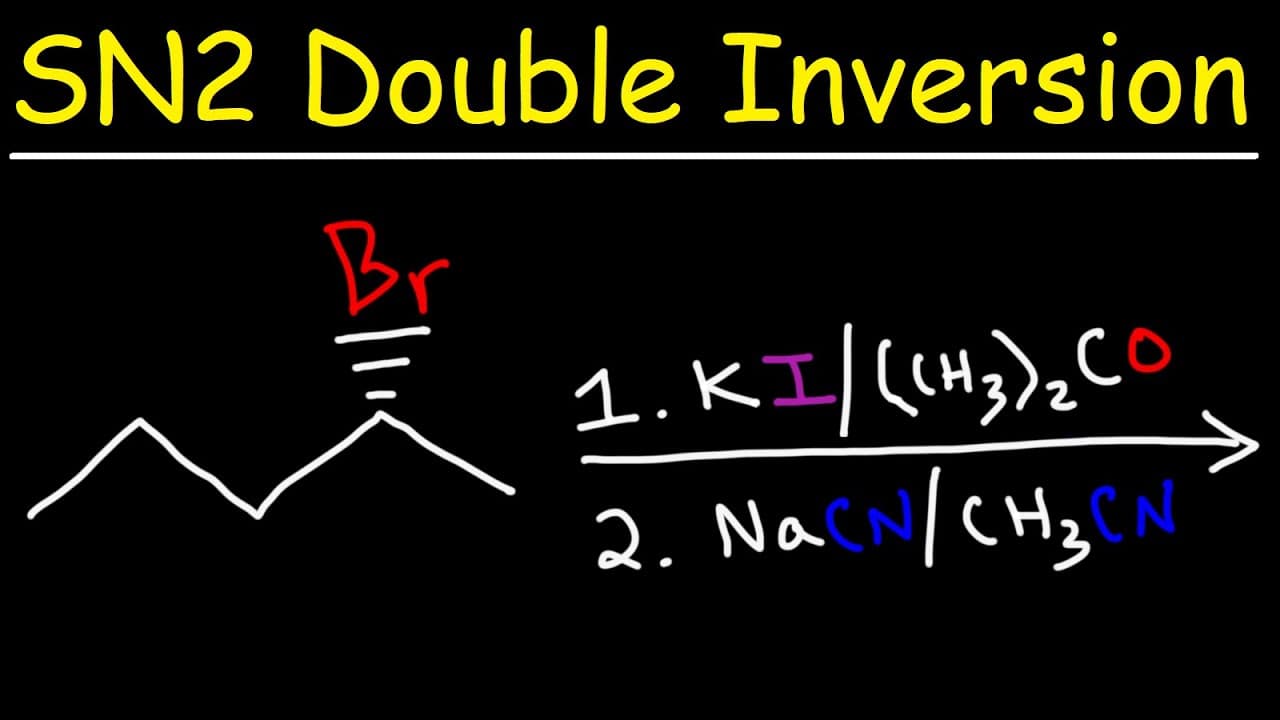
This video explains the process of a double inversion reaction using two sequential SN2 reactions in organic chemistry.
Transcript
83 what is the major product that will form when R2 bromopentane is treated with potassium iodide and acetone followed by sodium cyanide in acetonitrile so first let's draw our two bromopentane so let's begin by putting the BR on the wedge so this means that hydrogen is in the back we can reverse it if needed so if we count it this is group number ... Read More
Key Insights
- ⏫ The double inversion reaction involves two sequential SN2 reactions.
- ❓ Acetone and acetonitrile are commonly used solvents in organic chemistry.
- 👥 Inversion of stereochemistry occurs when the nucleophile replaces the leaving group.
Install to Summarize YouTube Videos and Get Transcripts
Explore YouTube Video Summarizer or Get YouTube Transcript Extractor
Questions & Answers
Q: What is the purpose of the first reaction with potassium iodide and acetone?
The first reaction replaces the bromine with iodine through an SN2 reaction, resulting in the inversion of stereochemistry.
Q: Why is acetonitrile used as a solvent in the second reaction?
Acetonitrile is a polar aprotic solvent, which is suitable for the SN2 reaction. It allows the cyanide to act as a nucleophile and replace the iodine, resulting in another inversion of stereochemistry.
Q: What is the outcome of the double inversion reaction?
The original configuration at the chiral center is retained through the double SN2 reaction, resulting in the formation of the original isomer.
Q: Can you provide an overview of the sequential steps in the double inversion reaction?
The first SN2 reaction converts the R isomer to the S isomer, while the second SN2 reaction converts the S isomer back to the R isomer, resulting in the retention of the original configuration.
Summary & Key Takeaways
-
The video demonstrates the reaction of R2 bromopentane with potassium iodide and acetone, followed by sodium cyanide in acetonitrile.
-
The first step involves an SN2 reaction where the bromine is replaced by iodine, resulting in an inversion of stereochemistry.
-
The second step is another SN2 reaction, where the cyanide replaces iodine, leading to another inversion of stereochemistry.
Read in Other Languages (beta)
Share This Summary 📚
Summarize YouTube Videos and Get Video Transcripts with 1-Click
Try YouTube Summary with ChatGPT & Claude or YouTube Transcript Generator
Explore More Summaries from The Organic Chemistry Tutor 📚






Summarize YouTube Videos and Get Video Transcripts with 1-Click
Try YouTube Summary with ChatGPT & Claude or YouTube Transcript Generator