A robot that eats pollution | Jonathan Rossiter
TL;DR
In this talk, the engineer discusses the concept of creating robots that are inspired by natural organisms and can solve environmental problems like pollution.
Transcript
Hi, I'm an engineer and I make robots. Now, of course you all know what a robot is, right? If you don't, you'd probably go to Google, and you'd ask Google what a robot is. So let's do that. We'll go to Google and this is what we get. Now, you can see here there are lots of different types of robots, but they're predominantly humanoid in structure. ... Read More
Key Insights
- 🤖 Robots can take inspiration from natural biological organisms that perform unique functions that current robots cannot replicate.
- 🌍 Environmental problems caused by human activity, such as pollution from agriculture and oil spills, can be addressed by robots that consume algae and oil.
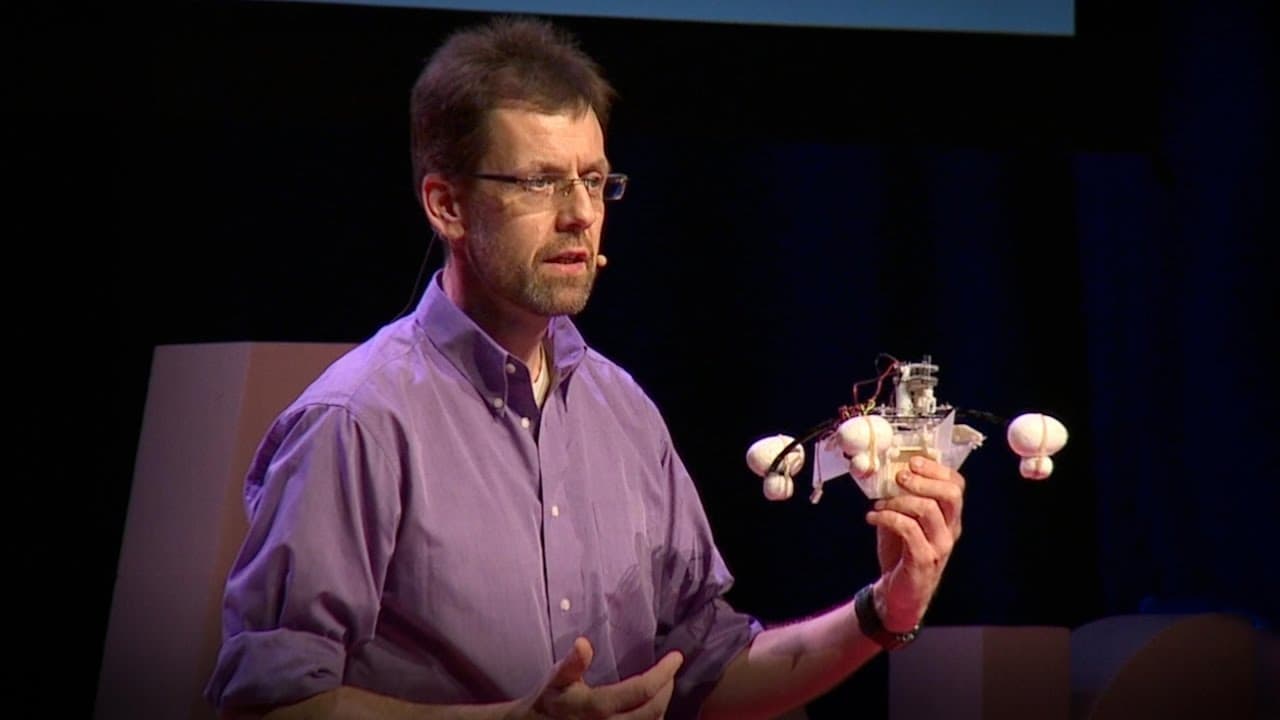
- 🔬 The Row-bot, a new type of robot, combines characteristics of a basking shark and a water boatman to row through water and eat pollution.
- ♀️ The Row-bot's body is made of plastic and it has flippers for movement. It has two mouths, one for intake and one for waste disposal.
- ⚡️ The Row-bot's energy is generated by a microbial fuel cell that can convert organic material into electricity.
- 🔄 The Row-bot operates in cycles: open mouth, row forward, close mouth, and wait to digest food. It can use the remaining energy to send messages or perform other tasks. ⏳ Biodegradable robots made from materials like jelly and paper can change how robots are used and deployed in the environment.
- 🍬 Future robots may be edible, like a robot gummy bear, that can perform tasks inside the human body and be safely degraded.
Install to Summarize YouTube Videos and Get Transcripts
Explore YouTube Video Summarizer or Get YouTube Transcript Extractor
Questions & Answers
Q: What is the primary inspiration for the engineer's robot designs?
The engineer takes inspiration from natural biological organisms, such as animals and plants that don't look like humans or conventional robots but perform interesting tasks in their environment.
Q: What are the two environmental problems the engineer discusses?
The engineer discusses two environmental problems: the negative impacts of agricultural chemicals on water and algae blooms, as well as oil pollution in the sea.
Q: How does the engineer propose solving the problem of algae blooms?
The engineer proposes creating a robot that can eat the algae and consume it, making it safe. This robot would use skills and technologies derived from natural organisms that perform similar tasks.
Q: How does the engineer propose solving the problem of oil pollution?
The engineer proposes creating robots that can eat the pollution produced by oil fields. The design takes inspiration from the basking shark, which collects plankton, and the water boatman, which uses paddle-like legs to swim.
Q: What are the three components that make up the Row-bot?
The Row-bot is made up of three components: a brain, a body, and a stomach-like microbial fuel cell. The brain controls the robot, the body aids movement through the water, and the stomach digests pollution and generates electricity for movement.
Q: What is the purpose of the microbial fuel cell in the Row-bot?
The microbial fuel cell acts as the robot's stomach, converting organic materials and pollution into electricity. Additionally, it can use select microbes to treat pollution like algae or petroleum spirits and crude oil.
Q: How does the Row-bot acquire energy and continue its function?
The Row-bot acquires energy by consuming pollution through its mouth and digesting it in the microbial fuel cell. Despite generating a relatively small amount of electricity, the Row-bot conserves energy by closing its mouth and waiting for digestion to occur before repeating the process.
Q: How does the engineer propose addressing the issue of non-biodegradable robot components?
The engineer proposes making robots out of biodegradable materials like jelly and paper. By utilizing household materials and artificial muscles, the robots can be designed to degrade naturally, reducing the need for tracking and collection after use.
Summary & Key Takeaways
-
The speaker is an engineer who wants to make different kinds of robots inspired by natural biological organisms.
-
Two environmental problems that robots could help solve are the excessive use of chemicals in agriculture, which leads to water pollution and algal blooms, and oil pollution caused by human activities.
-
The speaker introduces the "Row-bot," a robot that rows and eats pollution using a microbial fuel cell made of living microbes that can treat pollution and generate electricity. The robot is made of biodegradable materials and could be used in large quantities without the need for tracking or collecting.
Read in Other Languages (beta)
Share This Summary 📚
Summarize YouTube Videos and Get Video Transcripts with 1-Click
Try YouTube Summary with ChatGPT & Claude or YouTube Transcript Generator
Explore More Summaries from TED 📚


Summarize YouTube Videos and Get Video Transcripts with 1-Click
Try YouTube Summary with ChatGPT & Claude or YouTube Transcript Generator