Principle of Operation - Inverter - Power Electronics
TL;DR
Inverters convert DC voltage to AC voltage using transistors, diodes, and resistive or inductive loads.
Transcript
click the bell icon to get latest videos from akira hello friends today we are going to discuss about principle of operation of inverter so friends as we all read about the semiconductor devices and how does it operate and what kind of output voltage is in output current we are getting we learned about rectifier rectifier converts an AC voltage to ... Read More
Key Insights
- ⚡ Inverters are essential for converting DC voltage to AC voltage in various applications.
- ❓ The principle of operation of an inverter involves using transistors, diodes, and resistive or inductive loads.
- ⚡ The direction of current and voltage changes based on the switching on state of the transistors, allowing for the generation of an inverted AC voltage.
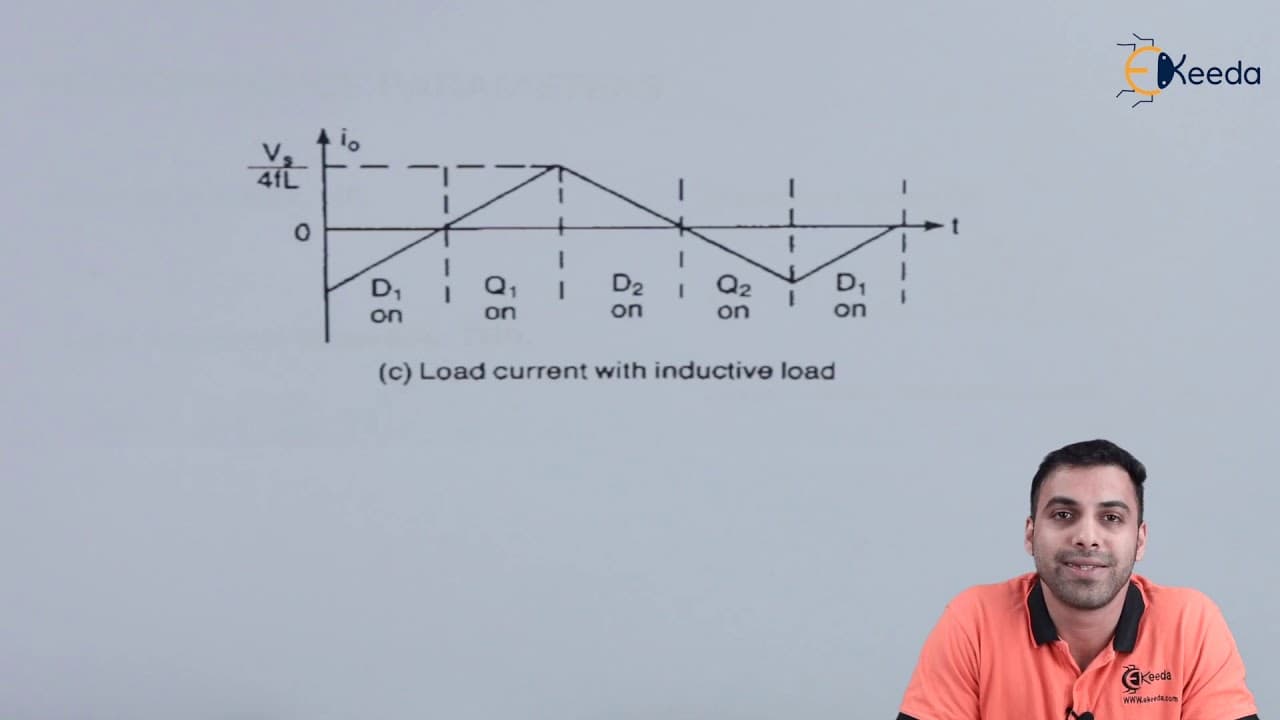
- 🪜 Adding an inductor to the load of an inverter affects the waveform of the current.
- ⚡ The average output voltage of an inverter can be calculated using the formula (2/T_nought) multiplied by the square root of the source voltage.
- ✊ Inverters are commonly used in power electronics, renewable energy systems, and electronic devices.
- 🏪 Inverters with inductive loads require additional components, such as freewheeling diodes, to manage the energy stored in the inductor.
Install to Summarize YouTube Videos and Get Transcripts
Explore YouTube Video Summarizer or Get YouTube Transcript Extractor
Questions & Answers
Q: How does an inverter convert DC voltage to AC voltage?
An inverter uses transistors, diodes, and resistive or inductive loads to create a switching mechanism that generates an alternating current from a direct current source.
Q: What determines the direction of the current and voltage in an inverter?
The direction of current and voltage changes based on the switching on state of the transistors. When one transistor is on, the current flows in one direction, and when the other transistor is on, the current flows in the opposite direction.
Q: How does the addition of an inductor affect the operation of an inverter?
When an inductor is added in series with a resistor, it becomes an RL load. The inductor allows the current to rise and fall slowly, resulting in a different waveform for the current across the load.
Q: How is the average output voltage of an inverter calculated?
The average output voltage of an inverter can be calculated by taking the integral of the waveform and dividing it by the time period. The formula is (2/T_nought) multiplied by the square root of the source voltage.
Summary & Key Takeaways
-
Inverter converts DC voltage to AC voltage by using transistors, diodes, and resistive or inductive loads.
-
When a gate pulse is given to a transistor for a specific time, the current flows through a resistor in a certain direction, creating an AC voltage.
-
The direction of current and voltage changes depending on the switching on state of the transistors, allowing for the generation of an inverted AC voltage.
Read in Other Languages (beta)
Share This Summary 📚
Summarize YouTube Videos and Get Video Transcripts with 1-Click
Try YouTube Summary with ChatGPT & Claude or YouTube Transcript Generator
Explore More Summaries from Ekeeda 📚



Summarize YouTube Videos and Get Video Transcripts with 1-Click
Try YouTube Summary with ChatGPT & Claude or YouTube Transcript Generator