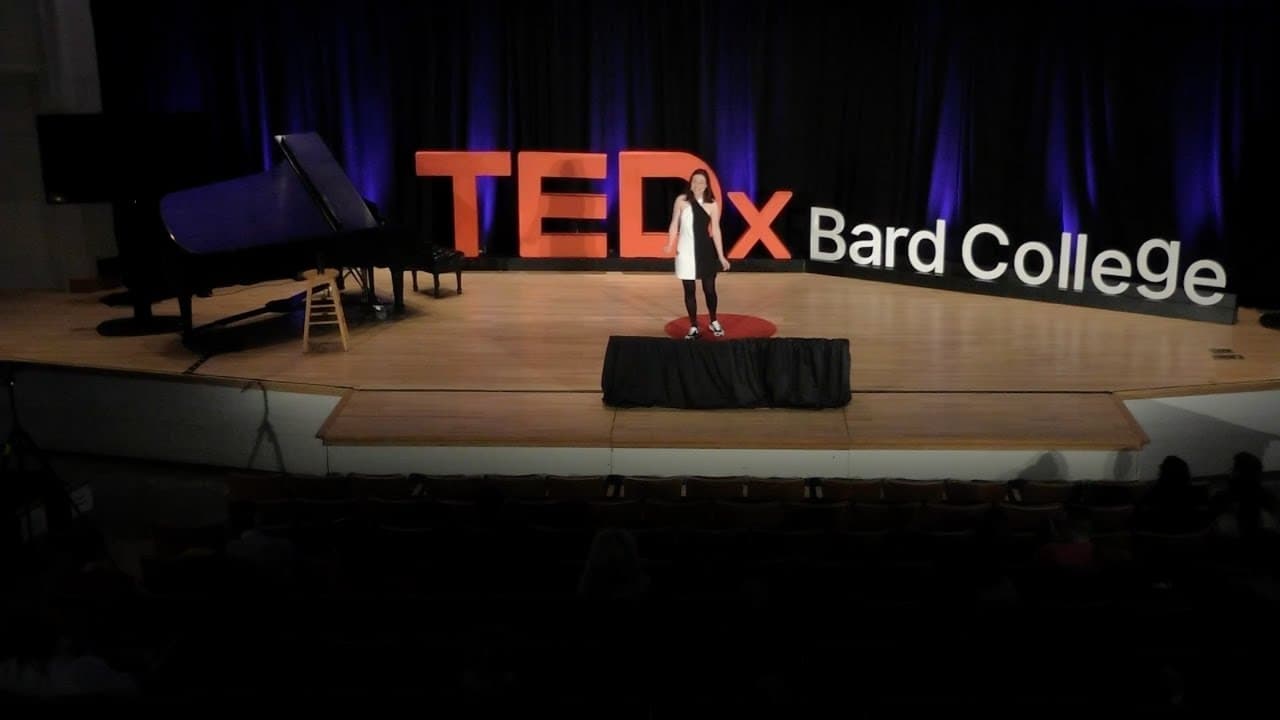
Conquering Movement: How Math Can Help us Become Musicians | Hannah Park-Kaufmann | TEDxBard College
TL;DR
This talk explores the challenges faced by pianists, including physical injuries, and the potential for using math and science to improve technique and prevent injuries.
Transcript
now here's everything that can go wrong for The Pianist the PE Pio has been drinking my neck tie is asleep and the metronome ran off to Rome the gy had to take a leak and the curtain he's a hackard and the spotlight looks like a prison break and oh Lin Hall is 10 below my fingers first to nice you know the piano has been drinking the piano has been... Read More
Key Insights
- 😀 Many pianists face physical ailments such as tendonitis and nerve damage, which can impact their ability to play.
- 🎼 The intersection of music and math provides an opportunity to enhance musicianship by applying scientific principles.
- 👻 Motion capture technology, such as the one used in the MIT study, allows for detailed analysis of piano playing and identification of patterns.
- 🤽 The study's initial findings suggest that healthy playing involves a more holistic and integrated approach throughout the body.
- 🖐️ The research has garnered significant interest from musicians, highlighting the need for a scientific approach to prevent injuries and improve playing technique.
- 🎹 The development of a mathematical toolset specific to musicians' movements could provide valuable insights and guidance in piano playing and potentially other musical instruments.
- 🧑🎨 The exciting prospect of combining arts and sciences offers immense potential for advancing the field of musicianship and improving the lives of artists.
Install to Summarize YouTube Videos and Get Transcripts
Explore YouTube Video Summarizer or Get YouTube Transcript Extractor
Questions & Answers
Q: What are some common physical ailments experienced by pianists?
Pianists commonly suffer from various physical issues such as tendonitis, nerve damage, and joint pain, which can significantly impact their playing ability.
Q: How did the speaker's background in mathematics and science contribute to their research on piano playing?
By studying math and science, the speaker gained a deeper understanding of the mechanics of piano playing and explored how scientific principles could be applied to improve technique and prevent injuries.
Q: What were the key findings of the MIT study on piano playing?
The study captured extensive data on piano playing, revealing patterns in muscle movement and suggesting that healthy playing involves a more integrated approach throughout the body. Further analysis is needed to fully understand these patterns and their implications.
Q: What is the potential impact of this research on pianists?
The research has generated significant interest, particularly among pianists struggling with injuries. It holds the potential to develop an objective approach to piano playing that can help prevent injuries and improve technique.
Summary & Key Takeaways
-
The speaker shares personal experiences of struggling with piano playing and the physical ailments that often plague musicians.
-
The intersection of music and math is discussed, highlighting the potential for using scientific methods to enhance musicianship.
-
A study conducted at MIT using motion capture technology to analyze piano playing and identify patterns is shared.
Read in Other Languages (beta)
Share This Summary 📚
Summarize YouTube Videos and Get Video Transcripts with 1-Click
Try YouTube Summary with ChatGPT & Claude or YouTube Transcript Generator
Explore More Summaries from TEDx Talks 📚






Summarize YouTube Videos and Get Video Transcripts with 1-Click
Try YouTube Summary with ChatGPT & Claude or YouTube Transcript Generator