These Liquids Look Alive!
TL;DR
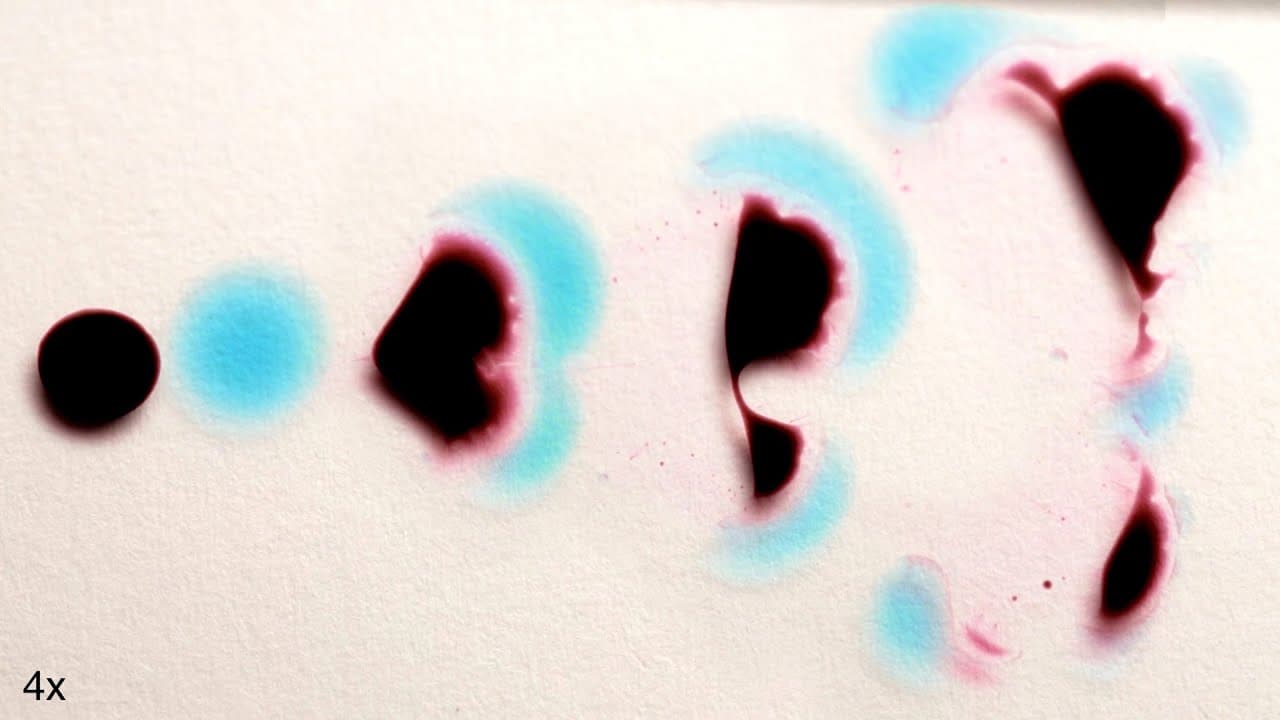
Drops of food coloring placed on a microscope slide behave like micro-organisms, attracting and merging with drops of similar concentration due to differential evaporation and surface tension gradients.
Transcript
Watch what happens when I place some small drops of food coloring on to this slide. Some are attracted to each other and merge, while others repel and chase each other. It looks just like the tiny world of micro-organisms, but why? Well if you want to try this out for yourself You need to get some ordinary food coloring and dilute it with distilled... Read More
Key Insights
- 🔬 Drops of food coloring on a microscope slide behave like micro-organisms, attracting and repelling each other based on concentration.
- 💦 Evaporation plays a crucial role in the behavior of these droplets, with differential evaporation causing attraction between drops of similar concentration.
- 💦 Surface tension gradients, influenced by the different properties of water and propylene glycol in food coloring, contribute to the droplets' motion.
- 💦 The motion of the droplets resembles chemotaxis, a process observed in living organisms.
- 💦 Passing the slide through a flame creates a high-energy surface that affects the evaporation and behavior of the droplets.
Install to Summarize YouTube Videos and Get Transcripts
Explore YouTube Video Summarizer or Get YouTube Transcript Extractor
Questions & Answers
Q: Why do drops of food coloring of similar concentration attract and merge?
Drops of similar concentration attract due to the higher humidity in-between them caused by differential evaporation. This pushes the drops together and makes them merge.
Q: Why don't drops of different concentration merge when they attract each other?
Drops of different concentration do attract each other due to the higher humidity in-between them, but they do not merge. This is because water in the lower concentration drop pulls together and away from the drop with higher propylene glycol concentration.
Q: How does passing the microscope slide through a flame affect the droplets' behavior?
Passing the slide through a flame creates a high-energy surface by breaking open some of the glass bonds. This high energy surface draws water molecules away from the droplet, making them more likely to evaporate.
Q: Why do some microscope slides shatter during the procedure?
Some microscope slides may shatter due to the expansion and contraction caused by heating and cooling. The stresses from these temperature changes can lead to breakages.
Summary & Key Takeaways
-
Drops of food coloring of similar concentration attract and merge on a microscope slide due to higher humidity between them, driven by differential evaporation.
-
Drops of different concentration attract each other but do not merge, as water in the lower concentration drop pulls away from the drop with higher propylene glycol concentration.
-
The motion of these droplets mimics chemotaxis, the process by which living organisms seek out molecules like food.
Read in Other Languages (beta)
Share This Summary 📚
Summarize YouTube Videos and Get Video Transcripts with 1-Click
Try YouTube Summary with ChatGPT & Claude or YouTube Transcript Generator
Explore More Summaries from Veritasium 📚


Summarize YouTube Videos and Get Video Transcripts with 1-Click
Try YouTube Summary with ChatGPT & Claude or YouTube Transcript Generator