What Is NMR Spectroscopy and How Does It Work?
TL;DR
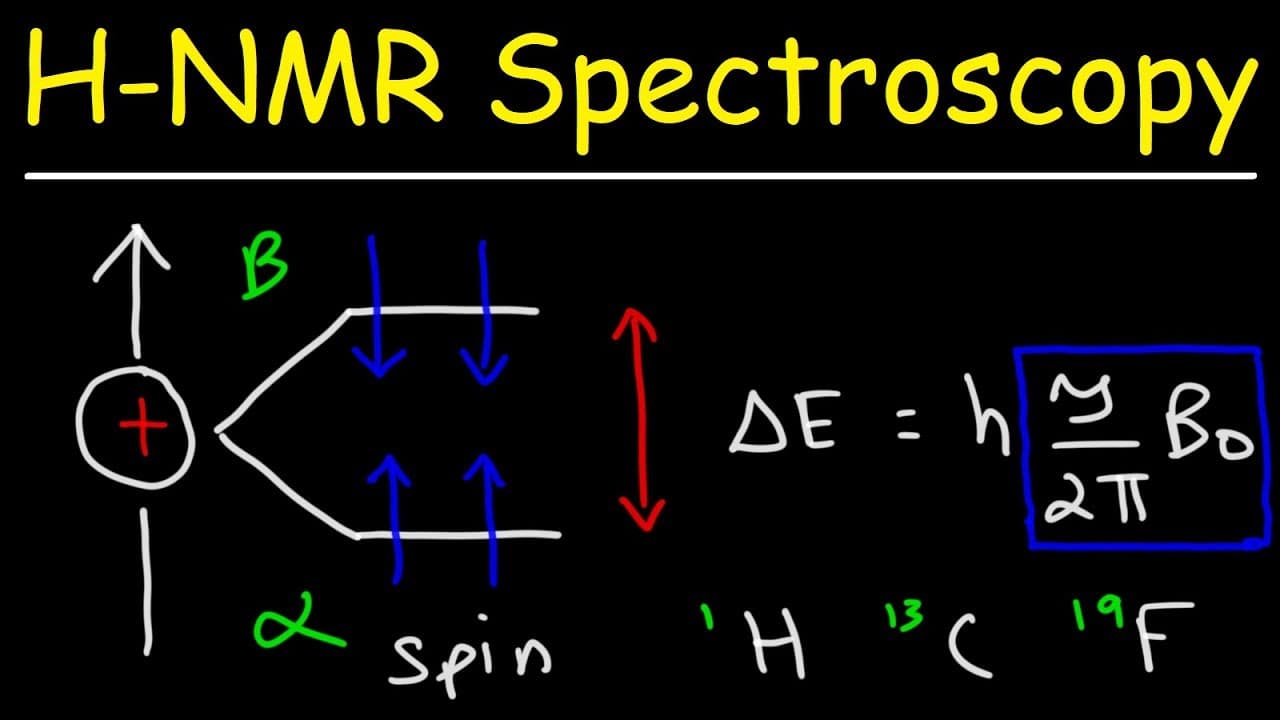
NMR spectroscopy is a technique for identifying the carbon and hydrogen framework of organic compounds by using nuclei with an odd number of protons or neutrons, such as hydrogen and carbon-13. It works by measuring the energy differences between alpha and beta spin states of these nuclei when placed in a magnetic field, which reveals structural information about the compound.
Transcript
in this video we're going to talk about the basics of nmr spectroscopy nmr spectroscopy is useful for identifying the carbon hydrogen framework of an organic compound now it only works with certain nuclei and that is nuclei either with an odd number of protons or an odd number of neutrons so let me give you some examples so nuclei such as hydrogen ... Read More
Key Insights
- ❓ NMR spectroscopy is used to identify the carbon and hydrogen framework of organic compounds.
- 🦕 Only nuclei with odd numbers of protons or neutrons can be used in NMR spectroscopy.
- 🎚️ The alpha and beta spin states in NMR spectroscopy represent different energy levels.
Install to Summarize YouTube Videos and Get Transcripts
Explore YouTube Video Summarizer or Get YouTube Transcript Extractor
Questions & Answers
Q: What types of nuclei can be used in NMR spectroscopy?
Nuclei that have an odd number of protons or an odd number of neutrons can be used in NMR spectroscopy. Examples include hydrogen, carbon-13, nitrogen-15, fluorine-19, and phosphorus-31.
Q: Why can't carbon-12 be used in NMR spectroscopy?
Carbon-12 has an even number of protons and neutrons, so it doesn't have the property called spin that is required for NMR spectroscopy. Only nuclei with an odd number of protons or neutrons can be used.
Q: What is the significance of the alpha and beta spin states in NMR spectroscopy?
The alpha spin state is lower in energy and more stable than the beta spin state. The majority of the hydrogen nuclei will be in the alpha spin state because it is easier to align with the applied magnetic field. The difference in energy between the two states is dependent on the strength of the magnetic field.
Q: How is the operating frequency of an NMR spectrometer calculated?
The operating frequency is calculated using the formula nu = gyromagnetic ratio / (2 * pi * applied magnetic field). The gyromagnetic ratio depends on the nucleus being studied. In the example given, the operating frequency is approximately 500 megahertz.
Summary & Key Takeaways
-
NMR spectroscopy is used to identify the carbon hydrogen framework of organic compounds.
-
It only works with nuclei that have an odd number of protons or an odd number of neutrons.
-
Examples of nuclei that can be used in NMR spectroscopy include hydrogen, carbon-13, nitrogen-15, fluorine-19, and phosphorus-31.
Read in Other Languages (beta)
Share This Summary 📚
Summarize YouTube Videos and Get Video Transcripts with 1-Click
Try YouTube Summary with ChatGPT & Claude or YouTube Transcript Generator
Explore More Summaries from The Organic Chemistry Tutor 📚



Summarize YouTube Videos and Get Video Transcripts with 1-Click
Try YouTube Summary with ChatGPT & Claude or YouTube Transcript Generator