How Did 23andMe Transform Consumer DNA Testing?
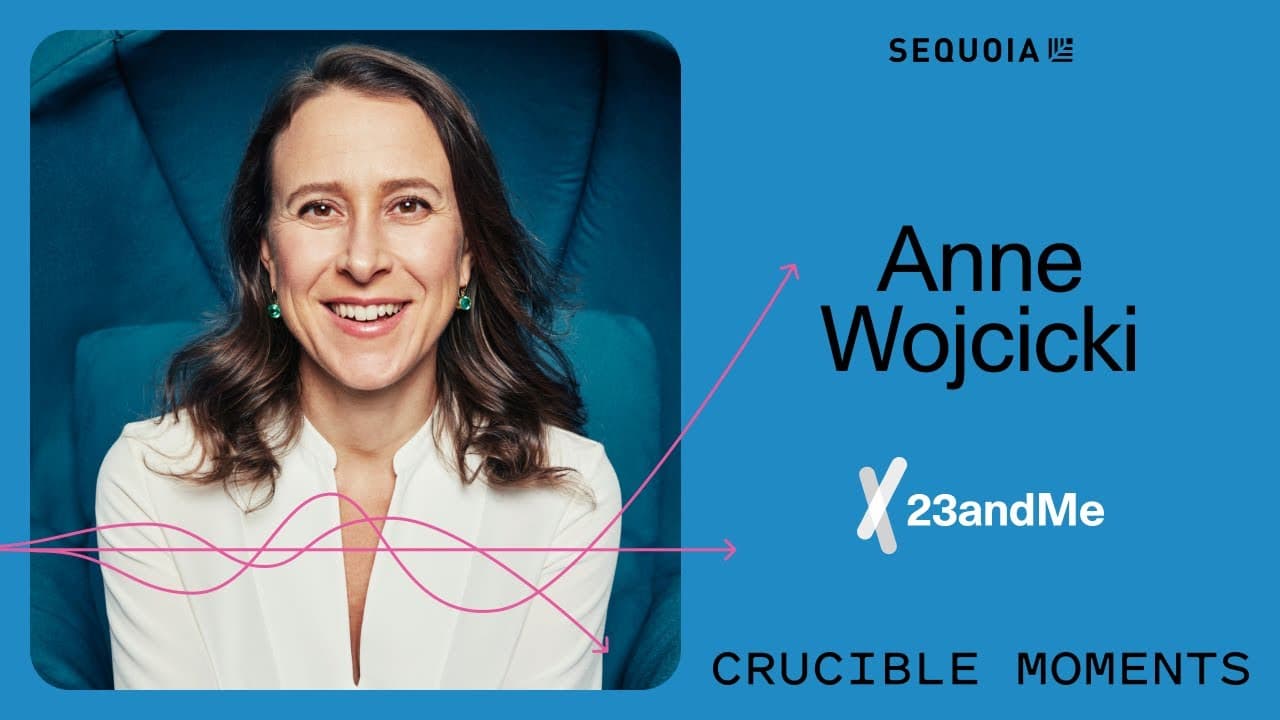
TL;DR
23andMe made personal genetic information directly accessible by lowering the price of testing, building useful ancestry and health tools, and complying with FDA requirements after its health service was halted. Its customer community also created a consent-based research database that supported product improvements and a move into drug discovery, while slowing kit sales and privacy concerns later pushed the company toward telehealth.
Transcript
lizo dressed up like 23 me for Halloween and we had Eddie Murphy come to Saturday live and like talk about 23 me like we're in crossword puzzles and jokes everyone suddenly was exploding with stories about 23 me and then in 2019 kit sales started to Flatline it was really a question of like what happened welcome to Crucible moments a podcast about ... Read More
Key Insights
- 23andMe was created to give individuals a stronger voice in healthcare by providing direct access to their genetic information. Anne Wojcicki believed people could use that information to make health, lifestyle, and family decisions that did not depend entirely on the priorities of medical or insurance institutions.
- The timing of 23andMe depended on advances in genome science and declining analysis costs. These conditions made personal genetic data affordable enough for a consumer service, allowing the company to pursue its mission of helping people access, understand, and benefit from information contained in the human genome.
- Consumer genetic testing offered information that conventional medicine sometimes withheld when no treatment was available. The company argued that people could still benefit from knowing about inherited risks because such knowledge could inform life planning, lifestyle choices, research participation, and conversations about future health decisions.
- The consent-based customer database made every participating customer potentially valuable to research and product development. As enrollment grew, 23andMe could improve ancestry composition, identify possible relatives, develop exploratory tools, and create a research resource based on people who had agreed to contribute their information.
- Affordable pricing was the key to demonstrating product-market fit. Early press attention produced an initial burst of purchases, but demand soon declined at the original price. When 23andMe sharply reduced the cost, orders surged, inventory sold out, and the company gained evidence that a broad consumer market existed.
- Direct access to genetic health information challenged established medical assumptions. Critics feared consumers would misuse results without physician supervision or experience personal harm from unexpected family findings, while Wojcicki maintained that these fears lacked supporting data and underestimated people's ability to make informed choices.
- FDA intervention became a decisive test of the company's survival. After the agency ordered health testing to stop, 23andMe faced a regulatory process without a clear precedent for consumer genetic products and had to develop capabilities that differed substantially from those required to launch and market testing kits.
- Diversification became important when consumer kit sales stopped growing. 23andMe used the scale of its consented research community to enter drug discovery, then pursued telehealth as privacy concerns and tapering sales challenged its original business, showing how the company repeatedly adapted after major strategic inflection points.
Install to Summarize YouTube Videos and Get Transcripts
Explore YouTube Video Summarizer or Get YouTube Transcript Extractor
Questions & Answers
Q: Why did Anne Wojcicki start 23andMe?
Anne Wojcicki started 23andMe after spending years investing in healthcare companies and concluding that the healthcare system was optimized to monetize patients rather than represent their interests. She wanted to build a community centered on what people actually needed, including staying healthy, understanding personal risks, planning their lives, and crowdsourcing possible solutions when illness occurred.
Q: How did 23andMe make genetic testing accessible?
23andMe made genetic testing accessible by turning information that had previously required prohibitively expensive individual analysis into a direct-to-consumer product. Falling genome-analysis costs enabled the model, while a major reduction in the kit price expanded demand. The service also translated raw genetic data into understandable ancestry, health, trait, and relative-discovery information that customers could explore themselves.
Q: How did 23andMe find product-market fit?
23andMe found product-market fit after discovering that publicity and curiosity were not enough to sustain sales at its original price. The company sharply lowered the price and immediately experienced a large surge in orders that exhausted its inventory. That response demonstrated substantial consumer interest, supported a new financing round, and showed that affordability was central to adoption.
Q: Why was direct-to-consumer genetic testing controversial?
Direct-to-consumer genetic testing was controversial because it allowed people to obtain health and family information without going through physicians. Some members of the medical establishment feared that consumers would misinterpret genetic risks or suffer harm from unexpected findings, including non-paternity discoveries. Wojcicki argued that these concerns underestimated consumers and were not supported by evidence presented to the company.
Q: Why did the FDA stop 23andMe health testing?
The FDA stopped 23andMe's health testing because the agency required the company to complete an approval process before continuing to sell that product. Consumer genetic health testing had little regulatory precedent, and 23andMe lacked experience working through such a process. The order transformed a recurring regulatory challenge into a direct threat to the company's central consumer health service.
Q: How did 23andMe respond to the FDA order?
23andMe responded by taking the regulatory demand seriously, stopping the affected health service, and pursuing FDA approval rather than abandoning its broader mission. The company needed to gather people with the right expertise and learn how to satisfy requirements for a product without an established consumer-genetics pathway. Its persistence eventually made its offering the only FDA-approved product in that market.
Q: How did customer data support 23andMe research?
Customer data supported research through a database of individuals who consented to participate. As more people joined, the company could improve features such as ancestry composition and relative finding while creating a resource for broader scientific work. The model connected consumer participation with product development and later provided the scale needed for the company's move into therapeutic discovery.
Q: Why did 23andMe expand into drug discovery and telehealth?
23andMe expanded into drug discovery because its growing consent-based genetic database could support the search for therapeutic opportunities beyond consumer reports. Later, kit sales began to flatten while privacy concerns complicated further growth in the original business. The company responded with another strategic shift toward telehealth, continuing its pattern of adapting its model when regulatory or market conditions changed.
Summary & Key Takeaways
-
Anne Wojcicki founded 23andMe after concluding that healthcare systems were optimized around institutional revenue rather than patient interests. Falling genome-analysis costs created an opportunity to give individuals affordable access to genetic information, helping them understand ancestry, health predispositions, and personal traits while participating in a community focused on shared needs and better outcomes.
-
The initial publicity generated strong curiosity, but sustained demand remained weak at the original price. A dramatic price reduction caused kit orders to surge and demonstrated that consumers wanted genetic information when access became affordable. This breakthrough provided evidence of product-market fit, attracted financing, and created a population large enough to support meaningful genetic research.
-
The FDA later ordered 23andMe to stop providing health testing, forcing the company to choose between resisting regulation, abandoning the service, or pursuing approval. The company complied, assembled expertise for regulatory work, and eventually became the only FDA-approved product in its market. It also expanded into therapeutics and later telehealth as consumer kit growth slowed.
Read in Other Languages (beta)
Share This Summary 📚
Summarize YouTube Videos and Get Video Transcripts with 1-Click
Try YouTube Summary with ChatGPT & Claude or YouTube Transcript Generator
Explore More Summaries from Sequoia Capital 📚






Summarize YouTube Videos and Get Video Transcripts with 1-Click
Try YouTube Summary with ChatGPT & Claude or YouTube Transcript Generator