Teaching Self-Regulation During Choice Time in Pre-K
TL;DR
This video discusses various strategies and systems, such as timers and waiting lists, that help young children manage waiting time during choice time in early childhood centers.
Transcript
Student: And you get the waiting list. >>Cindy Barron: You could write your name on the waiting list. That's a great strategy. We are going to get started for Choice Time. >>Cindy Barron: At the beginning of Choice Time, the children have to choose the centers that they're going to. In order to make the transition work, we start a routine right f... Read More
Key Insights
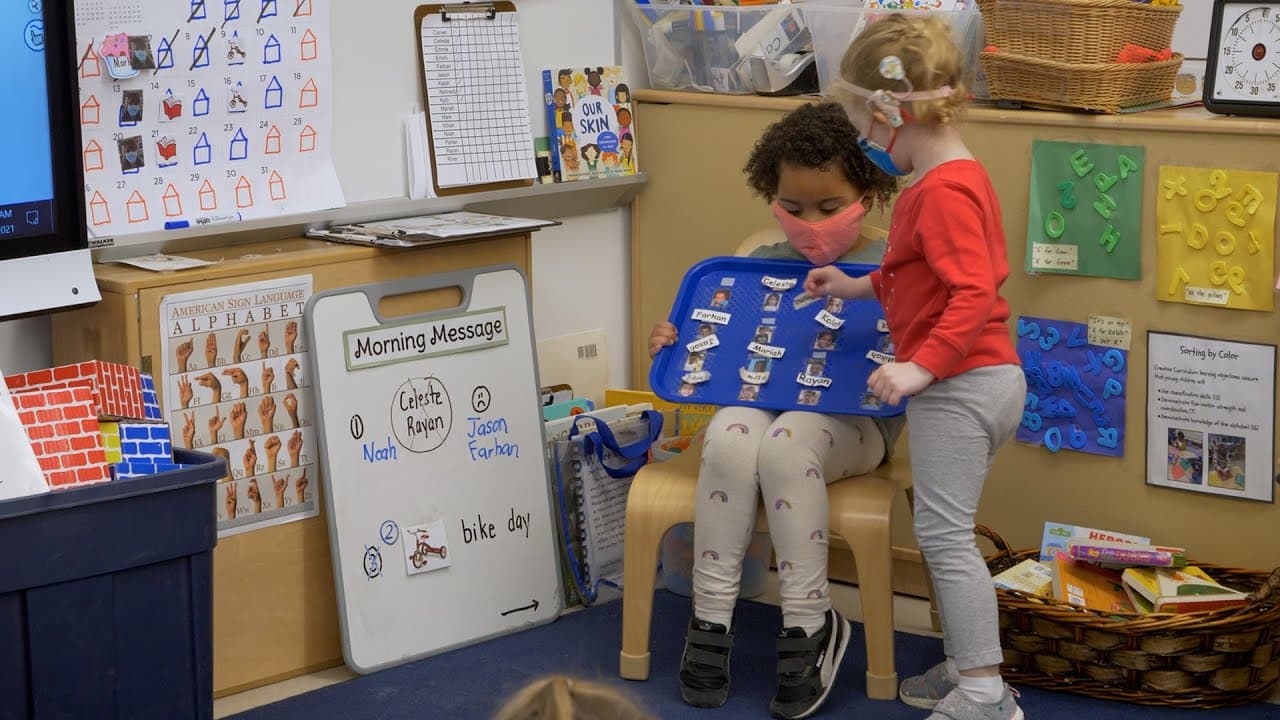
- 🙃 Velcro boards are effective for organizing sign-ups during choice time, allowing children to easily add and remove their names for centers.
- ⏲️ Visual timers create a visual representation of time, helping children understand how much longer they need to wait.
- 👂 Waiting lists are useful for popular centers, ensuring that all children have a turn and reducing impatience.
- 🤳 These systems promote self-regulation and help children handle waiting time more effectively.
- 🇰🇼 Early childhood centers need strategies to manage waiting time, as young children find it difficult to wait.
- ⏲️ The use of timers with a visual component, such as a countdown or color changes, helps children comprehend the passing of time.
- 👶 Waiting lists can be helpful for new and exciting centers that attract high demand from children.
Install to Summarize YouTube Videos and Get Transcripts
Explore YouTube Video Summarizer or Get YouTube Transcript Extractor
Questions & Answers
Q: What is the purpose of using Velcro boards for sign-ups during choice time?
Velcro boards help children choose and sign up for centers during choice time. Each child has their own name with Velcro, making it easy to add and remove names as needed.
Q: How do visual timers help children with waiting time?
Visual timers provide a clear visual representation of how much time is left before a child's turn at a center. The decreasing time helps children build self-regulation and reduces the likelihood of tears or impatience.
Q: When are waiting lists typically used in early childhood centers?
Waiting lists are usually used for new and exciting centers where there might be high demand. Children can add their names to the waiting list if their chosen center is full, providing them reassurance that their turn will come.
Q: How do these systems help children with self-regulation?
By implementing strategies like Velcro sign-ups, visual timers, and waiting lists, children learn to manage and regulate their emotions during waiting time. This helps them understand that their turn will come and reduces frustration.
Summary & Key Takeaways
-
At the beginning of choice time, children choose centers to play in by signing up with their names on Velcro boards.
-
To help children wait their turn, visual timers are used to show them how much time is left before they can go to their chosen center.
-
Waiting lists are also implemented for popular centers, allowing children to add their names and know that their turn will come.
Read in Other Languages (beta)
Share This Summary 📚
Summarize YouTube Videos and Get Video Transcripts with 1-Click
Try YouTube Summary with ChatGPT & Claude or YouTube Transcript Generator
Explore More Summaries from Edutopia 📚


Summarize YouTube Videos and Get Video Transcripts with 1-Click
Try YouTube Summary with ChatGPT & Claude or YouTube Transcript Generator