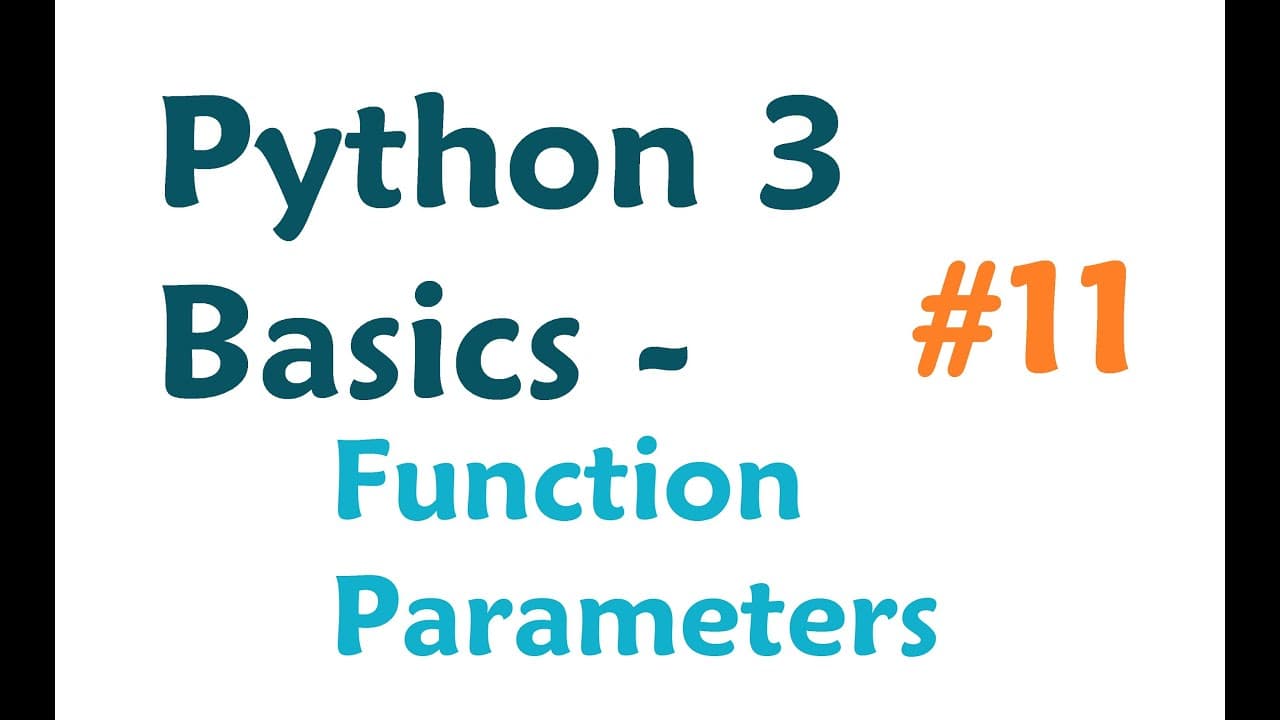
Python 3 Programming Tutorial - Function Parameters
TL;DR
Learn about using parameters and variables in Python functions to perform simple additions.
Transcript
hello everybody and welcome to another Python 3 Basics video in this video we're going to carry on with functions in the last video you were showing just a very basic function and we didn't use any parameters in this video we're actually going to include parameters and give this function more uh functionality so uh let's define a function and we're... Read More
Key Insights
- 🎭 Functions in Python can accept parameters to perform operations on specific values.
- 🪈 The order and quantity of parameters must be consistent in both the function definition and the function call.
- ❓ Using default variables can affect the quantity of parameters required for a function.
Install to Summarize YouTube Videos and Get Transcripts
Explore YouTube Video Summarizer or Get YouTube Transcript Extractor
Questions & Answers
Q: What is the purpose of using parameters in Python functions?
Parameters allow us to pass values into a function and perform operations on them, making functions more flexible and reusable.
Q: Can we have any number of parameters in a function?
Yes, there is no limit to the number of parameters in a function. However, it is important to maintain the correct order and quantity of parameters when calling the function.
Q: What happens if we provide the wrong order of parameters in a function call?
If the order of parameters in the function call does not match the order in the function definition, the values will be assigned incorrectly, leading to unexpected results.
Q: What is the significance of quantity in function parameters?
The quantity of parameters must match the number of arguments passed when calling a function. Providing too few or too many arguments will result in an error.
Summary & Key Takeaways
-
This video continues the Python 3 Basics series, focusing on functions with parameters and variables.
-
The function "simple_addition" is defined with two parameters, "num_one" and "num_two", and performs addition on them.
-
The video demonstrates how to print the values of the parameters and the result of the addition.
Read in Other Languages (beta)
Share This Summary 📚
Summarize YouTube Videos and Get Video Transcripts with 1-Click
Try YouTube Summary with ChatGPT & Claude or YouTube Transcript Generator
Explore More Summaries from sentdex 📚

Summarize YouTube Videos and Get Video Transcripts with 1-Click
Try YouTube Summary with ChatGPT & Claude or YouTube Transcript Generator