Os Piores Pratos Portugueses
TL;DR
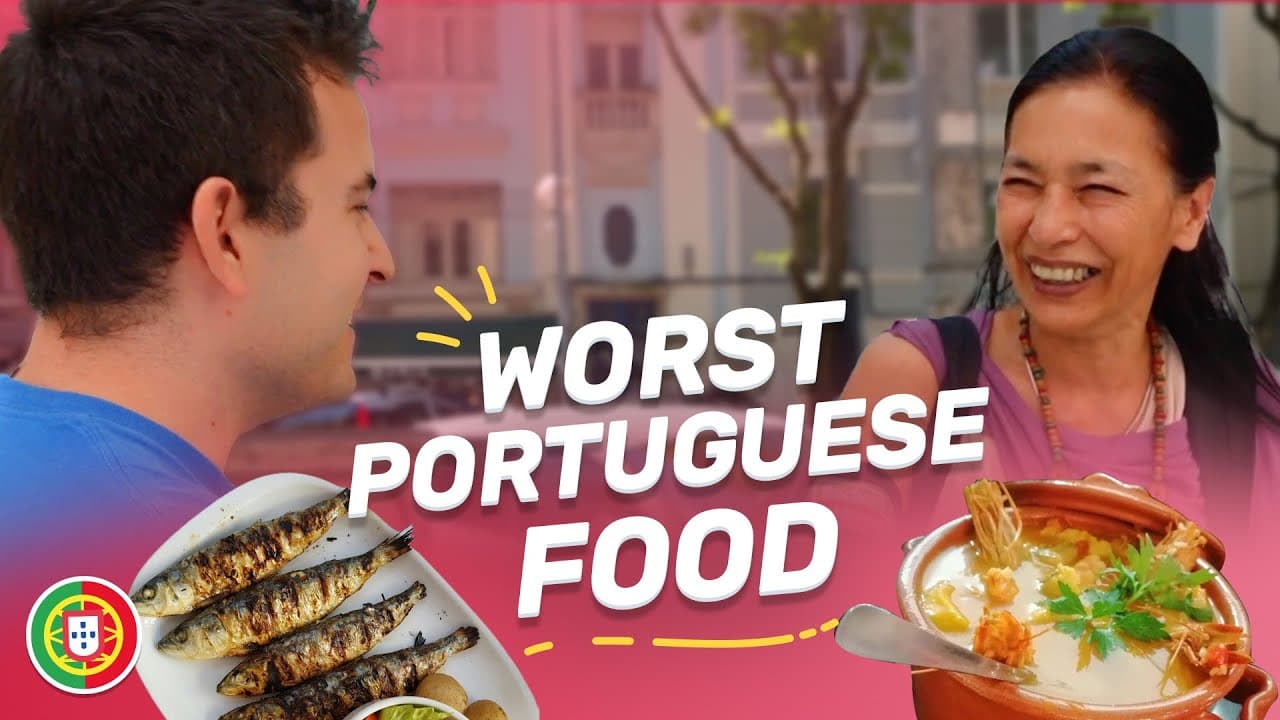
Locals discuss their least favorite Portuguese dishes and culinary dislikes.
Transcript
Excuse me, do you want to help us teach Portuguese to foreigners? OK, if it's quick! Yes, you're having lunch, aren't you? Yes, yes. What's one food that you don't like? Portuguese food? It can be Portuguese or foreign food. Food that you don't like. That I don't like? A food I don't like is hard to say. You like a lot of things? I like a lot of th... Read More
Key Insights
- The video explores Portuguese locals' least favorite dishes, revealing diverse opinions on traditional foods like 'Tripas à moda do Porto' and 'arroz de cabidela'.
- Some locals express a strong dislike for dishes containing blood, such as 'arroz de cabidela', highlighting cultural culinary boundaries.
- Fish, particularly sardines, receives mixed reviews; while some dislike the bones, others find creative ways to enjoy them.
- Despite being a cook, one participant dislikes lamb, showcasing that even culinary professionals have personal tastes.
- The conversation reveals that some Portuguese dishes, like 'dobrada', are polarizing, loved by some and disliked by others.
- The video illustrates the diversity in Portuguese cuisine and how personal preferences shape culinary experiences.
- A participant notes that while they generally dislike fish, cod can be an exception depending on the preparation.
- The video emphasizes that taste is subjective, with some dishes turning people vegetarian while others are cherished family traditions.
Install to Summarize YouTube Videos and Get Transcripts
Explore YouTube Video Summarizer or Get YouTube Transcript Extractor
Questions & Answers
Q: What is 'Tripas à moda do Porto'?
'Tripas à moda do Porto' is a traditional Portuguese dish made with tripe, which is the edible lining of a cow's stomach. It is a specialty from Porto and is often prepared with white beans, carrots, and various seasonings. While some people enjoy it, others find the idea of eating tripe unappealing.
Q: Why do some people dislike 'arroz de cabidela'?
'Arroz de cabidela' is a Portuguese dish made with rice, chicken, and the blood of the chicken, which gives it a distinctive taste and color. Some people are uncomfortable with the idea of consuming blood in their food, which can be a significant factor in their dislike for this dish.
Q: How do locals feel about sardines?
Opinions on sardines are mixed among locals. Some dislike them due to the numerous small bones, which can make eating difficult. However, others appreciate the flavor and have developed ways to enjoy sardines, such as crushing them on bread to avoid the bones and savor the taste.
Q: What is 'dobrada' and how is it perceived?
'Dobrada' is a Portuguese dish made from pork, particularly the stomach, and is often cooked with white beans. It is a polarizing dish, with some people enjoying its unique taste and texture, while others find the concept of eating stomach unappealing, leading to varied opinions among locals.
Q: Why might a cook dislike lamb?
Even culinary professionals have personal tastes, and the cook interviewed in the video admits to disliking lamb. Personal preferences can be influenced by various factors, including flavor, texture, and past experiences with the ingredient, highlighting that professional expertise doesn't eliminate subjective taste.
Q: What are some reasons people might dislike fish?
Dislike for fish can stem from several factors, such as the presence of bones, which can make eating cumbersome, or the strong smell that some fish emit. Additionally, personal taste preferences and dietary habits, like a general aversion to seafood, also contribute to people's dislike for fish.
Q: How do personal preferences influence culinary experiences?
Personal preferences significantly shape culinary experiences, as individuals have unique tastes influenced by cultural background, dietary habits, and personal history with certain foods. These preferences determine which dishes are enjoyed or avoided, creating a diverse and subjective culinary landscape.
Q: What role does cultural tradition play in food preferences?
Cultural tradition plays a crucial role in shaping food preferences, as traditional dishes often carry familial and cultural significance. While some individuals may cherish these foods as part of their heritage, others may not enjoy them due to personal taste, highlighting the complex relationship between culture and culinary preferences.
Summary & Key Takeaways
-
Joel interviews locals about their least favorite Portuguese dishes, revealing varied opinions on traditional foods like 'Tripas à moda do Porto' and 'arroz de cabidela'. Participants discuss their culinary dislikes, with some expressing aversion to dishes containing blood and others disliking fish due to bones.
-
The video highlights the subjective nature of taste, with some locals disliking lamb and sardines while others find enjoyment in these dishes. Despite being a cook, one participant admits to disliking lamb, showcasing that even culinary professionals have personal preferences.
-
Locals share their thoughts on Portuguese cuisine, with some dishes like 'dobrada' being polarizing. The conversation underscores the diversity in Portuguese culinary traditions and how personal tastes influence food experiences, with certain dishes being family favorites while others are avoided.
Read in Other Languages (beta)
Share This Summary 📚
Summarize YouTube Videos and Get Video Transcripts with 1-Click
Try YouTube Summary with ChatGPT & Claude or YouTube Transcript Generator
Explore More Summaries from Practice Portuguese 📚






Summarize YouTube Videos and Get Video Transcripts with 1-Click
Try YouTube Summary with ChatGPT & Claude or YouTube Transcript Generator