How Did Viking Invasions Influence the English Language?
TL;DR
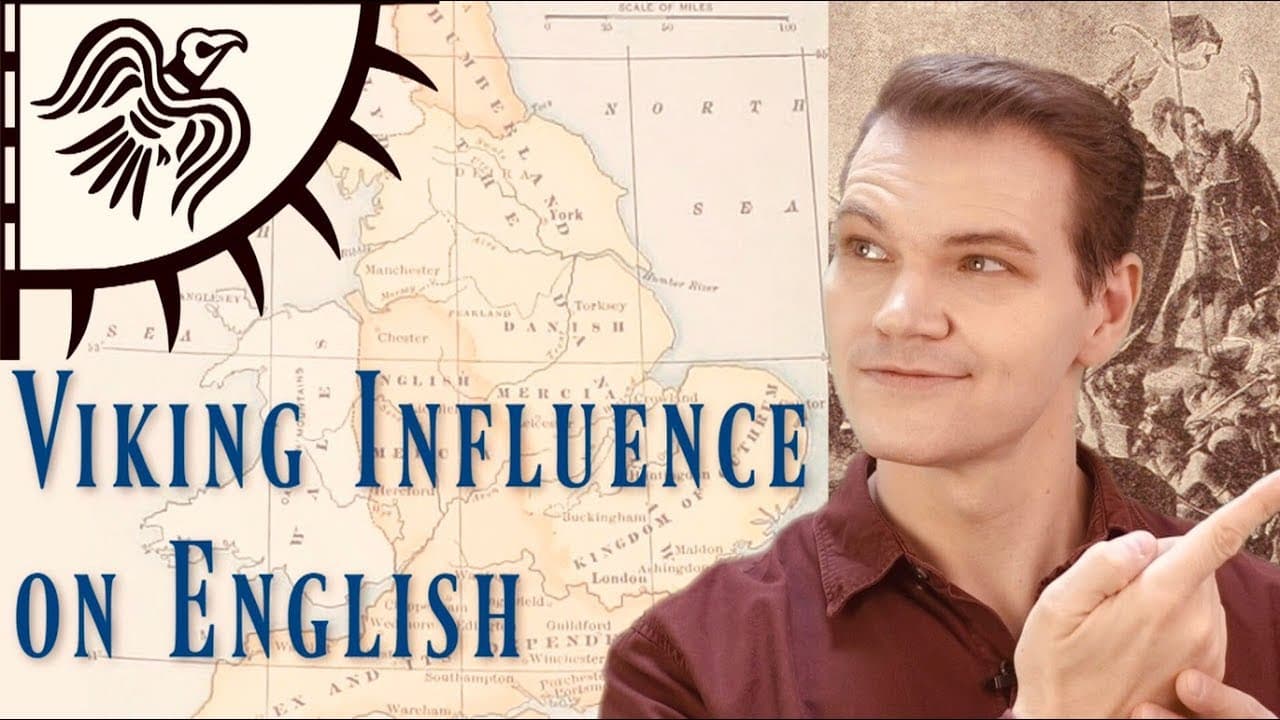
Viking invasions introduced significant elements of Old Norse into English, particularly in vocabulary and grammar. This influence led to the adoption of many common words and facilitated a transition from a synthetic to an analytic language structure. The Danelaw region's cultural integration of Old Norse and Old English speakers further shaped the evolution of the English language.
Transcript
Hello everyone, welcome to the Langfocus Channel and my name is Paul. Today we're going to go back in time and talk about an important influence on the English language, the influence of the Vikings and their language Old Norse. It's almost universally accepted that English is a West Germanic language along with Frisian, Dutch and German and that m... Read More
Key Insights
- The Viking invasions introduced Old Norse language elements into English, significantly impacting its vocabulary and grammar.
- Old Norse and Old English shared many cognates, facilitating communication and leading to the adoption of common words.
- Viking influence led to the simplification of English grammar, transitioning from a synthetic to an analytic language.
- Basic everyday words from Old Norse, such as pronouns and verbs, became integral parts of English vocabulary.
- The Danelaw region saw significant Scandinavian cultural and linguistic influence due to extensive interaction and intermarriage.
- Theories suggest Middle English might be a creole or semi-creole due to language mixing between Old English and Old Norse.
- Some scholars propose English is a North Germanic language, but this theory is debated due to English's West Germanic roots.
- The standardization of Middle English balanced influences from both northern Scandinavian and southern Anglo dialects.
Install to Summarize YouTube Videos and Get Transcripts
Explore YouTube Video Summarizer or Get YouTube Transcript Extractor
Questions & Answers
Q: How did the Viking invasions influence the English language?
The Viking invasions introduced Old Norse elements into English, significantly impacting its vocabulary and grammar. This influence resulted from extensive interaction and intermarriage within the Danelaw region, where Old Norse and Old English speakers coexisted. The cultural and linguistic integration led to the adoption of basic everyday words and contributed to the simplification of English grammar.
Q: What are some examples of Old Norse words in English?
Examples of Old Norse words in English include pronouns like 'they,' 'them,' and 'their,' as well as everyday nouns and verbs such as 'egg,' 'leg,' 'sky,' 'anger,' 'die,' 'take,' and 'call.' These words reflect the intense and prolonged contact between Old Norse and Old English speakers, leading to the borrowing of fundamental vocabulary.
Q: What theories exist about the development of Middle English?
There are several theories about the development of Middle English. The traditional view is that it descended directly from Old English with Old Norse influence. Another theory suggests it might be a creole or semi-creole due to language mixing. Additionally, some propose that English is a North Germanic language, though this is debated due to its West Germanic roots.
Q: How did English grammar change from Old English to Middle English?
English grammar transitioned from a synthetic language with inflections to an analytic language relying on word order and prepositions. Nouns lost their case inflections, and verb inflections were simplified. The use of auxiliary verbs emerged, and word order became more fixed. These changes reflect the influence of Old Norse and the need for simplified communication.
Q: What is the significance of the Danelaw in linguistic history?
The Danelaw was a region of England under Viking control where extensive cultural and linguistic integration occurred. Old Norse and Old English speakers lived in close proximity, leading to significant Scandinavian influence on the English language. This interaction facilitated the borrowing of vocabulary and contributed to the simplification of English grammar.
Q: Why do some scholars propose English is a North Germanic language?
Some scholars propose English is a North Germanic language due to syntactic similarities with Scandinavian languages and the extensive influence of Old Norse on English. However, this theory is debated because English retains many West Germanic features, and language borrowing typically involves vocabulary rather than structural elements.
Q: How did Old Norse influence English vocabulary?
Old Norse influenced English vocabulary by contributing basic everyday words and pronouns. The prolonged contact between Old Norse and Old English speakers led to the adoption of words that facilitated communication. This influence is evident in the presence of many common words with Norse origins, reflecting the integration of the two linguistic communities.
Q: What role did language contact play in English development?
Language contact played a crucial role in English development by introducing Old Norse elements that shaped vocabulary and grammar. The interaction between Old Norse and Old English speakers led to the borrowing of words and grammatical simplification. This contact influenced Middle English's evolution and contributed to the linguistic diversity of modern English.
Summary & Key Takeaways
-
The video explores the significant impact of Viking invasions on the English language, highlighting the introduction of Old Norse vocabulary and grammar simplification. It discusses the historical context of Viking settlements and the cultural integration within the Danelaw region, where Old Norse and Old English speakers coexisted and interacted.
-
Key linguistic changes include the adoption of everyday Old Norse words and the transition of English from a synthetic to an analytic language. The video also examines theories on whether Middle English was a creole resulting from language contact or if English is fundamentally a North Germanic language.
-
The discussion concludes by considering the standardization of Middle English, which balanced northern Scandinavian influences with southern Anglo dialects. The video invites viewers to reflect on language contact's historical impact and the ongoing debate about English's linguistic classification.
Read in Other Languages (beta)
Share This Summary 📚
Summarize YouTube Videos and Get Video Transcripts with 1-Click
Try YouTube Summary with ChatGPT & Claude or YouTube Transcript Generator
Explore More Summaries from Langfocus 📚




Summarize YouTube Videos and Get Video Transcripts with 1-Click
Try YouTube Summary with ChatGPT & Claude or YouTube Transcript Generator