Oxidation state trends in periodic table | Chemistry | Khan Academy
TL;DR
Oxidation states can be predicted based on an element's position on the periodic table and its electronegativity.
Transcript
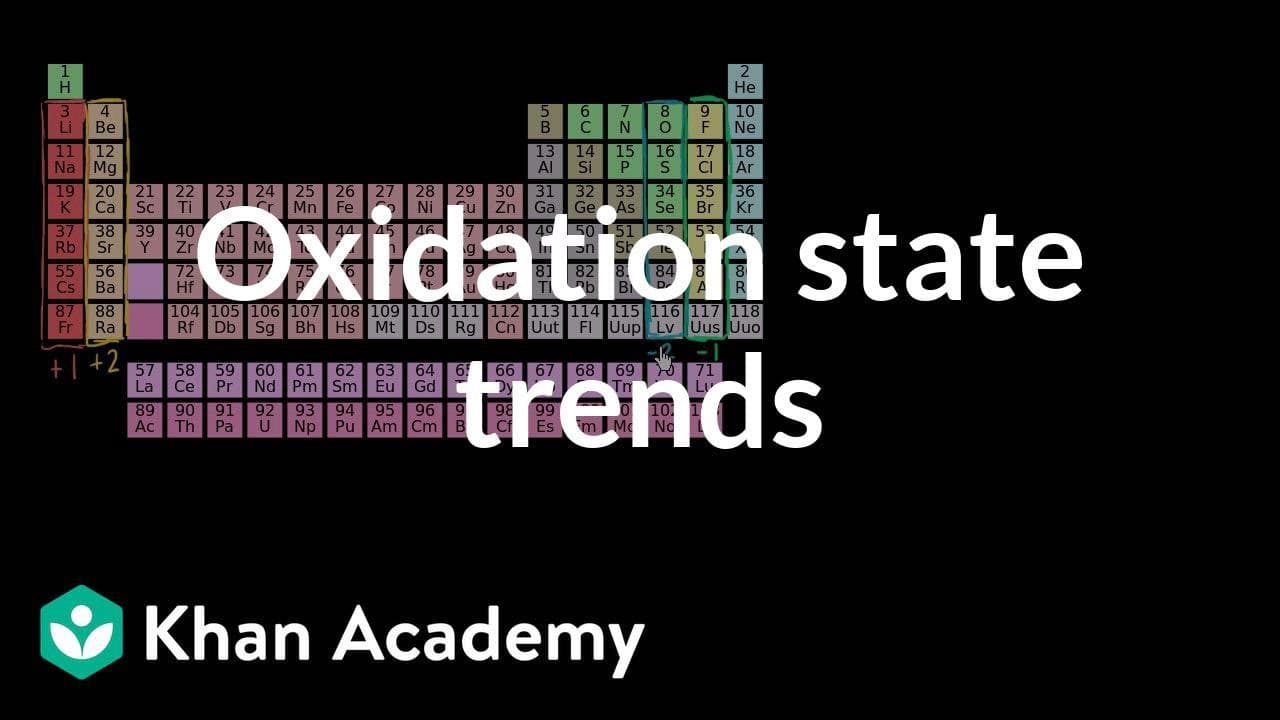
Let's see if we can come up with some general rules of thumb or some general trends for oxidation states by looking at the periodic table. So first, let's just focus on the alkali metals. And I'll box them off. We'll think about hydrogen in a second. Well, I'm going to box-- I'm going to separate hydrogen because it's kind of a special case. But if... Read More
Key Insights
- 🤘 Alkali metals (Group 1) typically have an oxidation state of +1, alkaline earth metals (Group 2) have a +2 oxidation state, halogens (Group 7) have a -1 oxidation state, and Group 6 elements have a -2 oxidation state.
- 📈 The trend in oxidation states follows electronegativity and valence electron configuration on the periodic table.
- ❎ Hydrogen can have both positive and negative oxidation states (-1 and +1) depending on its compound.
- 🫀 Oxidation states of atoms in a molecule add up to the total charge of the molecule.
Install to Summarize YouTube Videos and Get Transcripts
Explore YouTube Video Summarizer or Get YouTube Transcript Extractor
Questions & Answers
Q: How do alkali metals and alkaline earth metals differ in their typical oxidation states?
Alkali metals (Group 1) typically have a +1 oxidation state because they have one valence electron and are not very electronegative. Alkaline earth metals (Group 2) typically have a +2 oxidation state because they have two valence electrons and are still not highly electronegative.
Q: Why do halogens typically have a -1 oxidation state?
Halogens (Group 7) are highly electronegative and are one electron away from being satisfied from a valence electron point of view. They typically have a -1 oxidation state because they tend to gain one electron to reach stability.
Q: How are Group 6 elements, such as oxygen, typically involved in oxidation-reduction reactions?
Group 6 elements, including oxygen, are typically oxidizing agents. They have a -2 oxidation state, meaning they tend to take away two electrons from other elements, leading to oxidation. Oxygen, in particular, is a strong oxidizing agent.
Q: Can hydrogen have both positive and negative oxidation states?
Yes, hydrogen is unique in that it can have both positive and negative oxidation states (-1 and +1). Hydrogen can either lose or gain an electron depending on the specific compound it is in, similar to alkali metals or halogens.
Summary & Key Takeaways
-
Alkali metals (Group 1) typically have an oxidation state of +1 because they are not too electronegative and easily give away their valence electron.
-
Alkaline earth metals (Group 2) typically have an oxidation state of +2 because they have two valence electrons and are still not very electronegative.
-
Halogens (Group 7) typically have an oxidation state of -1 because they are highly electronegative and tend to gain an electron.
-
Group 6 elements, particularly oxygen, are typically oxidizing agents with an oxidation state of -2, meaning they tend to take away electrons.
Read in Other Languages (beta)
Share This Summary 📚
Summarize YouTube Videos and Get Video Transcripts with 1-Click
Try YouTube Summary with ChatGPT & Claude or YouTube Transcript Generator
Explore More Summaries from Khan Academy 📚



Summarize YouTube Videos and Get Video Transcripts with 1-Click
Try YouTube Summary with ChatGPT & Claude or YouTube Transcript Generator