How FIFA corrupted the World Cup
TL;DR
FIFA's World Cup host selections plagued by corruption and bribery.
Transcript
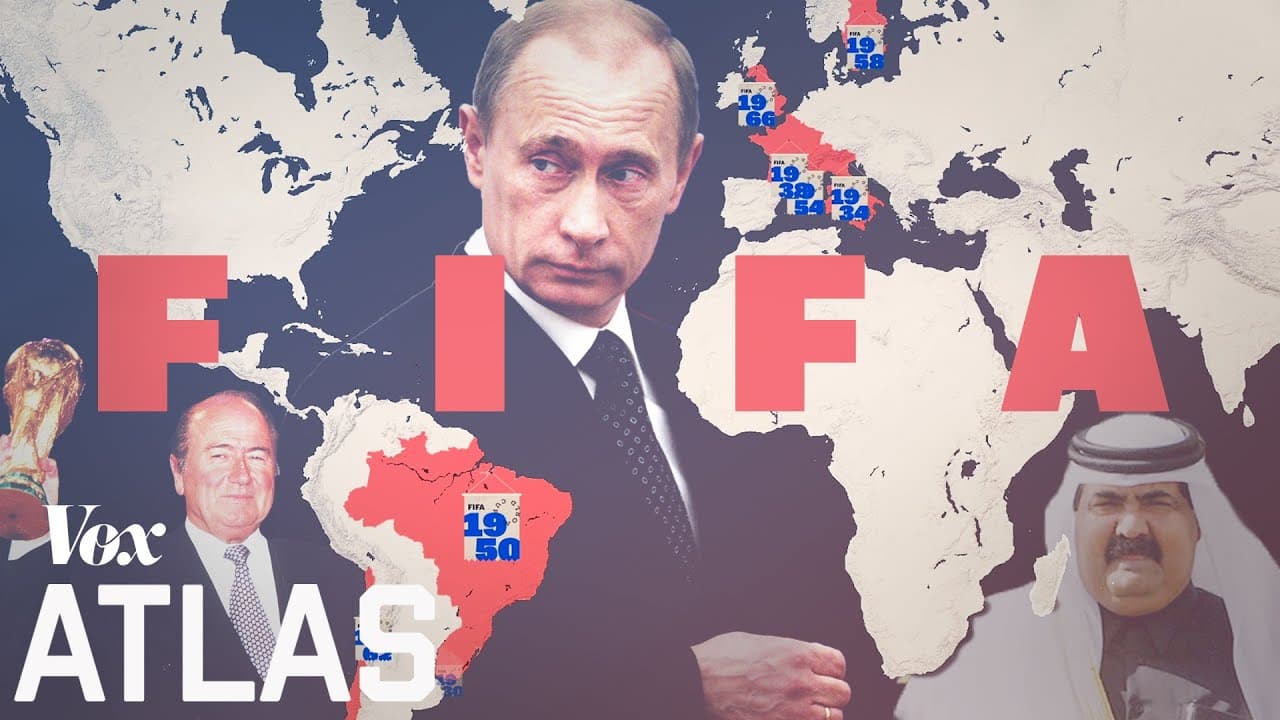
It's December 2nd, 2010, and the International Federation of Association Football, or FIFA, gathered in Switzerland to announce which country would host the 2018 and 2022 World Cups, and they had assembled a powerful audience. Here's former U.S. President Bill Clinton, who was there to back the U.S. bid. And here's Prince William working on behalf ... Read More
Key Insights
- FIFA's 2010 decision to award World Cup hosting to Russia and Qatar exposed deep-seated corruption within the organization, leading to widespread scrutiny and investigations.
- The executive committee, a group of 24 powerful men, controlled World Cup host selections, making them susceptible to bribery and corruption from bidding nations.
- FIFA's history of corruption dates back decades, with allegations of bribery and money laundering becoming more pronounced over time.
- The 2006 World Cup bid marked a turning point, as allegations of bribery and under-the-table deals surfaced, revealing a darker side to the bidding process.
- Russia and Qatar's successful bids for the 2018 and 2022 World Cups were bolstered by their authoritarian governments' ability to work the shadier side of the process.
- Despite the scandals, FIFA's financial success continued, with record revenues generated from the World Cups in Russia and Qatar.
- The fallout from the corruption investigations led to significant changes within FIFA, including the resignation of its president, Sepp Blatter.
- FIFA's decision to restore Congress's power to vote on World Cup hosts was an attempt to clean up its act and restore credibility.
Install to Summarize YouTube Videos and Get Transcripts
Explore YouTube Video Summarizer or Get YouTube Transcript Extractor
Questions & Answers
Q: What was the significance of FIFA's 2010 World Cup host announcement?
FIFA's 2010 announcement of Russia and Qatar as the hosts for the 2018 and 2022 World Cups was significant because it exposed deep-seated corruption within the organization. The decision shocked the world and led to widespread investigations into allegations of bribery and corruption, ultimately revealing the extent to which FIFA's executive committee was susceptible to influence from bidding nations.
Q: How did FIFA's executive committee influence World Cup host selections?
FIFA's executive committee, a group of 24 powerful men, held significant influence over World Cup host selections. Their votes were crucial for bidding nations, making them targets for bribery and corruption. The committee's control over the process allowed for under-the-table deals and a lack of transparency, contributing to the organization's long history of corruption.
Q: What role did bribery play in the 2006 World Cup bid?
The 2006 World Cup bid marked a turning point in FIFA's history of corruption, as allegations of bribery and under-the-table deals surfaced. Journalists revealed that Germany had bribed at least four executive committee members for their votes, highlighting the darker side of the bidding process. This incident shed light on the extent to which bribery influenced host selections and set the stage for future scandals.
Q: Why were Russia and Qatar successful in their World Cup bids?
Russia and Qatar's successful bids for the 2018 and 2022 World Cups were bolstered by their authoritarian governments' ability to work the shadier side of the process. Both countries had deep pockets and were willing to use their wealth and influence to secure votes from FIFA's executive committee. Their ability to operate without the same level of accountability as other nations gave them an advantage in the bidding process.
Q: What changes occurred within FIFA following the corruption investigations?
Following the corruption investigations, significant changes occurred within FIFA, including the resignation of its president, Sepp Blatter. The organization faced intense scrutiny and pressure to clean up its act, leading to reforms aimed at increasing transparency and accountability. One of the most notable changes was the restoration of Congress's power to vote on World Cup hosts, a move intended to reduce the influence of the executive committee and restore credibility.
Q: How did FIFA's financial success continue despite the scandals?
Despite the scandals, FIFA's financial success continued, with record revenues generated from the World Cups in Russia and Qatar. The organization's ability to attract lucrative sponsorship deals, merchandise sales, and TV rights ensured its continued profitability. However, the financial success was overshadowed by the ongoing corruption investigations and the damage to FIFA's reputation.
Q: What impact did the 2010 World Cup host announcement have on FIFA's reputation?
The 2010 World Cup host announcement had a significant impact on FIFA's reputation, as it exposed the organization's deep-seated corruption and lack of transparency. The decision to award the tournaments to Russia and Qatar, despite allegations of bribery, led to widespread condemnation and investigations, ultimately tarnishing FIFA's image and raising questions about its integrity and governance.
Q: How did FIFA attempt to restore credibility after the corruption scandals?
FIFA attempted to restore credibility after the corruption scandals by implementing reforms aimed at increasing transparency and accountability. One of the key changes was the restoration of Congress's power to vote on World Cup hosts, reducing the influence of the executive committee. Additionally, FIFA sought to improve its governance and oversight mechanisms to prevent future instances of corruption and rebuild trust with stakeholders.
Summary & Key Takeaways
-
FIFA's decision to award the 2018 and 2022 World Cups to Russia and Qatar exposed systemic corruption within the organization, leading to widespread investigations and significant fallout. The executive committee's control over host selections made it susceptible to bribery, with allegations reaching a new level following the 2010 announcement.
-
The history of FIFA's corruption can be traced back decades, with the 2006 World Cup bid marking a turning point as allegations of bribery and under-the-table deals surfaced. Russia and Qatar's successful bids were bolstered by their authoritarian governments' ability to work the shadier side of the process.
-
Despite the scandals, FIFA's financial success continued, with record revenues generated from the World Cups in Russia and Qatar. The fallout from the investigations led to significant changes within FIFA, including the resignation of its president, Sepp Blatter, and a shift in voting power back to Congress.
Read in Other Languages (beta)
Share This Summary 📚
Summarize YouTube Videos and Get Video Transcripts with 1-Click
Try YouTube Summary with ChatGPT & Claude or YouTube Transcript Generator
Explore More Summaries from Vox 📚



Summarize YouTube Videos and Get Video Transcripts with 1-Click
Try YouTube Summary with ChatGPT & Claude or YouTube Transcript Generator