Inquiry-Based Learning in the Science Classroom
TL;DR
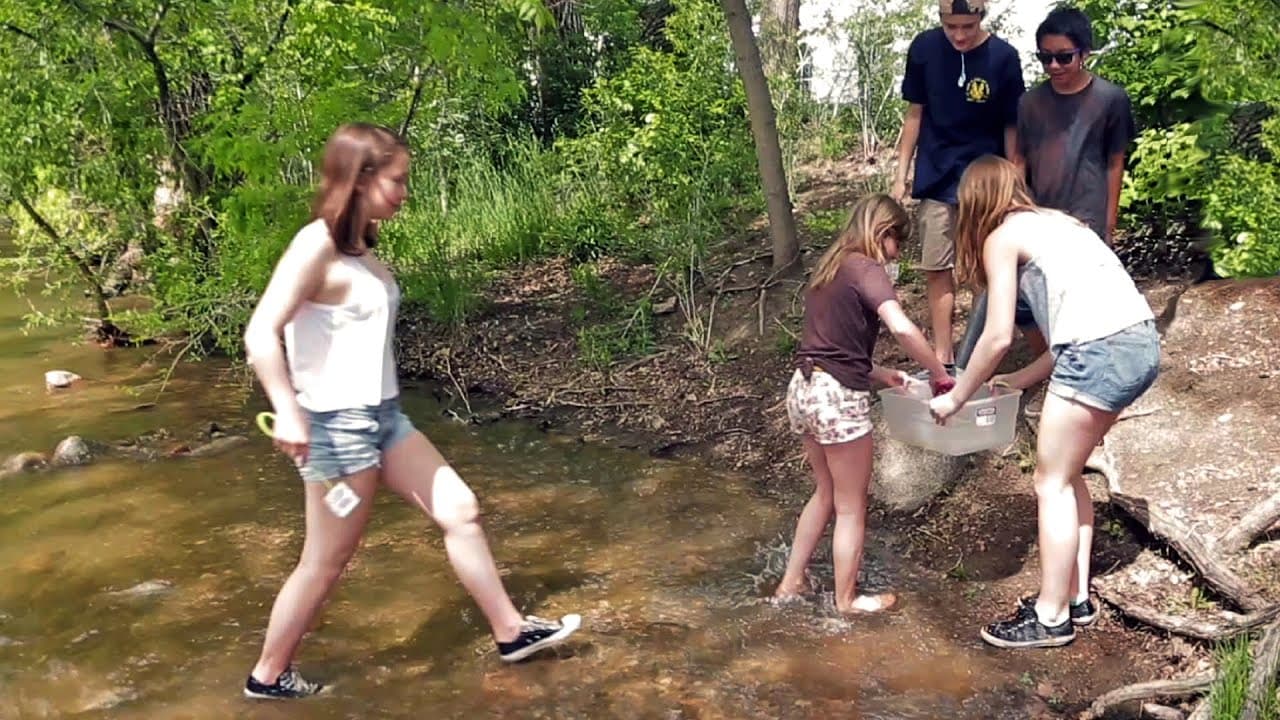
Students conduct experiments and research to answer the question of whether it is safe to tube in Boulder Creek.
Transcript
this is still settling but we found a lot of little organism so cool a real question we're trying to answer here is if it's safe to tube in the water cuz I I swim here every summer and I just realized how dirty it was when we design a science lesson to be an inquiry-based lesson we start everything around a central question that may last for one cl... Read More
Key Insights
- 👻 The inquiry-based learning approach allows students to actively engage in scientific exploration and discover answers themselves.
- 💦 Students learn how to collect and analyze data to make informed conclusions about the water quality of Boulder Creek.
- ❓ The presence of various organisms in the creek suggests its relative healthiness, even if it appears visually dirty.
- 🧑🎓 Students not only gain scientific knowledge but also learn from each other and their own experiences during the learning process.
- 😒 The use of infographics and visual presentations enhances the relevance and impact of the students' findings.
- 🧑🎓 A central question and ongoing research keep the students engaged and motivated throughout the lesson.
- 🧑🎓 Outdoor sessions provide a unique learning environment that encourages students to apply scientific concepts in real-life situations.
Install to Summarize YouTube Videos and Get Transcripts
Explore YouTube Video Summarizer or Get YouTube Transcript Extractor
Questions & Answers
Q: How does the inquiry-based learning approach work in this science lesson?
In this lesson, students are encouraged to explore and discover answers themselves through experiments, discussions, and research. The inquiry-based approach promotes critical thinking and a sense of discovery.
Q: What do the students do during the outdoor classroom session at Boulder Creek?
During the outdoor session, students engage in a physical survey of the area, create maps, and collect water samples for analysis. They observe the creek through a scientific lens and study its cleanliness.
Q: How do the students determine the water quality of Boulder Creek?
Students examine the presence of specific water bugs that can live in healthy or unhealthy water. By identifying the bugs found in the creek, they can infer the water quality and determine its healthiness.
Q: What do the students do with the collected data?
The students analyze the data collected from their experiments and observations. They then create posters or infographics to present their findings to the class in a visually appealing and informative manner.
Summary & Key Takeaways
-
Students engage in an inquiry-based lesson that revolves around the central question of water safety in Boulder Creek.
-
They collect samples and data from the creek to analyze parameters like temperature and turbidity.
-
Through experiments and discussions, students reach conclusions about the water quality and create informative infographics.
Read in Other Languages (beta)
Share This Summary 📚
Summarize YouTube Videos and Get Video Transcripts with 1-Click
Try YouTube Summary with ChatGPT & Claude or YouTube Transcript Generator
Explore More Summaries from Edutopia 📚

Summarize YouTube Videos and Get Video Transcripts with 1-Click
Try YouTube Summary with ChatGPT & Claude or YouTube Transcript Generator