Bad Block
TL;DR
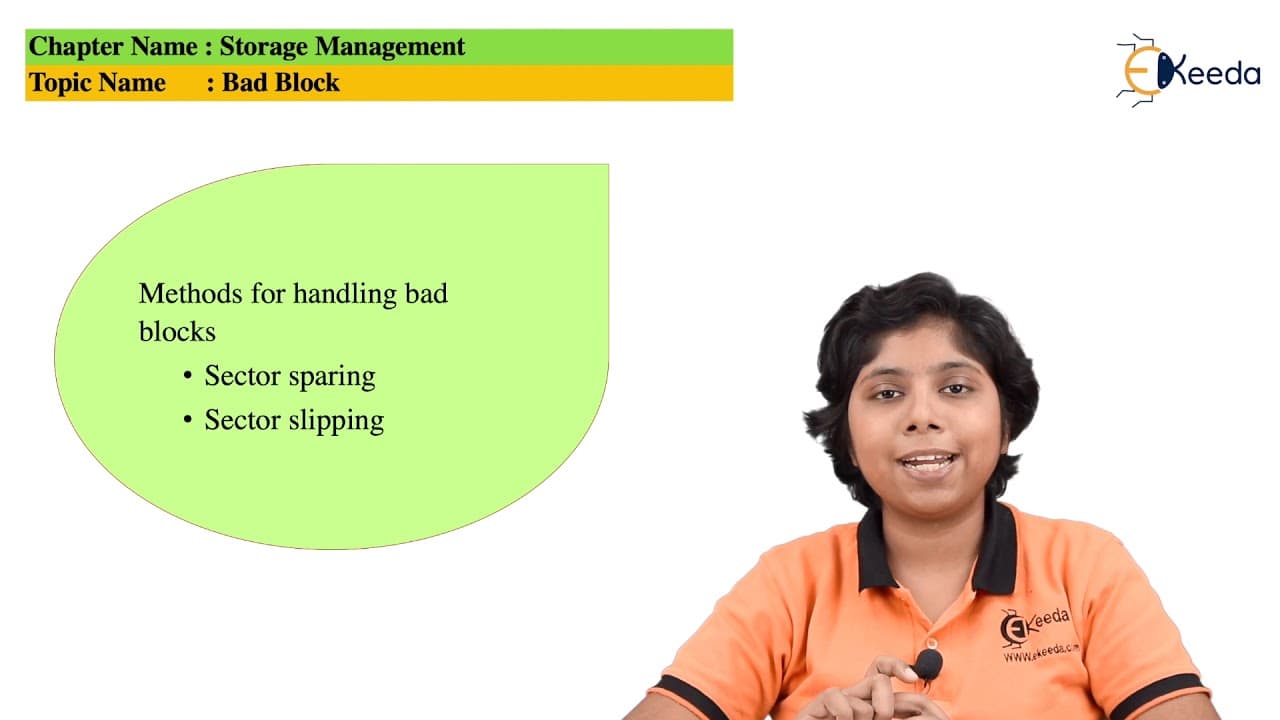
Learn how bad blocks in disk storage can be manually or automatically handled, including methods such as sector speeding and sector slipping.
Transcript
click the bell icon to get latest videos from akira hello friends today we will discuss about the data blocks that are being bad in nature that are being lost data and damaged which cannot be repaired and that has to be replaced within the backup data so how to implement this bad blocks recovery or manually had automatically within the disk we will... Read More
Key Insights
- 😚 Disk storage can have bad blocks that result in damaged or lost data, requiring replacement within the backup data.
- 🚫 Manual handling of bad blocks involves scanning the disk during formatting and flagging unusable blocks.
- 🚫 Automatic handling of bad blocks utilizes spare sectors to replace damaged blocks, preventing data loss.
- 🦡 Sector speeding and sector slipping are two methods used to recover data from bad blocks or optimize memory access time.
- 🧑🦽 Soft errors in bad blocks can be recovered through copying data to spare sectors, but hard errors require manual intervention and replacement of the affected disk.
- 🦡 Operating systems may have different approaches to handling bad blocks, with some using sophisticated methods or maintaining lists of bad blocks from the factory.
Install to Summarize YouTube Videos and Get Transcripts
Explore YouTube Video Summarizer or Get YouTube Transcript Extractor
Questions & Answers
Q: What are bad blocks in disk storage?
Bad blocks are sections of a disk that contain damaged or lost data and cannot be repaired. They require replacement within the backup data.
Q: How are bad blocks manually handled?
Manually handling bad blocks involves scanning the disk during formatting to identify and flag unusable blocks. This ensures that data allocation avoids these problem areas.
Q: What is sector speeding in bad block handling?
Sector speeding is a method where the contents of a bad block are copied to a spare sector. This allows the data to be retained and accessed without loss.
Q: What is sector slipping in bad block handling?
Sector slipping involves moving the contents of a bad block to an available block, freeing up the original block for other data. This method saves memory access time.
Summary & Key Takeaways
-
Bad blocks in disk storage refer to damaged or lost data that cannot be repaired and need to be replaced within the backup data.
-
Manually handling bad blocks involves scanning the disk during formatting to identify and flag unusable blocks. Automatic handling utilizes spare sectors to replace bad blocks.
-
Sector speeding involves copying the data from bad blocks to spare sectors, while sector slipping involves moving contents to available blocks, saving memory access time.
Read in Other Languages (beta)
Share This Summary 📚
Summarize YouTube Videos and Get Video Transcripts with 1-Click
Try YouTube Summary with ChatGPT & Claude or YouTube Transcript Generator
Explore More Summaries from Ekeeda 📚






Summarize YouTube Videos and Get Video Transcripts with 1-Click
Try YouTube Summary with ChatGPT & Claude or YouTube Transcript Generator