Is this the world's oldest animal fossil?
TL;DR
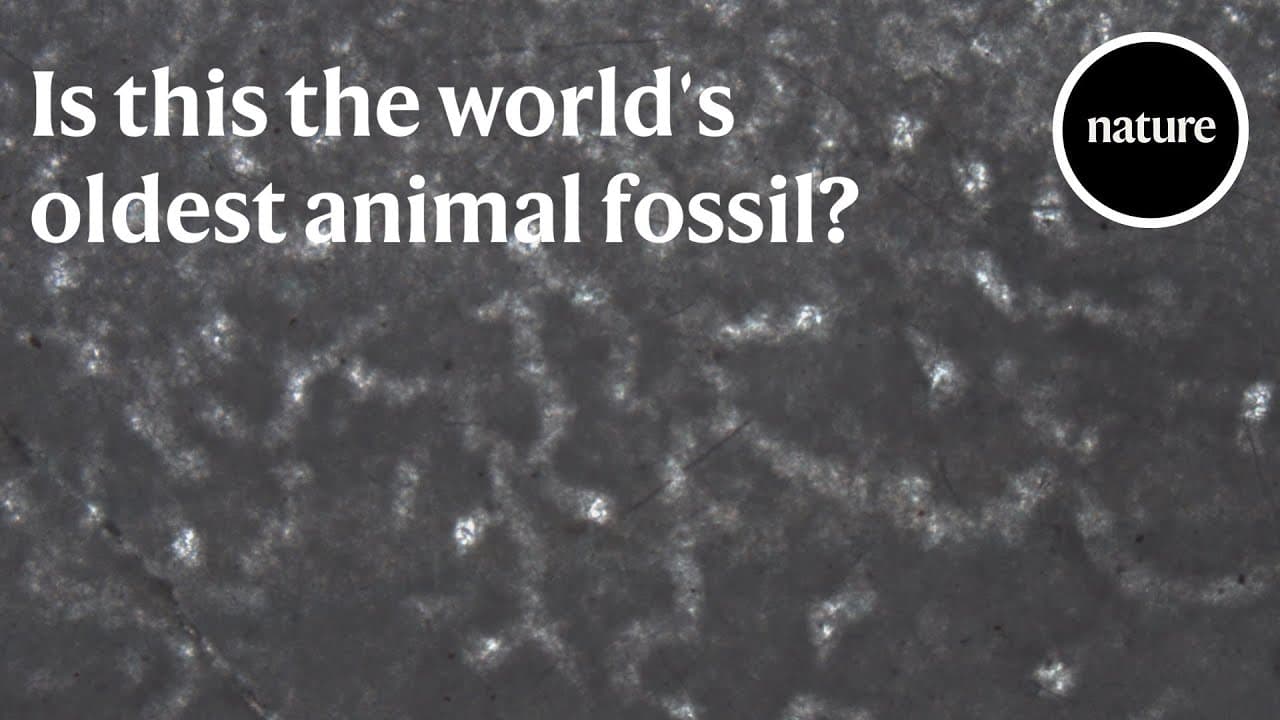
Ancient wiggly lines on rocks may indicate the earliest animal fossils, dating back 819 million years.
Transcript
these wiggly lines could be the oldest fossil animal ever discovered while they may look like random markings on a rock if these are the remains of an ancient animal it would push the first physical evidence of animals on this planet back by 300 million years animals are multicellular eukaryotes complicated life forms that consume organic material ... Read More
Key Insights
- 🧑🤝🧑 The newly discovered wiggly lines may represent the oldest potential animal fossils, dating back 819 million years, shifting current timelines of evolution.
- 😀 Early animals were likely simple multicellular organisms that faced significant adversity due to extreme environmental conditions prevalent on Earth during their existence.
- 👋 Sponges are currently viewed as good candidates for early animal ancestors due to their simple, tube-like structures, which illustrate the roots of multicellular life.
- 💖 The fossil's characteristics spark debate over its classification, as researchers must discern between biological and bacterial formations that mimicked early life.
- 😘 The existence of these fossils amidst bacterial structures suggests early animals may have thrived in specific, oxygen-rich niches despite a generally low-oxygen environment.
- 🤗 This discovery opens new avenues for understanding climatic events that early life forms survived, particularly during periods known as "snowball Earth."
- 🛟 The ongoing research serves to expand the framework of knowledge regarding the evolution of complex life forms and their resilience in ancient ecosystems.
Install to Summarize YouTube Videos and Get Transcripts
Explore YouTube Video Summarizer or Get YouTube Transcript Extractor
Questions & Answers
Q: What are the implications of these findings for understanding animal evolution?
If these structures are indeed confirmed as fossils of ancient animals, they would push back the timeline for the emergence of multicellular life by around 300 million years. This would transform our understanding of when and how complex organisms first appeared on Earth and how they had to adapt to extreme environmental changes during their early existence.
Q: Why is it challenging to identify ancient fossils as animal remains?
Distinguishing between ancient animal fossils and non-biological structures is complicated, as many early life forms lacked hard parts commonly found in fossil records. Factors such as geological processes and similarities to bacterial formations also complicate this identification, necessitating advanced analysis and comparative studies with known organisms.
Q: What role did environmental conditions play in the survival of early animals?
The newly suggested fossils date back to a time when Earth's atmosphere had low oxygen levels, posing significant challenges for life. If these early organisms did exist, they likely relied on microenvironments rich in oxygen, possibly found near photosynthesizing bacteria, suggesting that early animals were uniquely adapted to fluctuating and harsh conditions.
Q: How do these fossils relate to modern animals like sponges?
The discovered patterns exhibit similarities to the complex branching structures of modern sponges, which are considered some of the simplest multicellular organisms. This correlation provides insights into the evolutionary lineage of animals, potentially linking our earliest ancestors to structures still present in contemporary ecosystems.
Summary & Key Takeaways
-
Researchers discovered unusual patterns in rocks in Canada's northwest territories, potentially marking the oldest known animal fossils, dating back 819 million years. This discovery challenges previous timelines of animal evolution.
-
If confirmed as ancient animal remains, these fossils could shift the understanding of early multicellular life and the conditions under which they thrived, possibly surviving significant environmental challenges.
-
The debate continues regarding the nature of these fossils, with some suggesting they resemble bacterial structures. This requires careful analysis to determine their true origin and implications for evolutionary history.
Read in Other Languages (beta)
Share This Summary 📚
Summarize YouTube Videos and Get Video Transcripts with 1-Click
Try YouTube Summary with ChatGPT & Claude or YouTube Transcript Generator
Explore More Summaries from nature video 📚


Summarize YouTube Videos and Get Video Transcripts with 1-Click
Try YouTube Summary with ChatGPT & Claude or YouTube Transcript Generator