Transposition Techniques | Cryptography and Network Security
TL;DR
This lecture introduces transposition techniques, specifically focusing on the rail fence transposition technique.
Transcript
hello welcome to another lecture of substitution techniques but this time we are going to learn a different type of a technique that is known as a transposition technique there the alphabets are being transposed the position of the alphabets are being changed and this position is changed with two different formats and those two different for my sak... Read More
Key Insights
- 🧘 The transposition technique converts plaintext into ciphertext by rearranging the positions of characters.
- 🤩 Key transposition techniques require a key, such as the columnar transposition technique.
- 🤩 Keyless transposition techniques, like the rail fence technique, do not require a key.
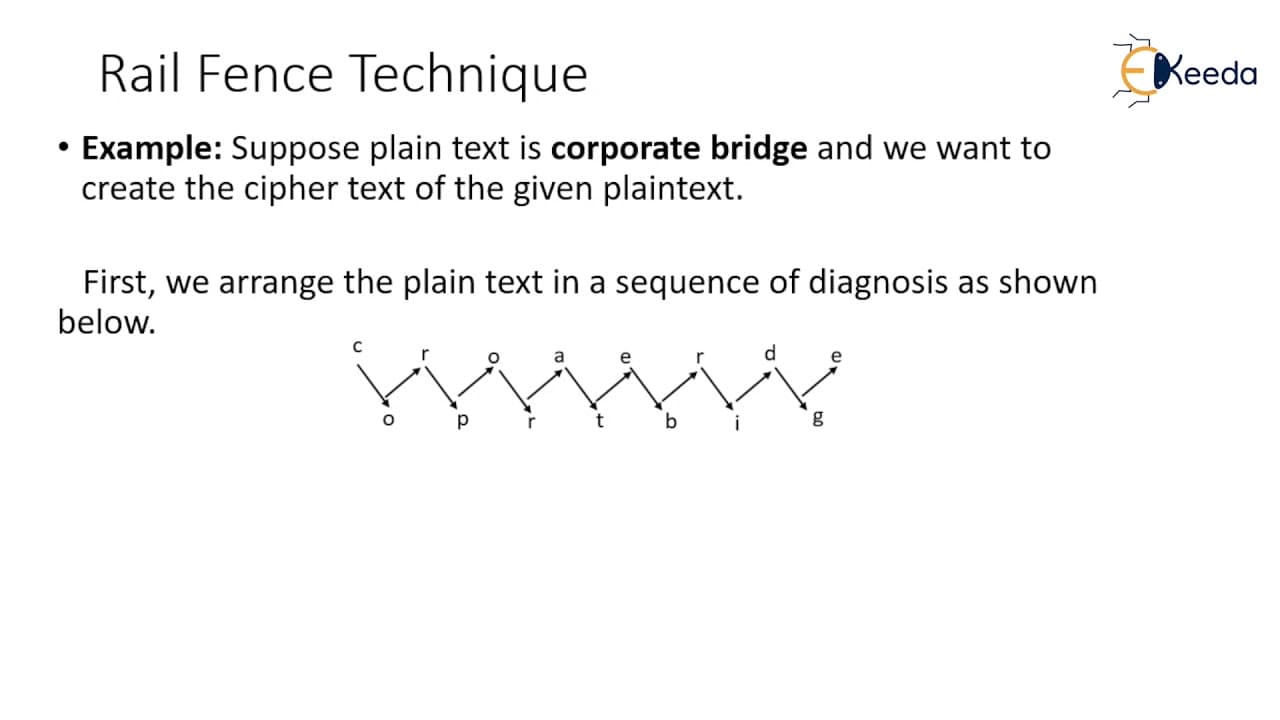
- 🤨 The rail fence technique involves arranging plaintext in diagonals and reading it row by row to generate the ciphertext.
- 🤨 The number of rows in the rail fence technique can vary, but it is typically set to two.
- 📔 Other transposition techniques mentioned in the lecture include the Varnum cipher and the book cipher.
- 💪 The rail fence technique may not provide strong encryption and can be relatively easy to break.
Install to Summarize YouTube Videos and Get Transcripts
Explore YouTube Video Summarizer or Get YouTube Transcript Extractor
Questions & Answers
Q: What is the purpose of the transposition technique in cryptography?
The transposition technique is used to convert plaintext into ciphertext by rearranging the positions of the characters in the text.
Q: What are the different types of transposition techniques mentioned in the lecture?
The lecture mentions the columnar transposition technique, rail fence transposition technique, Varnum cipher, and book cipher as examples of transposition techniques.
Q: How does the rail fence transposition technique work?
In the rail fence technique, the plaintext is arranged in diagonals and then read row by row to create the ciphertext. The number of rows can vary, but it is commonly set to two unless specified otherwise.
Q: Is the rail fence transposition technique secure?
The rail fence technique is relatively easy to break compared to other transposition techniques. It simply involves rearranging the alphabets and writing them row-wise, so it may not provide strong encryption.
Summary & Key Takeaways
-
The transposition technique is a cryptographic technique that converts plaintext into ciphertext by changing the position of each character.
-
Key transposition techniques include the columnar transposition technique, while keyless transposition techniques include the rail fence technique.
-
The rail fence transposition technique involves arranging plaintext in diagonals and then reading it row by row to generate the corresponding ciphertext.
Read in Other Languages (beta)
Share This Summary 📚
Summarize YouTube Videos and Get Video Transcripts with 1-Click
Try YouTube Summary with ChatGPT & Claude or YouTube Transcript Generator
Explore More Summaries from Ekeeda 📚


Summarize YouTube Videos and Get Video Transcripts with 1-Click
Try YouTube Summary with ChatGPT & Claude or YouTube Transcript Generator