Centralized And Client Server Architecture - System Architecture - Database Management System
TL;DR
This video discusses the differences between centralized and client-server system architecture, highlighting the advantages and disadvantages of each.
Transcript
click the bell icon to get latest videos from akira hello friends today we will talk about and centralized architecture and the client-server architecture we will discuss what is the difference between these two and what is the trend that we move from centralized to the client system server architecture the architecture means the basic design of co... Read More
Key Insights
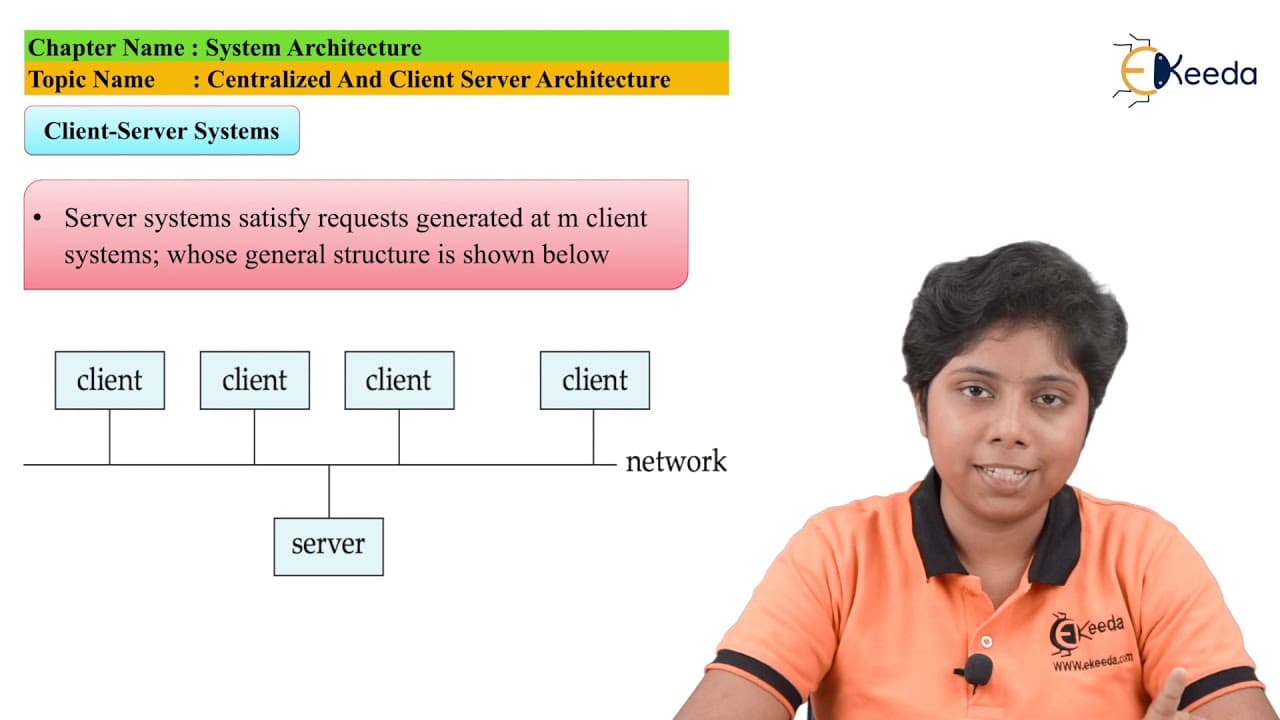
- 🛟 Centralized systems consist of a single computer or processor, while client-server systems involve multiple computers connected to a centralized server.
- 👤 Centralized systems are simpler and more efficient for single users, while client-server systems allow for better concurrency control and support for multiple users.
- 🍵 Client-server systems enable better scalability and can handle larger databases.
- 😑 Centralized systems have lesser complexity in terms of concurrency control and security.
- 💯 The processor in a centralized system is the core or backbone of the computer and is connected to various device controllers.
- 🛟 In a client-server system, the database is stored on the server, and clients can make queries or request data modifications directly.
- 🛟 Concurrency control and locking granularity are important considerations in client-server systems.
Install to Summarize YouTube Videos and Get Transcripts
Explore YouTube Video Summarizer or Get YouTube Transcript Extractor
Questions & Answers
Q: What is the main difference between centralized and client-server system architecture?
The main difference lies in the number of computers involved. Centralized systems have a single computer serving as both the client and server, while client-server systems have multiple computers connected to a centralized server.
Q: What are the advantages of a centralized system?
Centralized systems are simpler, more efficient for single users, and require less complexity in terms of concurrency control and security.
Q: What are the advantages of a client-server system?
Client-server systems allow for division of tasks, better concurrency control, and support for multiple users. They also enable better scalability and can handle larger databases.
Q: How does a client-server system handle database access?
In a client-server system, the database is stored in the server, and clients can make queries or request data modifications directly to the server. The server handles the processing and serves the requested data to the clients.
Summary & Key Takeaways
-
The video explores the difference between centralized and client-server system architecture.
-
Centralized systems consist of a single computer or processor, which serves as its own client and server, while client-server systems involve multiple computers connected to a centralized server.
-
Centralized systems are simpler and more efficient for single users, while client-server systems allow for division of tasks and better handling of multiple users.
Read in Other Languages (beta)
Share This Summary 📚
Summarize YouTube Videos and Get Video Transcripts with 1-Click
Try YouTube Summary with ChatGPT & Claude or YouTube Transcript Generator
Explore More Summaries from Ekeeda 📚






Summarize YouTube Videos and Get Video Transcripts with 1-Click
Try YouTube Summary with ChatGPT & Claude or YouTube Transcript Generator