How Does Shorting a Stock Work? And How is it Different than Buying Stock?
TL;DR
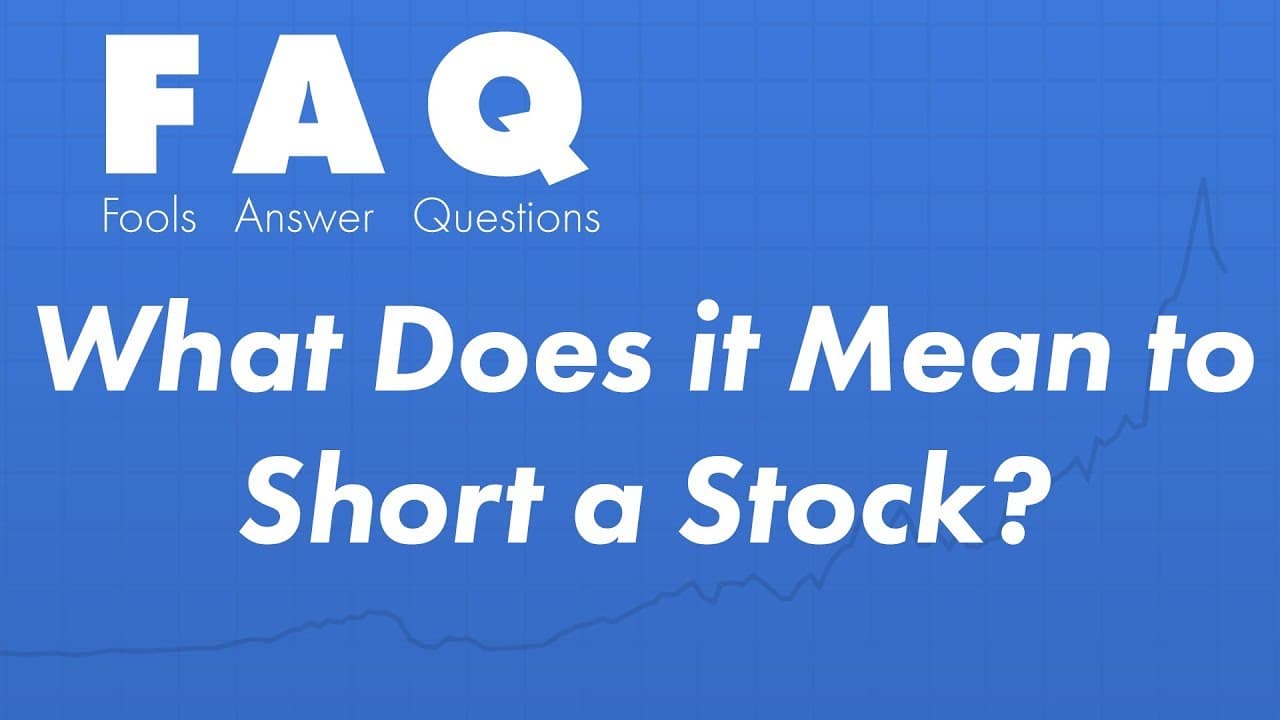
When shorting stocks, you borrow and sell shares at the current market price, hoping the value will go down in the future. Shorting is riskier than buying stocks, as the upside and downside are flipped.
Transcript
Dylan Lewis: Hi, I'm fool.com editor Dylan Lewis, and on this episode of FAQ, we're going to go through the long and short of shorting stocks. When you buy a stock, you're hoping that the value will go up over time. When you're shorting a stock, you're expecting the opposite, that the value of the company will go down in the future. Buying a stock ... Read More
Key Insights
- 🍰 Shorting stocks means borrowing and selling shares, expecting their value to decrease.
- 🌸 Shorting is riskier than buying stocks because losses can exceed the initial investment.
- 🤱 Shorting involves paying daily stock loan fees and being at risk during unexpected events.
- 🤪 Shorting goes against market growth trends and requires addressing dividend payouts.
- 👻 It allows people to identify fraud and acts as a check on irrational exuberance.
- 🍰 Average investors should generally avoid shorting due to its complexity and risk.
- 🔨 Shorting can be a valuable market tool but should be approached with caution.
Install to Summarize YouTube Videos and Get Transcripts
Explore YouTube Video Summarizer or Get YouTube Transcript Extractor
Questions & Answers
Q: How does shorting a stock differ from buying a stock?
Shorting involves borrowing and selling shares, while buying involves purchasing shares with your own money. Shorting depends on the stock's value declining, while buying is based on value appreciation.
Q: Is shorting stocks more complicated than buying them?
Yes, shorting stocks is more complex. It requires borrowing shares, selling them, monitoring the position, and eventually buying back shares to close the position. Losses can also exceed the initially invested amount.
Q: Why is shorting riskier than buying stocks?
Shorting stocks presents greater risks because losses can exceed the initial investment. The upside potential is limited, while there is no theoretical limit to how much the stock's price can rise.
Q: What are the downsides of shorting stocks?
Downsides include paying daily stock loan fees, potential losses due to unexpected events or short squeezes, betting against market growth trends, and being liable for dividends paid out while on loan.
Summary & Key Takeaways
-
Shorting a stock involves borrowing and selling shares, with the expectation that the value will decrease.
-
To close a short position, you must buy shares and return them to the lender.
-
Shorting stocks is riskier than buying them due to the unlimited potential for losses and the need to pay daily stock loan fees.
Read in Other Languages (beta)
Share This Summary 📚
Summarize YouTube Videos and Get Video Transcripts with 1-Click
Try YouTube Summary with ChatGPT & Claude or YouTube Transcript Generator
Explore More Summaries from The Motley Fool 📚

Summarize YouTube Videos and Get Video Transcripts with 1-Click
Try YouTube Summary with ChatGPT & Claude or YouTube Transcript Generator