What Are the Modes of Operation in Gunn Diodes?
TL;DR
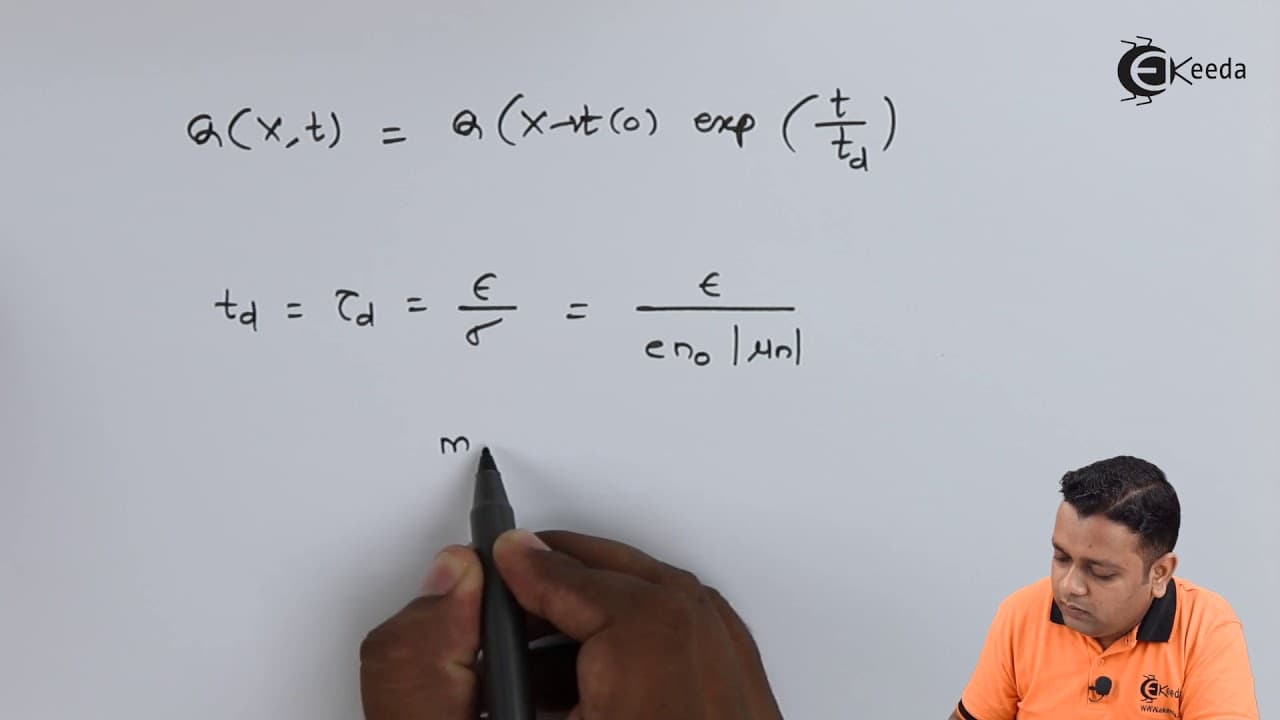
Gunn diodes operate in four primary modes: transit time, delayed, quench, and limited space accumulation. The transit time mode occurs when the velocity of electrons equals the product of frequency and length, while the delayed mode has a longer signal duration. Quench mode involves the collapse of the charge domain before reaching the anode, and the limited space accumulation mode maintains charge under negative conductance conditions.
Transcript
click the bell icon to get latest videos from akira hello friends i welcome you all to this video we are with for chapter of micro-engineering the transport electron devices in these devices those have the semiconductor platform there are two values we can say or they're two different energy levels and when the semiconductor compound is supplied wi... Read More
Key Insights
- ⚡ Gunn diodes exhibit different modes of operation depending on the biasing and voltage applied to them.
- ⌛ The transit time mode is characterized by the velocity of the electrons being equal to the product of frequency and length.
- ⌛ The delayed mode occurs when the duration of the signal is longer than the transit time.
- 📳 The quench mode refers to the collapse of the charge domain before reaching the anode.
Install to Summarize YouTube Videos and Get Transcripts
Explore YouTube Video Summarizer or Get YouTube Transcript Extractor
Questions & Answers
Q: What is the gun effect in Gunn diodes?
The gun effect refers to the transfer of electrons between two energy levels in the semiconductor compound of a Gunn diode when it is supplied with a certain voltage that exceeds a threshold value.
Q: What are the four modes of operation in Gunn diodes?
The four modes of operation are transit time mode, delayed mode, quench mode, and limited space accumulation mode. Each mode is characterized by specific criteria and the behavior of the diode under certain conditions.
Q: How is the gun effect related to the modes of operation in Gunn diodes?
The gun effect is the fundamental mechanism that enables the different modes of operation in Gunn diodes. It occurs when the diode is biased with the appropriate voltage and leads to the formation and movement of charge carriers in the diode.
Q: How are the modes of operation in Gunn diodes classified?
The modes of operation in Gunn diodes are classified based on the criteria of the space charge buildup within the diode. This criterion involves the time rate of growth of the space charge layers and the product of doping concentration, length, and other parameters.
Summary & Key Takeaways
-
The video introduces Gunn diodes, explaining that they have two energy levels in the semiconductor compound and that the gun effect occurs when electrons transfer between these levels.
-
The video covers four modes of operation in Gunn diodes: transit time, delayed, quench, and limited space accumulation modes.
-
The modes are summarized and explained using diagrams that illustrate the relationships between frequency, length, and velocity.
Read in Other Languages (beta)
Share This Summary 📚
Summarize YouTube Videos and Get Video Transcripts with 1-Click
Try YouTube Summary with ChatGPT & Claude or YouTube Transcript Generator
Explore More Summaries from Ekeeda 📚


Summarize YouTube Videos and Get Video Transcripts with 1-Click
Try YouTube Summary with ChatGPT & Claude or YouTube Transcript Generator