Why US gun laws get looser after mass shootings
TL;DR
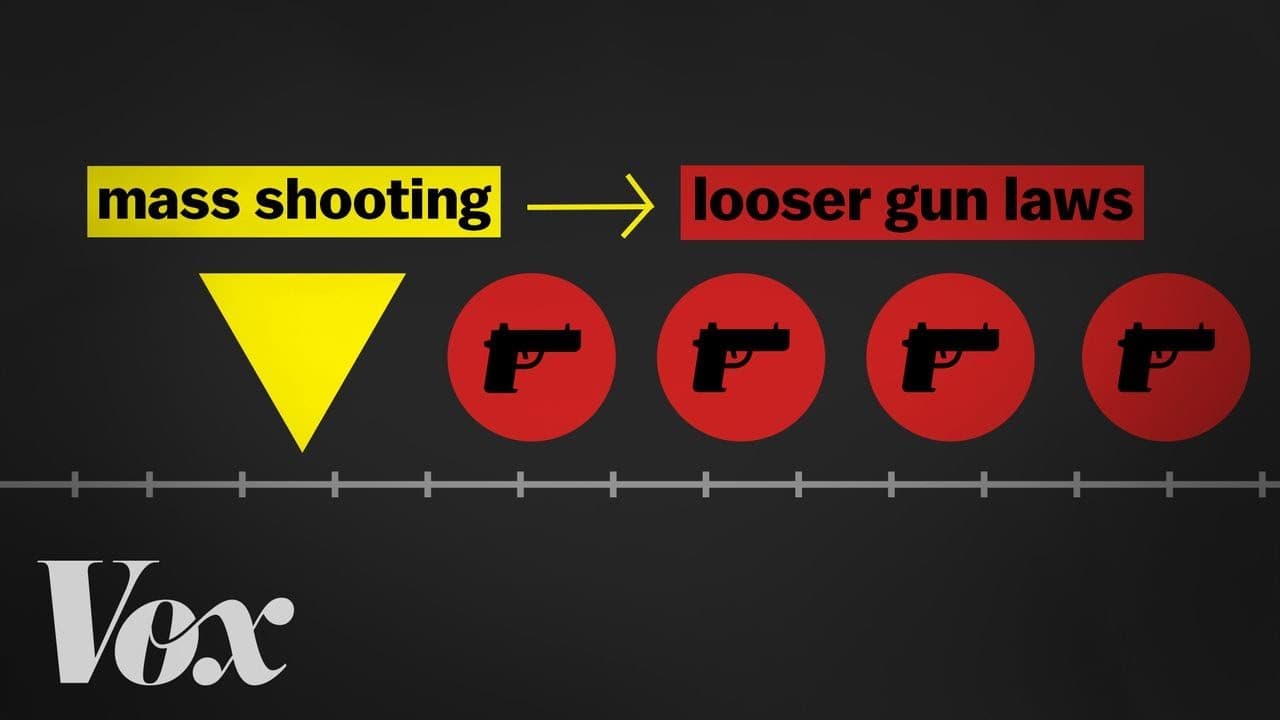
State gun laws often change after mass shootings, unlike federal laws.
Transcript
It was the last Friday of the school year and I had been actually subbing for a teacher for three days. It just seemed like a nice day. On May 18th, 2018, a gunman entered a high school in Santa Fe, Texas and opened fire. I look down and I realize in my pants I had bloody holes in my pants and I realized I'm shot. The gunman killed ten people. Fl... Read More
Key Insights
- Mass shootings in the US often lead to legislative action at the state level, with varying responses based on political control.
- Democratic-controlled states tend to pass tighter gun laws, while Republican-controlled states often loosen gun restrictions after mass shootings.
- The 2020 study found that mass shootings double the number of laws loosening gun restrictions in Republican-led states the following year.
- Texas has a history of expanding gun access following mass shootings, despite public opinion often favoring stricter laws.
- State laws have a significant impact on gun culture in the US, as federal gun laws have remained largely unchanged since the 1990s.
- The concept of 'constitutional carry' has been adopted by 24 states, allowing open carry of handguns without a license or training.
- Local governments in some states have adopted 'second amendment sanctuary' laws, refusing to recognize certain state or federal gun regulations.
- The federal government incentivizes states to pass red flag laws, but the decision ultimately lies with state legislatures.
Install to Summarize YouTube Videos and Get Transcripts
Explore YouTube Video Summarizer or Get YouTube Transcript Extractor
Questions & Answers
Q: How do state legislatures respond to mass shootings?
State legislatures often respond to mass shootings by passing new gun laws. Democratic-controlled states typically enact tighter restrictions, while Republican-controlled states are more likely to loosen gun laws. This legislative activity contrasts with the stagnant federal response to gun violence.
Q: What did the 2020 study reveal about gun legislation?
The 2020 study revealed that mass shootings significantly influence gun legislation at the state level, particularly in Republican-controlled legislatures. These states tend to double the number of laws loosening gun restrictions following a mass shooting, while Democratic states show no significant change in legislative activity.
Q: How has Texas responded to mass shootings?
Texas has historically responded to mass shootings by expanding gun access, despite public opinion often favoring stricter laws. Examples include allowing school employees to carry guns and legalizing weapons in places of worship. Efforts for tighter laws, such as red flag laws, often face resistance from gun rights advocates.
Q: What is 'constitutional carry' and how widespread is it?
'Constitutional carry' refers to laws allowing individuals to openly carry handguns without a license or training. As of now, 24 states have adopted such laws, reflecting a trend towards expanded gun rights in Republican-controlled states. This policy exemplifies the broader movement to loosen gun restrictions at the state level.
Q: What are 'second amendment sanctuary' laws?
'Second amendment sanctuary' laws are adopted by local governments to refuse recognition of state or federal gun regulations deemed to violate the Second Amendment. Over 400 local governments across 20 states have enacted variations of these laws, contributing to the diverse landscape of gun regulations in the US.
Q: How do federal incentives for red flag laws work?
Federal incentives for red flag laws aim to encourage states to adopt measures allowing authorities to temporarily confiscate firearms from individuals deemed dangerous. While the federal government can provide incentives, the decision to implement such laws ultimately rests with individual state legislatures.
Q: What role does public opinion play in Texas gun laws?
Public opinion in Texas often supports stricter gun laws, with polling showing a majority favoring tighter regulations. However, the strong gun culture and influence of the gun lobby frequently overshadow public sentiment, leading to legislative outcomes that expand gun access instead.
Q: How does political control affect gun legislation?
Political control significantly impacts gun legislation, with states where one party controls both the legislature and governor's office able to pass laws with minimal opposition. This dynamic allows for rapid adoption of gun policies aligned with the dominant party's stance, contributing to the patchwork of state gun laws.
Summary & Key Takeaways
-
Despite the lack of federal action on gun reform, state legislatures frequently change gun laws following mass shootings, with Democratic states tightening and Republican states loosening restrictions. A 2020 study highlights the impact of political control on legislative responses to mass shootings.
-
Texas exemplifies the trend of expanding gun access post-mass shootings, driven by strong gun culture and lobbying influence. Efforts by survivors like Flo and Scot Rice to push for tighter laws often face resistance despite public support for stricter regulations.
-
The patchwork of state gun laws across the US reflects the influence of political control, with many states adopting similar policies like 'constitutional carry' and 'second amendment sanctuary' laws. Federal incentives for red flag laws exist, but state action remains crucial.
Read in Other Languages (beta)
Share This Summary 📚
Summarize YouTube Videos and Get Video Transcripts with 1-Click
Try YouTube Summary with ChatGPT & Claude or YouTube Transcript Generator
Explore More Summaries from Vox 📚


Summarize YouTube Videos and Get Video Transcripts with 1-Click
Try YouTube Summary with ChatGPT & Claude or YouTube Transcript Generator