Properties of Probability Density Function
TL;DR
The video discusses the properties of probability density function (PDF) and its relation to probability.
Transcript
click the Bell icon to get latest videos from equator hello friends in this video we are going to discuss the properties of probability density function in the previous video we define the definition of probability density function that probability density function is not probability at all but it is a function in which it is probability per unit l... Read More
Key Insights
- 🇦🇪 The PDF represents probability per unit length and is always positive.
- ♾️ Integrating the PDF from minus infinity to plus infinity yields a total probability of one.
- 0️⃣ The probability at a specific point is always zero due to the zero length range.
- 🇦🇪 The PDF can be greater than one, as it represents probability per unit length, not actual probability.
- ❓ PDF is only defined for continuous random variables and not applicable to discrete random variables.
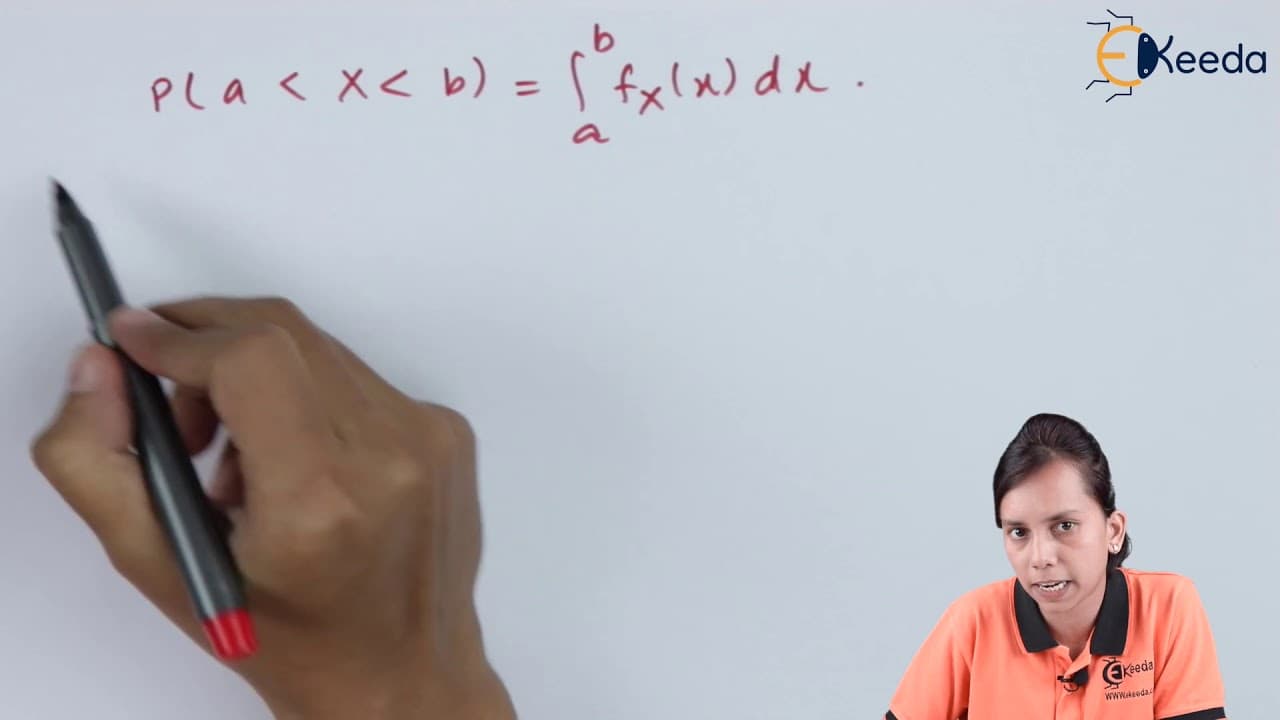
- 🧡 The PDF helps calculate the probability of a continuous random variable within a given range using integration.
- 😥 Probability at a particular point is zero because there is no change in length within the range.
Install to Summarize YouTube Videos and Get Transcripts
Explore YouTube Video Summarizer or Get YouTube Transcript Extractor
Questions & Answers
Q: What is the definition of probability density function (PDF)?
PDF is a function representing probability per unit length, not the actual probability value.
Q: Can the PDF be greater than one?
Yes, the PDF can be greater than one as it represents probability per unit length and is not bound by a maximum value.
Q: Why is the integral of the PDF from minus infinity to plus infinity equal to one?
The integral represents the total probability of all cases, and as the PDF is a representation of probability per unit length, integrating from minus infinity to plus infinity covers all possible cases.
Q: What is the probability at a particular point according to the PDF?
The probability at a particular point is always equal to zero because the length of the range is zero, resulting in no change and no probability.
Summary & Key Takeaways
-
The probability density function (PDF) is not actual probability but a function representing probability per unit length.
-
The PDF is always greater than or equal to zero since probability is a positive function.
-
The integral of the PDF from minus infinity to plus infinity is always equal to one, representing the probability of all cases.
Read in Other Languages (beta)
Share This Summary 📚
Summarize YouTube Videos and Get Video Transcripts with 1-Click
Try YouTube Summary with ChatGPT & Claude or YouTube Transcript Generator
Explore More Summaries from Ekeeda 📚






Summarize YouTube Videos and Get Video Transcripts with 1-Click
Try YouTube Summary with ChatGPT & Claude or YouTube Transcript Generator