How to Optimize Sports Vision Training Tools
TL;DR
The key to effective sports vision training is understanding the distinction between sports vision and perceptual cognitive training. Sports vision training focuses on basic visual functions, while perceptual cognitive training targets the use of sport-specific information. The new framework by Hadlow et al. helps categorize and assess training programs based on perceptual function, stimuli, and response mode.
Transcript
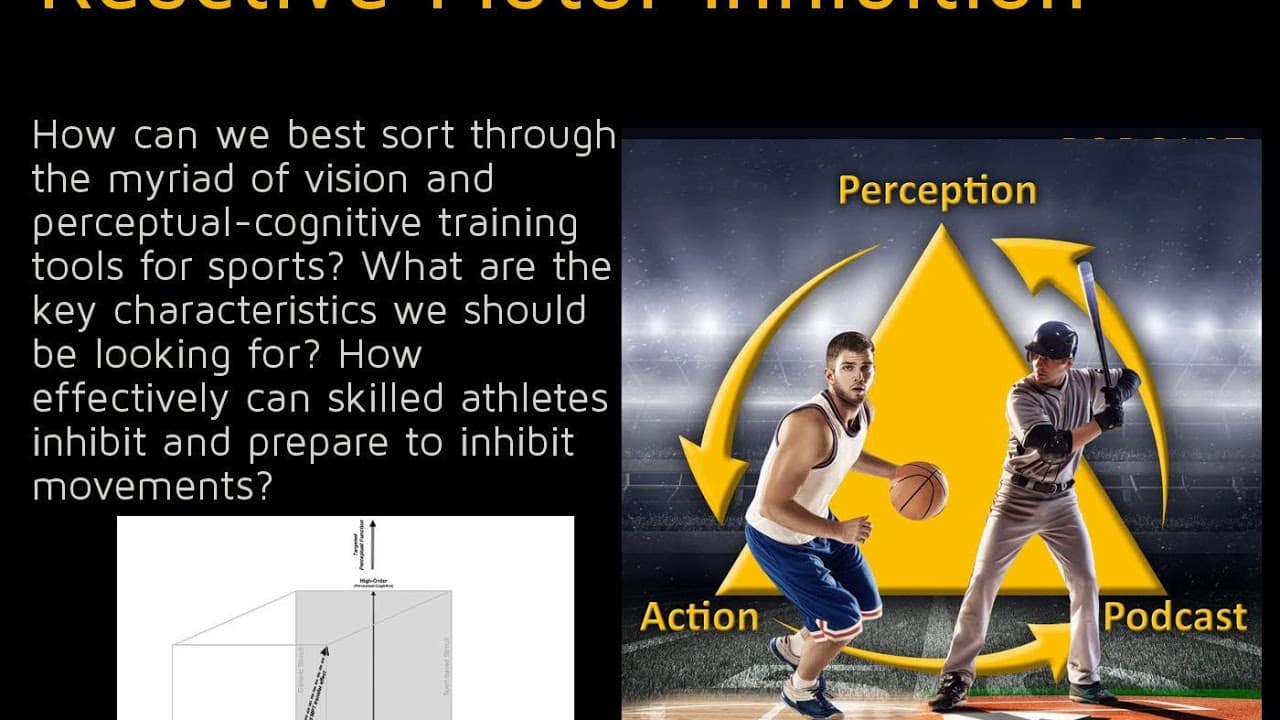
today on the perception and action news how can we best sort through the myriad of vision and perceptual cognitive training tools for sports what are the key characteristics we should be looking for how effectively can skilled athletes inhibit and prepare to inhibit movements so it's time for a call to action hi everyone this is Rob gray from Arizo... Read More
Key Insights
- Sports vision training aims to improve basic visual functions like acuity and contrast sensitivity.
- Perceptual cognitive training focuses on using sport-specific information for decision-making.
- Hadlow et al. propose a framework categorizing training by perceptual function, stimuli, and response.
- Effective training should show skill level discrimination, improvement through training, and transfer to performance.
- Sports vision training has inconsistent evidence for transferring to performance, while perceptual cognitive training shows better results.
- Training effectiveness increases with higher sport-specificity in perceptual cognitive skills.
- Stimulus correspondence involves visual and behavioral similarity to competition conditions.
- Response similarity in training and real competition enhances training effectiveness.
Install to Summarize YouTube Videos and Get Transcripts
Explore YouTube Video Summarizer or Get YouTube Transcript Extractor
Questions & Answers
Q: What is the difference between sports vision training and perceptual cognitive training?
Sports vision training focuses on enhancing basic visual functions such as acuity and contrast sensitivity, often using non-sport-specific stimuli. In contrast, perceptual cognitive training aims to improve the use of sport-specific information for decision-making and anticipation, emphasizing the context in which vision is used. This training targets higher-order perceptual cognitive skills relevant to sports.
Q: How does the new framework categorize sports training programs?
The framework proposed by Hadlow et al. categorizes sports training programs using a three-dimensional space. It considers the target perceptual function, the stimuli used, and the response mode. This categorization helps in assessing the effectiveness of training programs by examining how closely they align with real-world sports situations and the specific skills they aim to improve.
Q: What are the key criteria for evaluating sports training programs?
The key criteria for evaluating sports training programs include whether the target skill discriminates between different skill levels, if the skill can be improved through training, and whether improvements transfer to on-field performance. These criteria ensure that the training is effective and relevant to actual sports performance, enhancing the athlete's competitive abilities.
Q: Why is stimulus correspondence important in sports training?
Stimulus correspondence is crucial because it measures the similarity between training stimuli and those encountered during competition. It includes visual and behavioral aspects, ensuring that training conditions closely mimic real sports situations. High stimulus correspondence improves the effectiveness of training by providing realistic scenarios that athletes are likely to face in competition.
Q: How do skilled athletes perform in proactive and reactive inhibition?
Skilled athletes generally exhibit superior reactive inhibition, stopping their actions faster than non-athletes when needed. Proactive inhibition involves preparing to stop based on the likelihood of needing to inhibit an action. Skilled athletes can modulate their responses more strategically and quickly, adjusting to the demands of the task, although differences may diminish with practice.
Q: What is the role of response mode in training effectiveness?
The response mode in training refers to how similar the training responses are to real competitive actions. Training is more effective when the response required during training closely resembles the actual sports skill. This similarity enhances the transfer of training effects to real-world performance, ensuring that athletes can apply what they've learned in competition.
Q: What limitations exist in the current categorization of sports training?
Current categorization often fails to account for recent training technologies like VR and stroboscopic training, which don't fit neatly into existing categories. It also tends to focus on stimuli rather than other critical factors like the perceptual information involved. A more comprehensive approach would consider how training preserves the specific perceptual cues essential for sports performance.
Q: Why is the stop signal reaction time task recommended for athletes?
The stop signal reaction time task assesses an athlete's ability to inhibit actions, a skill linked to sports performance. It measures both reactive and proactive inhibition, providing insights into how quickly and effectively athletes can stop their actions. This task is valuable for evaluating inhibition abilities, which are crucial for making rapid decisions and adjustments in sports.
Summary & Key Takeaways
-
The new framework by Hadlow et al. categorizes sports training programs based on perceptual function, stimuli, and response mode. This helps in assessing and predicting the effectiveness of different training programs. Sports vision training focuses on improving basic visual functions, while perceptual cognitive training targets sport-specific information usage.
-
Sports vision training shows inconsistent results in transferring skills to on-field performance, whereas perceptual cognitive training demonstrates better outcomes. Effective training should discriminate between skill levels, improve through training, and enhance performance. The framework emphasizes the importance of stimulus and response correspondence to real competition conditions.
-
Proactive and reactive inhibition are crucial in sports, with skilled athletes showing better inhibition abilities. The study highlights the importance of sports-specific stimuli and responses in training. The stop signal reaction time task is recommended for evaluating inhibition ability, which correlates with sports skill levels.
Read in Other Languages (beta)
Share This Summary 📚
Summarize YouTube Videos and Get Video Transcripts with 1-Click
Try YouTube Summary with ChatGPT & Claude or YouTube Transcript Generator
Explore More Summaries from Rob Gray 📚
Summarize YouTube Videos and Get Video Transcripts with 1-Click
Try YouTube Summary with ChatGPT & Claude or YouTube Transcript Generator