What Are Economic Systems and Their Impact?
TL;DR
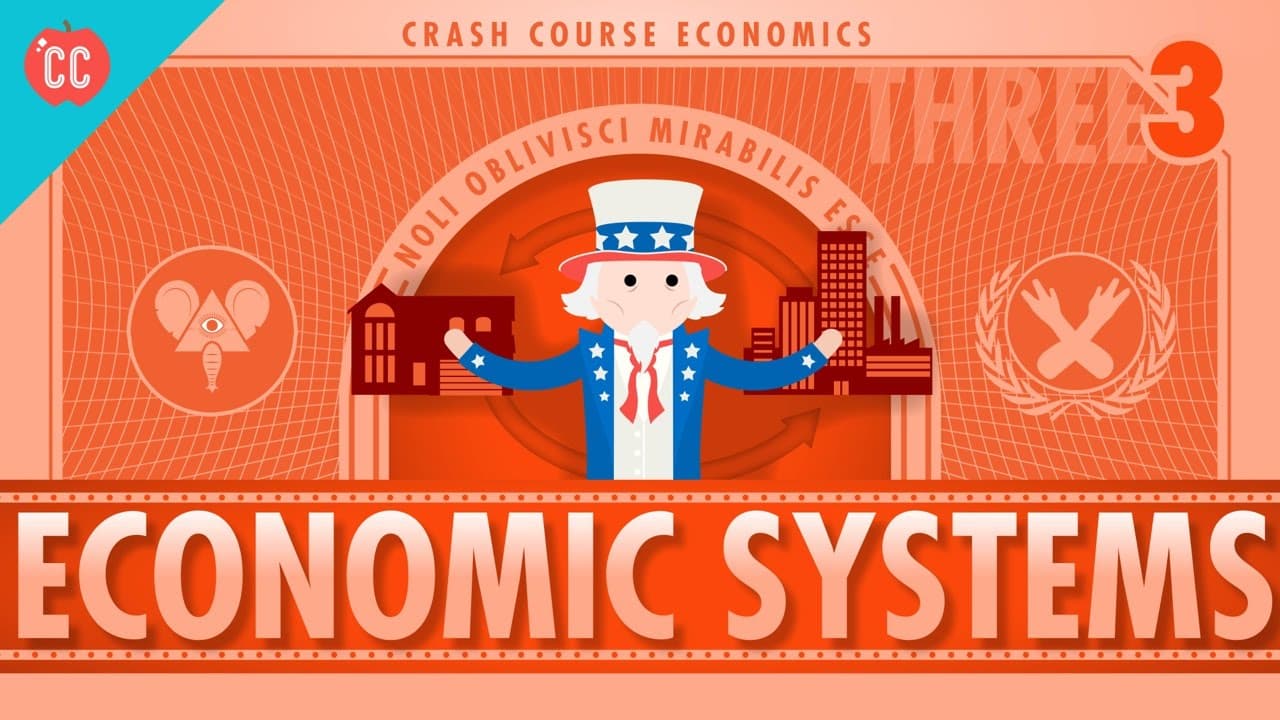
Economic systems determine how resources are allocated, focusing on what to produce, how to produce, and who receives the output. Market economies prioritize individual ownership and profit, while planned economies involve government control. Most modern economies are mixed, incorporating elements of both to balance efficiency and government intervention.
Transcript
Adriene: Hi I'm Adriene Hill. Mr. Clifford: And I'm Mr. Clifford and welcome to Crash Course Economics. Adriene: Today we're going to focus on macroeconomics and talk about economic systems and the nations that really like them. Wink, wink. Mr. Clifford: "Economic systems and the nations that really like them. Wink, wink." What does that even mean?... Read More
Key Insights
- Economic systems are frameworks for resource allocation, answering what, how, and for whom to produce.
- Market economies emphasize private ownership and profit through supply and demand dynamics.
- Planned economies involve government control over production and distribution decisions.
- Communism aims for classless society with shared ownership, but true communism has never been fully realized.
- Socialism combines private property with public ownership to achieve collective goals like healthcare.
- The invisible hand theory suggests self-interest in free markets leads to societal benefits.
- Mixed economies blend market and planned elements, adapting to changing needs and government roles.
- Economic debates focus on the balance of free market benefits versus necessary government intervention.
Install to Summarize YouTube Videos and Get Transcripts
Explore YouTube Video Summarizer or Get YouTube Transcript Extractor
Questions & Answers
Q: How do market economies allocate resources?
Market economies allocate resources based on supply and demand dynamics. Individuals own the factors of production, and businesses compete to meet consumer preferences. This competition drives efficiency and innovation, as producers strive to offer desirable products at competitive prices. The invisible hand theory suggests that self-interested actions by individuals and businesses inadvertently lead to societal benefits, as resources are directed to their most valued uses.
Q: What role does the government play in planned economies?
In planned economies, the government plays a central role in controlling and directing economic activity. It determines what goods and services are produced, how they are produced, and who receives them. This involves managing the factors of production, such as land, labor, and capital, often aiming to achieve specific societal goals like equitable distribution and access to essential services. Government agencies may also regulate prices and production levels to maintain economic stability.
Q: What is the invisible hand in economics?
The invisible hand is a metaphor introduced by economist Adam Smith to describe the self-regulating nature of a free market economy. It suggests that individuals seeking personal gain inadvertently contribute to the overall economic well-being of society. As businesses and consumers pursue their own interests, they create competition and innovation, leading to efficient resource allocation. This process results in the production of goods and services that meet consumer demands, benefiting society as a whole.
Q: How do mixed economies function?
Mixed economies combine elements of both market and planned systems to balance efficiency with government intervention. They feature private ownership and market-driven resource allocation, while also incorporating government regulations and public services. This approach allows for flexibility in addressing market failures, ensuring public welfare, and promoting economic stability. Mixed economies adapt to changing societal needs, with varying levels of government involvement depending on the country's specific goals and values.
Q: Why are most modern economies mixed?
Most modern economies are mixed because they aim to harness the benefits of both market and planned systems. Market mechanisms drive efficiency, innovation, and consumer choice, while government intervention addresses market failures, provides public goods, and ensures social welfare. This combination allows for a more balanced approach to economic management, accommodating the complexities of contemporary societies and adapting to changing economic conditions and priorities.
Q: What are the challenges of command economies?
Command economies face challenges such as inefficiency, lack of innovation, and slow response to consumer needs. Centralized decision-making can lead to resource misallocation and production shortages, as government planners may not accurately predict demand. Additionally, the absence of competition can stifle innovation and quality improvements. These economies may struggle to adapt to changing economic conditions, leading to economic stagnation and reduced living standards over time.
Q: How do economic systems impact individual choices?
Economic systems influence individual choices by dictating the availability and distribution of resources. In market economies, individuals have the freedom to make choices based on personal preferences and financial means, with competition driving innovation and variety. In planned economies, choices may be limited by government decisions on production and distribution. Mixed economies offer a balance, providing individual freedom while ensuring access to essential services and addressing economic inequalities through government intervention.
Q: What factors influence a country's choice of economic system?
A country's choice of economic system is influenced by historical, cultural, and political factors. Historical experiences with different systems, cultural values regarding individualism versus collectivism, and political ideologies all play a role. Economic goals, such as growth, equity, and stability, also shape the choice. Additionally, global influences and economic interdependence can impact decisions, as countries seek systems that best meet their needs in a rapidly changing world.
Summary & Key Takeaways
-
Economic systems guide resource allocation by determining what to produce, how to produce, and who receives the output. Market economies rely on private ownership and profit motives, while planned economies involve significant government control over production decisions. Most modern economies are mixed, combining elements of both systems to achieve a balance between efficiency and necessary government intervention.
-
Market economies function on the principle of supply and demand, where consumer preferences shape production. The concept of the invisible hand suggests that individuals pursuing their own interests inadvertently benefit society. In contrast, planned economies involve government agencies deciding production and distribution, often aiming to meet specific collective objectives such as healthcare and education.
-
Mixed economies incorporate both free market and planned elements, adapting to societal needs and government roles. The debate over economic systems centers on finding the optimal level of government involvement to ensure efficiency and address market failures. Ultimately, the choice of economic system reflects societal values and priorities regarding resource distribution and social welfare.
Read in Other Languages (beta)
Share This Summary 📚
Summarize YouTube Videos and Get Video Transcripts with 1-Click
Try YouTube Summary with ChatGPT & Claude or YouTube Transcript Generator
Explore More Summaries from CrashCourse 📚





Summarize YouTube Videos and Get Video Transcripts with 1-Click
Try YouTube Summary with ChatGPT & Claude or YouTube Transcript Generator