Making Mercury (Part 2)
TL;DR
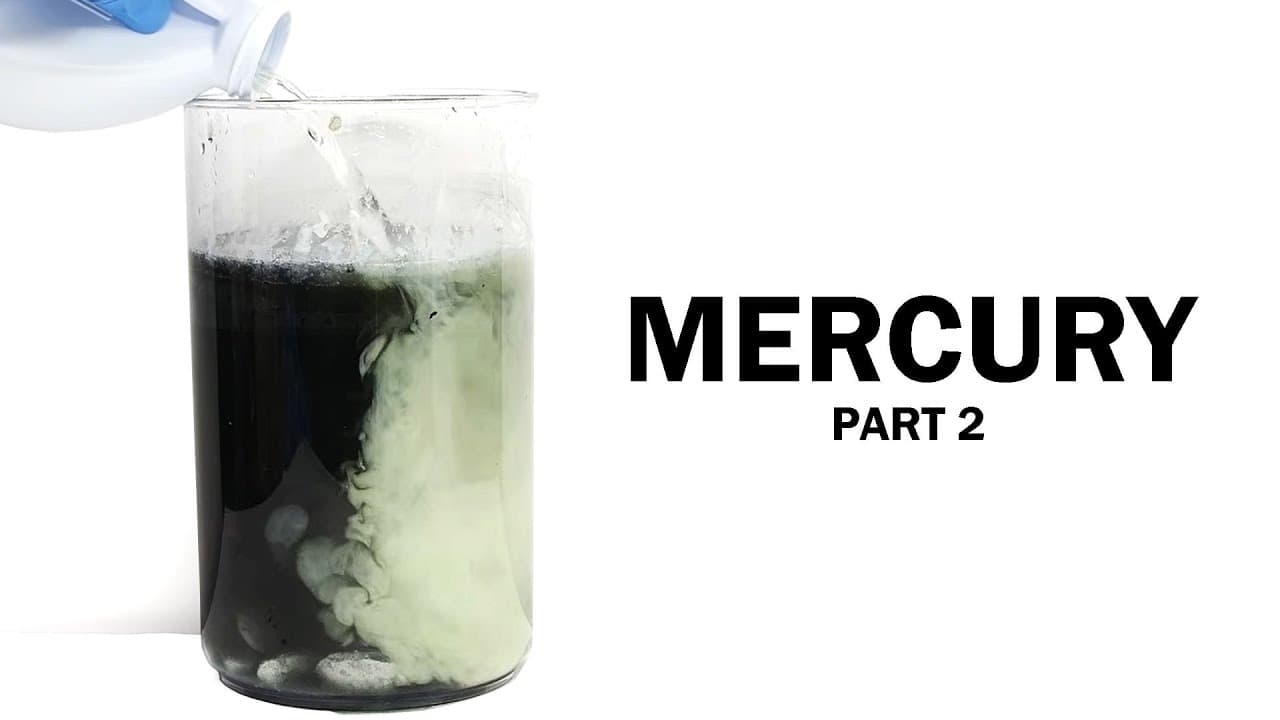
This video showcases the process of safely neutralizing and disposing of mercury-contaminated waste using chemicals such as sodium bicarbonate, hydrogen peroxide, sodium sulfide, and bleach.
Transcript
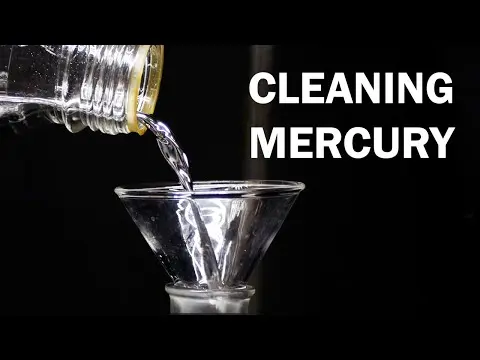
this video is a part to follow up to a previous one where I refined mercury metal from cinnabar during the project I made a lot of mercury contaminated waste and in this video you're going to see how I dealt with it if you haven't seen the previous one I highly recommend you watch it otherwise this video probably is not going to make too much sense... Read More
Key Insights
- 👁️🗨️ Sodium bicarbonate effectively neutralizes nitric acid by gradually adding it until the solution stops bubbling.
- 🥵 Hydrogen peroxide can be used to destroy potassium permanganate, but caution must be exercised due to the vigorous reaction and heat production.
- 💦 Mercury sulfide can be precipitated out by adding sodium sulfide to the solution, as mercury sulfide is insoluble in water.
- 😑 Mixing and swirling the solution aids in the precipitation of other metal ions as sulfides.
- 🎁 Bleach is effective in oxidizing and precipitating various compounds present in the waste solution.
- 🗑️ The waste management process often requires multiple steps and careful handling of chemicals.
- 🙂 Filtering the waste solution using a combination of filter papers and sea light helps remove solid residues.
Install to Summarize YouTube Videos and Get Transcripts
Explore YouTube Video Summarizer or Get YouTube Transcript Extractor
Questions & Answers
Q: How is nitric acid neutralized in the waste management process?
Nitric acid is neutralized by adding sodium bicarbonate gradually until it stops bubbling, indicating that the acid has been neutralized.
Q: Why is hydrogen peroxide added to neutralize potassium permanganate?
Hydrogen peroxide is added to neutralize potassium permanganate because it catalytically breaks down into manganese dioxide, which assists in the destruction of the permanganate.
Q: How is mercury sulfide precipitated from the solution?
Sodium sulfide is added to the solution, causing a reaction with mercury ions and resulting in the precipitation of mercury sulfide, which can be easily separated from the solution.
Q: What is the purpose of adding bleach to the waste solution?
Bleach is added to react with the sodium bisulfite, formed from the reaction between sodium sulfide and bleach, to produce sodium bisulfate, which is inert. It also helps destroy the remaining sulfide compounds in the solution.
Summary & Key Takeaways
-
The video demonstrates the neutralization of nitric acid using sodium bicarbonate and the destruction of potassium permanganate using hydrogen peroxide.
-
Sodium sulfide is added to the solution to precipitate mercury sulfide, which is then separated and filtered out.
-
The remaining solutions containing mercury and other compounds are treated with bleach to oxidize and precipitate various compounds.
Read in Other Languages (beta)
Share This Summary 📚
Summarize YouTube Videos and Get Video Transcripts with 1-Click
Try YouTube Summary with ChatGPT & Claude or YouTube Transcript Generator
Explore More Summaries from NileRed 📚

Summarize YouTube Videos and Get Video Transcripts with 1-Click
Try YouTube Summary with ChatGPT & Claude or YouTube Transcript Generator