How to Calculate Systolic, Diastolic, and Mean Blood Pressure
TL;DR
To calculate systolic, diastolic, and mean arterial pressure from a lab chart trace, you should identify the peaks and troughs in the data. Use the built-in functions in lab chart software for efficiency; systolic pressure is the maximum value, diastolic is the minimum, and mean arterial pressure is calculated with the formula 1/3 systolic + 2/3 diastolic.
Transcript
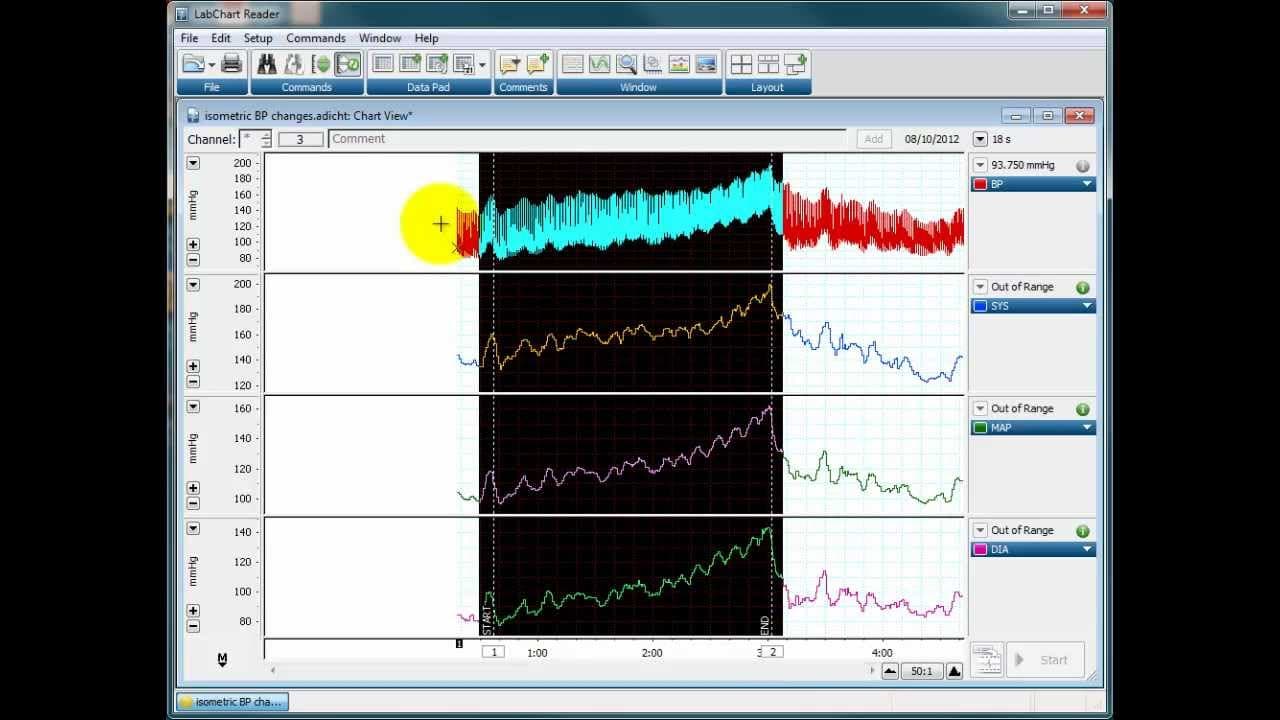
hello we've got a lab chart trace in front of us here which is um a finite press reading from a student's finger which was taken during isometric exercise and you can see here the start of the exercise there is an increase in blood pressure and at the end of the exercise the blood pressure decreases again but the question we're asking is what's the... Read More
Key Insights
- 🏃 Isometric exercise can cause changes in blood pressure, with an initial increase and subsequent decrease.
- 🥼 Lab chart reader can automate the calculation of systolic, diastolic, and mean arterial pressure from a lab chart trace.
- ❓ Mean arterial pressure is calculated using an equation that considers both systolic and diastolic pressures.
- 🙊 Lab chart reader provides functions for peak detection and adjustment of sensitivity to improve accuracy.
- ☑️ Eye-balling the data and manually checking pressures can help ensure the accuracy of automated measurements.
- 👻 Exporting or saving the data allows for further analysis and comparison.
- 🥼 Lab chart reader generates additional columns for mean blood pressure, mean systolic pressure, mean diastolic pressure, and mean arterial pressure.
Install to Summarize YouTube Videos and Get Transcripts
Explore YouTube Video Summarizer or Get YouTube Transcript Extractor
Questions & Answers
Q: How can the lab chart trace be used to calculate systolic, diastolic, and mean arterial pressure?
The trace can be analyzed by selecting peaks and troughs and using the time and pressure values to calculate these pressures. Lab chart reader also has functions to automate this process.
Q: What is mean arterial pressure and how is it different from the mean pressure over the entire trace?
Mean arterial pressure is a special equation that considers systolic and diastolic pressures to estimate the average pressure during a cardiac cycle. It is different from the simple mean pressure calculated from all data points.
Q: How does lab chart reader assist in calculating systolic, diastolic, and mean arterial pressure?
Lab chart reader has built-in functions for these calculations, allowing users to easily select the measurement type (maximum or minimum) and the source (blood pressure). It also provides options to adjust peak detection sensitivity.
Q: Are there any limitations to using automated measurements for blood pressure analysis with lab chart reader?
While lab chart reader works well for pulsatile flow and positive pressure measurements like finger pulse pressure, it may not work as effectively for other types of measurements such as respiratory gas measurements. It's important to refer to other tutorials and validate the results.
Summary & Key Takeaways
-
The lab chart trace shows an increase in blood pressure at the start of isometric exercise and a decrease at the end.
-
The trace can be used to derive systolic, diastolic, and mean arterial pressure by selecting peaks and troughs and making note of the time and pressure.
-
Lab chart reader has built-in functions to calculate these pressures, making the process easier and more accurate.
Read in Other Languages (beta)
Share This Summary 📚
Summarize YouTube Videos and Get Video Transcripts with 1-Click
Try YouTube Summary with ChatGPT & Claude or YouTube Transcript Generator
Explore More Summaries from Dory Video 📚





Summarize YouTube Videos and Get Video Transcripts with 1-Click
Try YouTube Summary with ChatGPT & Claude or YouTube Transcript Generator