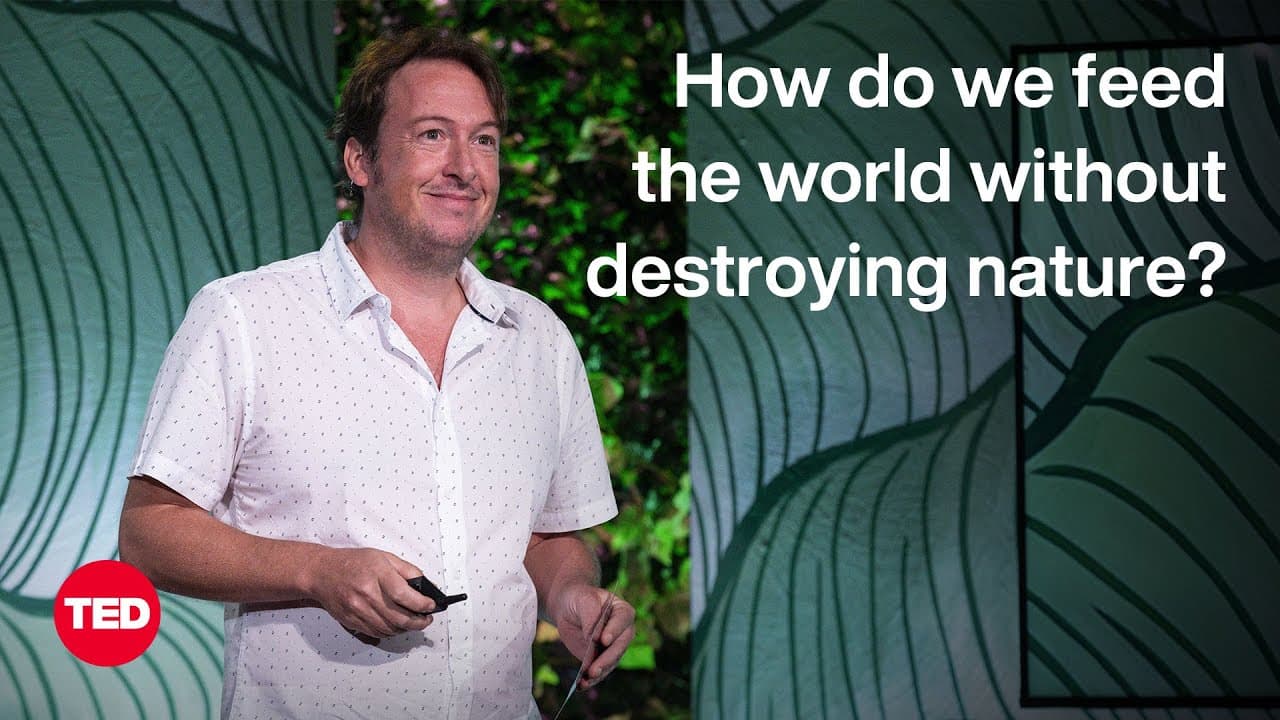
How to feed 10 billion people — without destroying nature | Andy Jarvis | TED
TL;DR
Future food solutions must balance sustainability and nutrition for a growing population.
Transcript
My son thinks I have the coolest job title in the world. I'm the director of the future of food. For him, that's some kind of idea -- he thinks this is a Willy Wonka-style role of creating chocolate fountains, unlimited gobstoppers. But it’s a little bit more down to Earth, really. It's about thinking about how do we produce food without destroying... Read More
Key Insights
- 😋 The global demand for protein is expected to increase by 50% by 2050, presenting significant challenges to sustainable food production.
- 😋 Alternative proteins like plant-based products, fermented proteins, and cultivated meat are crucial strategies for reducing the environmental footprint of food.
- 😋 Current animal agriculture contributes one-third of global emissions, emphasizing the need for transformative changes in food production.
- 😋 Governments can play a vital role in fostering sustainable food systems by redirecting financial support from traditional agriculture to innovative alternative protein sectors.
- ❓ Consumer choice is paramount; solutions must accommodate diverse dietary preferences rather than prescribe specific diets.
- 🤩 Innovation, particularly through technology like AI, is key to enhancing the taste and affordability of alternative protein products.
- 🍖 Countries like Singapore demonstrate successful models for regulating and supporting cultivated meat production, offering practical frameworks for other nations to follow.
Install to Summarize YouTube Videos and Get Transcripts
Explore YouTube Video Summarizer or Get YouTube Transcript Extractor
Questions & Answers
Q: What are the primary environmental issues associated with current animal agriculture?
Current animal agriculture is responsible for approximately half of global food emissions and occupies over two-thirds of agricultural land. This unsustainable practice contributes significantly to ecological degradation, which threatens our ability to produce food for an expected global population of 10 billion by 2050, necessitating urgent rethinking of food production methods.
Q: How can alternative proteins help address food sustainability?
Alternative proteins, including plant-based products, fermented proteins, and cultivated meat, offer methods to produce food with less environmental impact. These options require significantly less land and emit fewer greenhouse gases than traditional animal agriculture, making them vital for meeting future protein demands while preserving natural ecosystems.
Q: Why can't the speaker dictate what people should eat?
The speaker highlights the ineffectiveness of telling individuals what to eat based on personal experiences with his son and mother. Instead, he believes that the future of food should focus on providing diverse, sustainable options, allowing individuals to make their own informed choices without imposing dietary restrictions.
Q: What role does innovation play in the future of food according to the speaker?
Innovation is crucial for reducing the costs of alternative proteins and improving their taste and texture. By utilizing advances in technology, such as AI, to blend plant proteins and enhance flavors, we can create sustainable food options that appeal to a broader range of consumers, ultimately contributing to a more resilient food system.
Q: How does the speaker view the role of governments in achieving food sustainability?
The speaker believes that governments must step up and support the alternative protein industry. By reallocating funds currently directed toward traditional animal agriculture to sustainable alternatives, governments can help create a level playing field, incentivize innovation, and promote healthier food options that address pressing food security issues.
Q: Can you explain what cultivated meat is and its benefits?
Cultivated meat is produced by reproducing animal cells to create meat-like products without raising and slaughtering animals. Its benefits include lower environmental impact, reduced animal suffering, and the potential for scalable production that meets the increasing global demand for protein while minimizing damage to natural ecosystems.
Q: How can we engage with diverse dietary preferences in the future of food?
The future of food must consider diverse palates, cultures, and budgetary constraints. The speaker envisions a food system offering varied options, from traditional dishes to innovative proteins, catering to different dietary practices like halal or vegetarianism, fostering inclusion and accessibility for all communities.
Q: What is the speaker's vision for the future of food choices?
The speaker envisions a future where individuals have access to a wide range of sustainable, affordable, and healthy food options. This is not about pushing a single ideal but allowing people to choose from various sustainable alternatives that respect cultural and personal preferences, ultimately leading to a more mindful and diverse food landscape.
Summary & Key Takeaways
-
The speaker emphasizes the critical role of protein in food production and the environmental impact of current animal agriculture practices, which contribute significantly to emissions and land use.
-
Alternative proteins, including plant-based products, fermentation, and cultivated meat, are introduced as viable solutions to reduce ecological damage while meeting increasing protein demands.
-
Governments need to support alternative protein sectors, following successful models like Singapore, to foster innovation and create a more balanced food system accommodating diverse diets globally.
Read in Other Languages (beta)
Share This Summary 📚
Summarize YouTube Videos and Get Video Transcripts with 1-Click
Try YouTube Summary with ChatGPT & Claude or YouTube Transcript Generator
Explore More Summaries from TED 📚

Summarize YouTube Videos and Get Video Transcripts with 1-Click
Try YouTube Summary with ChatGPT & Claude or YouTube Transcript Generator