Stanford Seminar - Optimizing the Internet
TL;DR
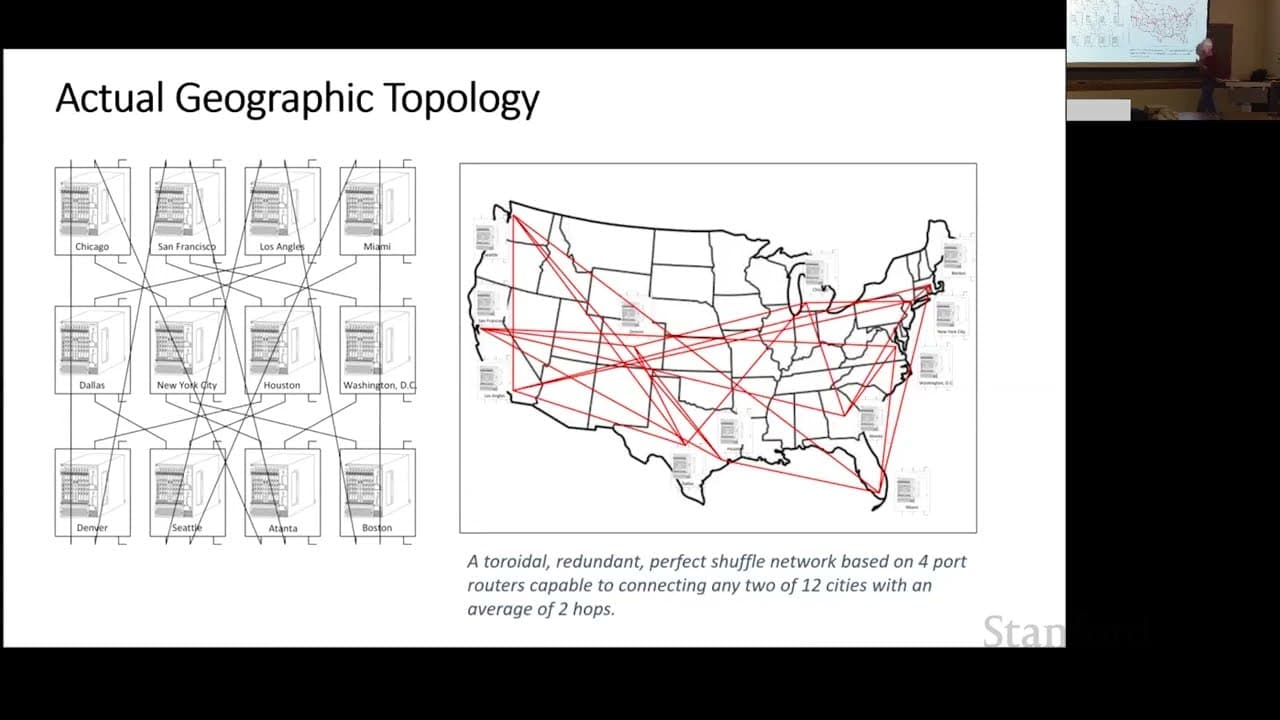
This comprehensive analysis explores the concept of optimizing the internet through network optimization techniques, including the implementation of mathematically optimal networks, the deployment of optical communications, and the impact on routing protocols such as border Gateway Protocol (BGP).
Transcript
so welcome to ee3 this is the first live presentation in quite a long time um and uh uh I think that maybe half of the remaining presentations are going to end up being live uh the um problems uh in getting things organized this this year were surprisingly art but I think things are back in in form any case um our speaker today is Alan Huang he's u... Read More
Key Insights
- 😘 Mathematically optimal networks offer the potential for reduced hops, lower latency, and improved fault tolerance.
- ☠️ Optical communications provide higher data rates, increased bandwidth, and cost-effective solutions for network optimization.
- 🍻 The deployment of an optimized network can be done incrementally, starting with selected segments or links.
- 🚰 Routing protocols like BGP can adapt to optimized network topologies and adjust routing tables for more efficient packet routing.
- 👤 The optimization of the internet presents opportunities for improved efficiency, reduced costs, and enhanced user experiences.
- ❓ The concept of optimizing the internet requires a combination of mathematical analysis, engineering techniques, and collaboration with network engineers and stakeholders.
- 😀 While network optimization may face challenges such as resistance to change and the complexity of implementation, it offers significant benefits in terms of performance and cost savings.
Install to Summarize YouTube Videos and Get Transcripts
Explore YouTube Video Summarizer or Get YouTube Transcript Extractor
Questions & Answers
Q: How can optimal networks be implemented?
Optimal networks can be implemented by selecting a suitable network topology, such as banyan, butterfly, or perfect shuffle, and assigning nodes to cities based on traffic patterns. The use of redundancy and fault tolerance also plays a crucial role in optimizing the network.
Q: What are the benefits of using optical communications in network optimization?
Optical communications offer higher data rates, increased bandwidth, and the use of WDM channels, allowing for efficient data transmission. This translates to reduced latency, lower power consumption, and cost savings in running the network.
Q: How does the optimization of the internet impact routing protocols like BGP?
The optimization of the internet introduces a more efficient network topology, which can lead to reduced hops, lower latency, and improved fault tolerance. Routing protocols like BGP can adapt to these changes and optimize routing tables to ensure the most efficient paths are selected.
Q: Can network optimization be done incrementally?
Yes, network optimization can be done incrementally by starting with one link or segment and gradually expanding the optimized network. This allows for easier implementation and gradual improvements without disrupting the entire network infrastructure.
Summary & Key Takeaways
-
The speaker introduces the concept of optimizing the internet through network optimization techniques, including the use of mathematically optimal networks and the implementation of optical communications.
-
The implementation of optimal networks involves selecting the right network topology, assigning nodes to cities, and leveraging redundancy for fault tolerance and congestion relief.
-
The deployment of optical communications allows for higher data rates and the use of wavelength division multiplexing (WDM) channels, resulting in increased efficiency and reduced costs.
Read in Other Languages (beta)
Share This Summary 📚
Summarize YouTube Videos and Get Video Transcripts with 1-Click
Try YouTube Summary with ChatGPT & Claude or YouTube Transcript Generator
Explore More Summaries from Stanford Online 📚

Summarize YouTube Videos and Get Video Transcripts with 1-Click
Try YouTube Summary with ChatGPT & Claude or YouTube Transcript Generator