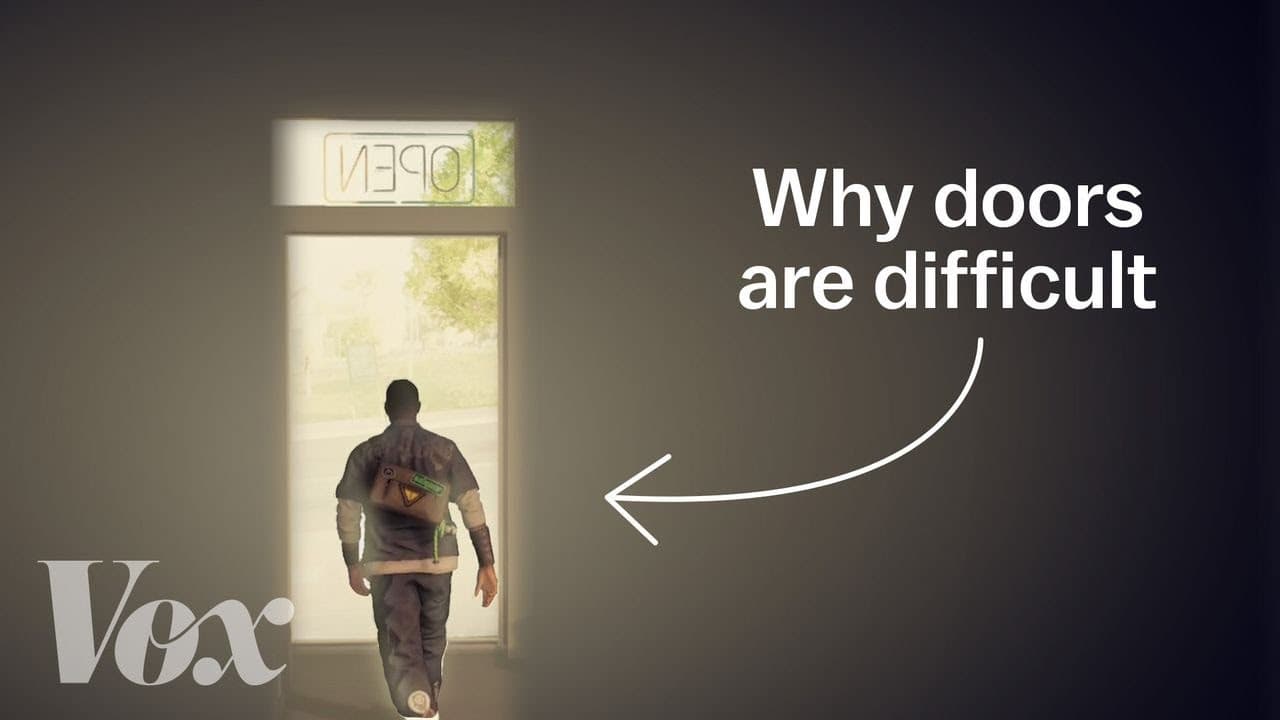
Why video game doors are so hard to get right
TL;DR
Designing realistic video game doors is surprisingly complex.
Transcript
If there’s one thing I appreciate when playing video games, it’s great mechanics. The web swinging in Spiderman: Miles Morales feels really natural, and in Fortnite, you can destroy essentially everything, and then turn it into a wall, with a few intuitive gestures. But The Last of Us Part 2 impressed me for something much more subtle The doors. Th... Read More
Key Insights
- Video game doors require significant development effort to interact realistically with the game environment, needing input from various departments.
- Tiered door systems in games range from simple proximity-based mechanics to complex physical interactions requiring detailed animations.
- Realistic door mechanics enhance player immersion by reducing the disconnect between game actions and real-world expectations.
- Character animations for doors must be adaptable to different emotional states and scenarios to maintain gameplay fluidity.
- The size of doors in games is often exaggerated to facilitate navigation and maintain visual coherence with camera angles.
- Doors in games must account for interactions with all game elements, including AI characters, objects, and player actions.
- The complexity of designing doors is a microcosm of broader game development challenges, highlighting the intricate work behind seemingly simple features.
- The 'Door Problem' illustrates the extensive considerations and questions developers face when integrating doors into game design.
Install to Summarize YouTube Videos and Get Transcripts
Explore YouTube Video Summarizer or Get YouTube Transcript Extractor
Questions & Answers
Q: Why are video game doors considered difficult to design?
Video game doors are difficult to design because they require seamless interaction with their surroundings, logical operation, and visual appeal. This involves complex animations, interactions with other game elements, and contributions from various departments to ensure that doors function realistically within the game environment.
Q: What are the different tiers of door complexity in video games?
Door complexity in video games is categorized into tiers. Tier 1 doors open or close based on player proximity without interaction. Tier 2 doors mimic real-world doors but may not operate identically. Tier 3 doors involve detailed character interactions, requiring complex animations and allowing for player control during the interaction.
Q: How do video game doors enhance player immersion?
Video game doors enhance player immersion by reducing the disconnect between game actions and real-world expectations. Realistic door mechanics, such as physical interactions and responsive animations, make the gameplay experience more believable, allowing players to feel more invested in the game world.
Q: What role do character animations play in video game door design?
Character animations are crucial in video game door design as they must adapt to different emotional states and scenarios. For instance, a character might open a door slowly when investigating or quickly when in a tense situation. These animations must be fluid and responsive to maintain gameplay immersion and control.
Q: Why are doors in video games often larger than in real life?
Doors in video games are often larger than in real life to facilitate easier navigation and accommodate camera angles. Larger doors reduce the precision required for character movements, preventing frustration and ensuring smoother transitions through doorways, while also maintaining visual coherence with the game's camera perspective.
Q: How do doors interact with other game elements like AI characters?
Doors in video games must account for interactions with AI characters and other game elements. AI characters need to recognize door states, strategize around them, and interact logically, such as testing if a door is locked. This adds complexity to door design, requiring developers to consider numerous interaction scenarios.
Q: What is the 'Door Problem' in game design?
The 'Door Problem' in game design refers to the extensive considerations and questions developers face when integrating doors into a game. It highlights the complexity of designing doors, from basic functionality to interactions with characters and game systems, illustrating the broader challenges of game development.
Q: Why is the design of doors a reflection of broader game development challenges?
The design of doors reflects broader game development challenges because it involves intricate work across multiple departments to create a feature that appears simple but requires detailed planning and execution. This mirrors the complexity and interdependence of various elements in game development, where even minor features demand significant resources and collaboration.
Summary & Key Takeaways
-
Designing doors in video games is a complex task that involves multiple departments to ensure seamless interaction with the game world. Doors must balance realism and playability, requiring detailed animations and interactions to enhance player immersion.
-
Different door types in games range from simple to complex, with more realistic doors requiring intricate animations and interactions. The design process must account for various game elements and scenarios to maintain gameplay fluidity and visual coherence.
-
The challenges of designing video game doors reflect broader game development difficulties. Realistic doors enhance immersion by reducing gameplay disconnects, but they require extensive consideration and collaboration across departments to achieve.
Read in Other Languages (beta)
Share This Summary 📚
Summarize YouTube Videos and Get Video Transcripts with 1-Click
Try YouTube Summary with ChatGPT & Claude or YouTube Transcript Generator
Explore More Summaries from Vox 📚



Summarize YouTube Videos and Get Video Transcripts with 1-Click
Try YouTube Summary with ChatGPT & Claude or YouTube Transcript Generator