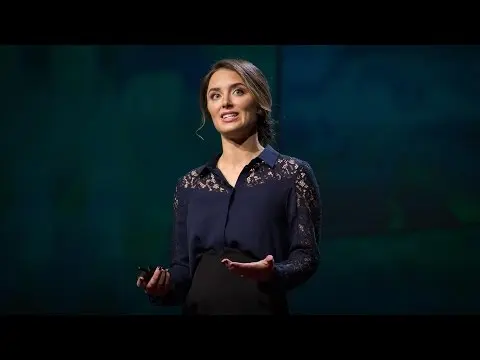
Susan Etlinger: What do we do with all this big data?

TL;DR
This content explores the impact of technology, the challenges of interpreting data, and the importance of critical thinking.
Transcript
Technology has brought us so much: the moon landing, the Internet, the ability to sequence the human genome. But it also taps into a lot of our deepest fears, and about 30 years ago, the culture critic Neil Postman wrote a book called "Amusing Ourselves to Death," which lays this out really brilliantly. And here's what he said, comparing the dystop... Read More
Key Insights
- 🔍 Technology taps into our deepest fears and brings us both great advancements and challenges. We have the power to shape its role in our lives, but we must pay attention to both thinking and coding.
- 📊 Big data is not just about size, but also about the speed at which it moves and the various types of data, such as images, text, video, and audio. Context and understanding are crucial in interpreting data.
- 🚬 Understanding how people talk about smoking requires context, as there are different meanings associated with the term "smoking" on social media platforms like Twitter.
- 📺 Advertisements featuring graphic and disturbing content can jolt people into thinking about their behavior, but the impact on actual behavior may vary. It's important to respect the limits of data in drawing conclusions.
- 💡 Facts are essential, but they can be misused or undervalue other metrics. A focus on critical thinking and appreciation for diverse perspectives is necessary in interpreting data accurately.
- 🧠 Verbal communication may not be the only metric to evaluate. Assessments and analytics should consider a wide range of factors, such as creative problem-solving, to understand the full picture.
- 💻 Data can be manipulated to mean anything, but it is our responsibility as consumers and citizens to make meaning out of it. Critical thinking skills, humanities, and social sciences provide the necessary context.
- 🔒 Privacy controls, consumer opt-in, transparency in methodology, and understanding the limitations of data are essential in utilizing data responsibly. Show your math and remain skeptical of results that align too conveniently with our desires.
Install to Summarize YouTube Videos and Get Transcripts
Explore YouTube Video Summarizer or Get YouTube Transcript Extractor
Questions & Answers
Q: What were the dystopian visions of George Orwell and Aldous Huxley according to Neil Postman?
Orwell feared a captive culture where the truth would be concealed from us, while Huxley feared a trivial culture where we would be drowned in a sea of irrelevance.
Q: How can we shape the role of technology in our lives and make meaning from it?
We are not passive consumers of data and technology. To shape its role and make meaning from it, we need to pay attention to how we think as much as how we code. Asking hard questions and moving past counting things to understanding them is crucial.
Q: What challenges arise from interpreting big data?
Size isn't the only challenge when it comes to interpreting big data. The speed at which it moves and the many varieties of data types, such as images, text, video, and audio, also contribute to the complexity. Additionally, context is essential as data is created by people.
Q: How did the Health Media Collaboratory study people's conversations about quitting smoking?
The Health Media Collaboratory worked with the Centers for Disease Control to understand how people talk about quitting smoking and electronic cigarettes. They discovered that understanding the meaning behind words like "smoking" was essential. They also found that language is complex and constantly evolving, with people using metaphors, slang, and jargon to communicate.
Q: Did the graphic anti-smoking advertisements have an impact on people's quitting behavior?
The Health Media Collaboratory respected the limits of their data but concluded that the advertisements featuring a woman with a hole in her throat had the effect of jolting people into a thought process that could potentially impact their future behavior. The study emphasized the importance of considering the impact of communication and visual stimuli.
Q: How can facts be vulnerable to misuse?
Facts can be vulnerable to misuse, willful or otherwise. They can be taken out of context or misinterpreted to fit a particular agenda. For example, former President Ronald Reagan's slip of the tongue when quoting John Adams demonstrates how facts can be unintentionally altered. It is important to approach facts critically and consider their validity and relevance.
Q: Why is critical thinking and context important for interpreting data?
Data doesn't create meaning on its own; we do. Critical thinking skills, along with disciplines like humanities, sociology, philosophy, ethics, rhetoric, and social sciences, provide contextual understanding crucial for interpreting big data. By questioning assumptions, biases, methodologies, and asking ourselves the hardest questions, we can avoid making hasty conclusions or falling for false correlations.
Q: How should we approach data analysis responsibly?
We need to treat data with appropriate privacy controls and ensure consumer opt-in. Transparency regarding hypotheses, methodologies, and confidence in the results is crucial. Showing our math, as my high school algebra teacher used to say, allows others to understand the steps taken. We must also be cautious of attributing causation merely based on correlations and guard against results that make us feel more successful and comfortable without critically evaluating the data.
Summary & Key Takeaways
-
Technology taps into our deepest fears and has the power to make us either a captive culture or a trivial culture.
-
We have the ability to shape the role of technology in our lives and make meaning from it, but we must pay equal attention to how we think as how we code.
-
Interpreting big data is not just about the size of the data, but also the speed at which it moves and the various types of data, which require context and understanding.
Read in Other Languages (beta)
Share This Summary 📚
Summarize YouTube Videos and Get Video Transcripts with 1-Click
Try YouTube Summary with ChatGPT & Claude or YouTube Transcript Generator
Explore More Summaries from TED 📚




Summarize YouTube Videos and Get Video Transcripts with 1-Click
Try YouTube Summary with ChatGPT & Claude or YouTube Transcript Generator