Why the US doesn’t have universal child care (anymore)
TL;DR
The US lacks universal child care due to historical policy decisions.
Transcript
"In war towns all over the United States women are called upon to leave their homes and take jobs." During World War II, nearly 1 in 3 American men went off to war. And women were expected to take their place at work. "They discovered that factory work is usually no more difficult than house work." "Isn't this pretty hot for you?" "Well I hear i... Read More
Key Insights
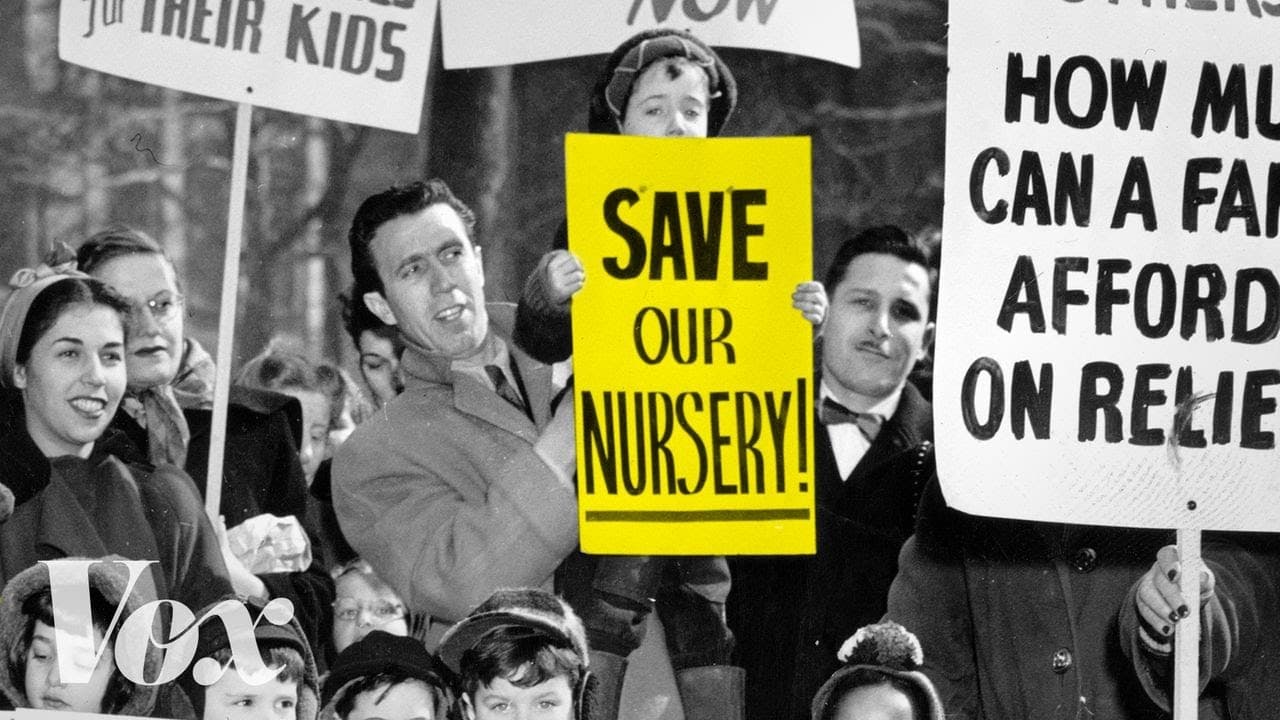
- During WWII, the US established universal child care to support working mothers, but funding ceased in 1946, ending the program.
- In 1971, the Comprehensive Child Development Act aimed to create universal child care but was vetoed by President Nixon, citing concerns over 'Sovietizing' families.
- Nixon's veto led to a divided system: tax deductions for middle-class families and stigmatized support for low-income families.
- Other countries, like Canada and Sweden, maintained and expanded their child care programs, benefiting from path dependency to implement more policies.
- The US policy path has been shaped by income-based programs and tax breaks, reinforcing inequalities in race, gender, and class.
- The UK shifted its approach in the 1990s by framing child care as education, establishing a universal pre-k program.
- Despite historical setbacks, the US can change its policy direction, as demonstrated by the UK's successful shift.
- The lack of universal child care in the US contrasts starkly with other high-income countries that offer comprehensive family policies.
Install to Summarize YouTube Videos and Get Transcripts
Explore YouTube Video Summarizer or Get YouTube Transcript Extractor
Questions & Answers
Q: What was the purpose of the US universal child care during WWII?
During World War II, the US established universal child care to support women who were entering the workforce as men went off to war. This program allowed mothers to leave their children at government-funded day care centers, enabling them to contribute to the war effort by working in factories and other essential jobs.
Q: Why did the US universal child care program end after WWII?
The US universal child care program ended after WWII due to the cessation of federal funding in 1946. As the war concluded, the need for women to work in place of men decreased, and the government decided not to continue the program despite protests from families who wanted the centers to remain permanent.
Q: What was the Comprehensive Child Development Act of 1971?
The Comprehensive Child Development Act of 1971 was a legislative proposal aimed at creating a universal child care system in the US. It was designed to provide non-stigmatized, widely available child care to support working families. However, it was vetoed by President Nixon, who feared it would promote communal child-rearing and weaken traditional family structures.
Q: How did President Nixon's veto impact US child care policy?
President Nixon's veto of the Comprehensive Child Development Act led to a fragmented child care policy in the US. Instead of universal child care, the country developed a system of tax deductions for middle-class families and direct, stigmatized support for low-income families, reinforcing social and economic inequalities.
Q: What is path dependency, and how does it relate to child care policies?
Path dependency refers to the idea that once a country establishes a policy, it becomes easier to implement related policies in the future. Countries like Canada and Sweden benefited from path dependency by maintaining and expanding their child care systems, while the US, lacking a universal policy, struggled to implement comprehensive family policies.
Q: How did the UK change its child care policy in the 1990s?
In the 1990s, the UK shifted its approach to child care by framing it as education rather than welfare. This reframing allowed the establishment of a universal pre-k program, demonstrating that policy direction can change even after previous setbacks. The UK example shows that prioritizing education can help overcome barriers to implementing child care policies.
Q: What are the current US child care policies?
The current US child care policies are fragmented and primarily income-based. While some states offer preschool programs, and there are child care programs for low-income families, the system lacks a universal approach. Tax credits and deductions benefit middle-class families, but overall, the policies reinforce existing social and economic disparities.
Q: How do US child care policies compare to other high-income countries?
US child care policies lag behind those of other high-income countries, which typically offer paid maternity and paternity leave and universal or subsidized child care. The US's fragmented system contrasts sharply with countries that have established comprehensive family policies, highlighting significant gaps in support for American families.
Summary & Key Takeaways
-
The US once had universal child care during WWII, but the program ended in 1946 due to funding cuts. Other countries maintained and expanded their child care systems, benefiting from path dependency to implement further policies.
-
In 1971, the Comprehensive Child Development Act aimed to establish universal child care in the US but was vetoed by President Nixon, resulting in a divided system with tax benefits for the middle class and stigmatized support for low-income families.
-
The US policy path has reinforced inequalities and contrasts with other high-income countries that offer comprehensive family policies. However, the UK's shift in the 1990s to frame child care as education shows that policy direction can change.
Read in Other Languages (beta)
Share This Summary 📚
Summarize YouTube Videos and Get Video Transcripts with 1-Click
Try YouTube Summary with ChatGPT & Claude or YouTube Transcript Generator
Explore More Summaries from Vox 📚




Summarize YouTube Videos and Get Video Transcripts with 1-Click
Try YouTube Summary with ChatGPT & Claude or YouTube Transcript Generator