How to Transition from Biology to Data Science
TL;DR
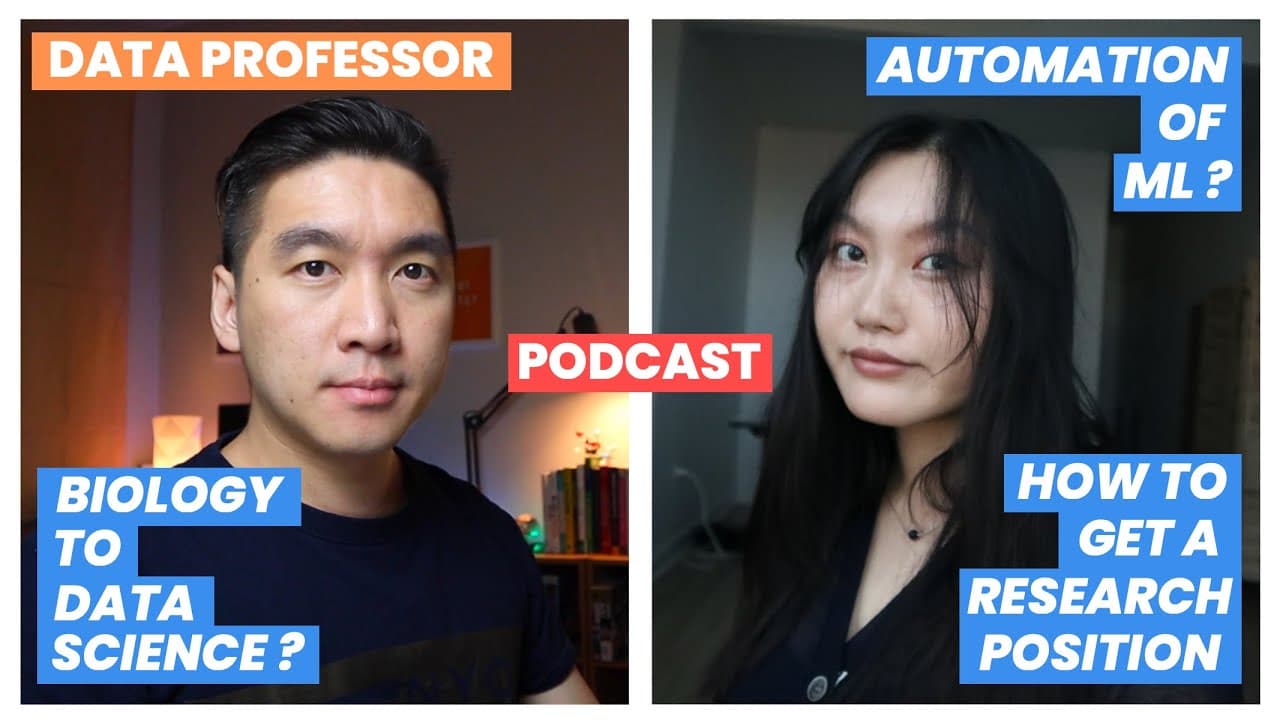
Transitioning from biology to data science involves leveraging existing scientific skills and learning new data-centric techniques. Key steps include identifying potential supervisors, understanding their research, and demonstrating genuine interest. The future of data science involves automation, so understanding the problem and application of algorithms is crucial.
Transcript
at least um google for like your potential supervisor look at what what type of work are they doing looking at the sort of publication that they're doing um over the years is there any trends that you're noticing thank you so so much for taking the time to have a chat with me oh you know we've obviously just like ran into each other lots of places ... Read More
Key Insights
- Data science skills can be developed by leveraging existing scientific expertise and learning data-centric techniques.
- Identifying potential supervisors and understanding their research can help secure a research position.
- Automation in data science is increasing, making understanding the problem and application of algorithms crucial.
- The transition from biology to data science can be facilitated by pursuing a PhD and engaging in related projects.
- Networking and reaching out to researchers can provide valuable opportunities and insights.
- The data science life cycle includes data collection, cleaning, model building, and deployment.
- Learning from peer reviews and continuously updating knowledge is essential for growth in data science.
- The joy of solving problems and creating impactful projects drives success in data science careers.
Install to Summarize YouTube Videos and Get Transcripts
Explore YouTube Video Summarizer or Get YouTube Transcript Extractor
Questions & Answers
Q: How to transition from biology to data science?
Transitioning from biology to data science involves leveraging your existing scientific skills and gaining new data-centric techniques. Pursuing a PhD in a related field, engaging in data science projects, and networking with researchers can provide valuable opportunities. Understanding the data science life cycle and continuously updating your knowledge through learning resources are critical steps.
Q: How to get a research position with a professor?
To secure a research position, identify potential supervisors and thoroughly understand their research work by reviewing their publications and lab websites. Demonstrate genuine interest by suggesting potential projects or areas of study. Personalized communication, such as addressing the professor by name and highlighting your relevant skills, can also make a positive impression.
Q: Will machine learning become automated?
Yes, machine learning is becoming increasingly automated. Tools like AutoML simplify the process by automating model selection and parameter tuning. However, understanding the problem, selecting appropriate algorithms, and interpreting results remain critical skills. The ability to apply machine learning in a meaningful way and understand its implications is more important than ever.
Q: What is the data science life cycle?
The data science life cycle involves several key stages: data collection, data cleaning and preprocessing, model building, parameter optimization, and model deployment. Effective communication of results is also essential. Understanding this cycle helps in structuring data science projects and ensures a systematic approach to problem-solving.
Q: Why is understanding the application of algorithms important?
Understanding the application of algorithms is crucial because it enables you to select the most appropriate method for a given problem. As machine learning becomes more automated, the ability to interpret results and understand the context of the data is vital. This ensures that the insights derived are meaningful and actionable.
Q: What are the benefits of networking in data science?
Networking in data science provides access to valuable opportunities, insights, and collaborations. Engaging with researchers and practitioners can lead to mentorship, potential research projects, and career advancement. Networking also keeps you updated with the latest trends and technologies in the field, fostering continuous learning and growth.
Q: How can peer reviews aid in data science learning?
Peer reviews provide critical feedback that helps improve research quality and methodology. They offer insights into new techniques, highlight potential errors, and suggest improvements. Engaging with peer reviews fosters a culture of continuous improvement and learning, which is essential for advancing in the rapidly evolving field of data science.
Q: What drives success in data science careers?
Success in data science careers is driven by a passion for problem-solving and creating impactful projects. The ability to continuously learn, adapt, and apply new knowledge is crucial. As data science evolves, focusing on understanding the problem, selecting appropriate tools, and effectively communicating results will differentiate successful data scientists.
Summary & Key Takeaways
-
Transitioning from biology to data science involves leveraging existing skills and learning new techniques. Identifying potential supervisors and understanding their research can help secure a position. Automation is increasing, so understanding the problem and application of algorithms is crucial.
-
Networking and reaching out to researchers can provide valuable opportunities and insights. Engaging in projects and continuously updating knowledge through peer reviews and learning resources is essential for growth in data science.
-
The data science life cycle includes data collection, cleaning, model building, and deployment. The joy of solving problems and creating impactful projects drives success in data science careers, and automation will play a significant role in the future.
Read in Other Languages (beta)
Share This Summary 📚
Summarize YouTube Videos and Get Video Transcripts with 1-Click
Try YouTube Summary with ChatGPT & Claude or YouTube Transcript Generator
Explore More Summaries from Tina Huang 📚





Summarize YouTube Videos and Get Video Transcripts with 1-Click
Try YouTube Summary with ChatGPT & Claude or YouTube Transcript Generator