How To Self Study AI FAST
TL;DR
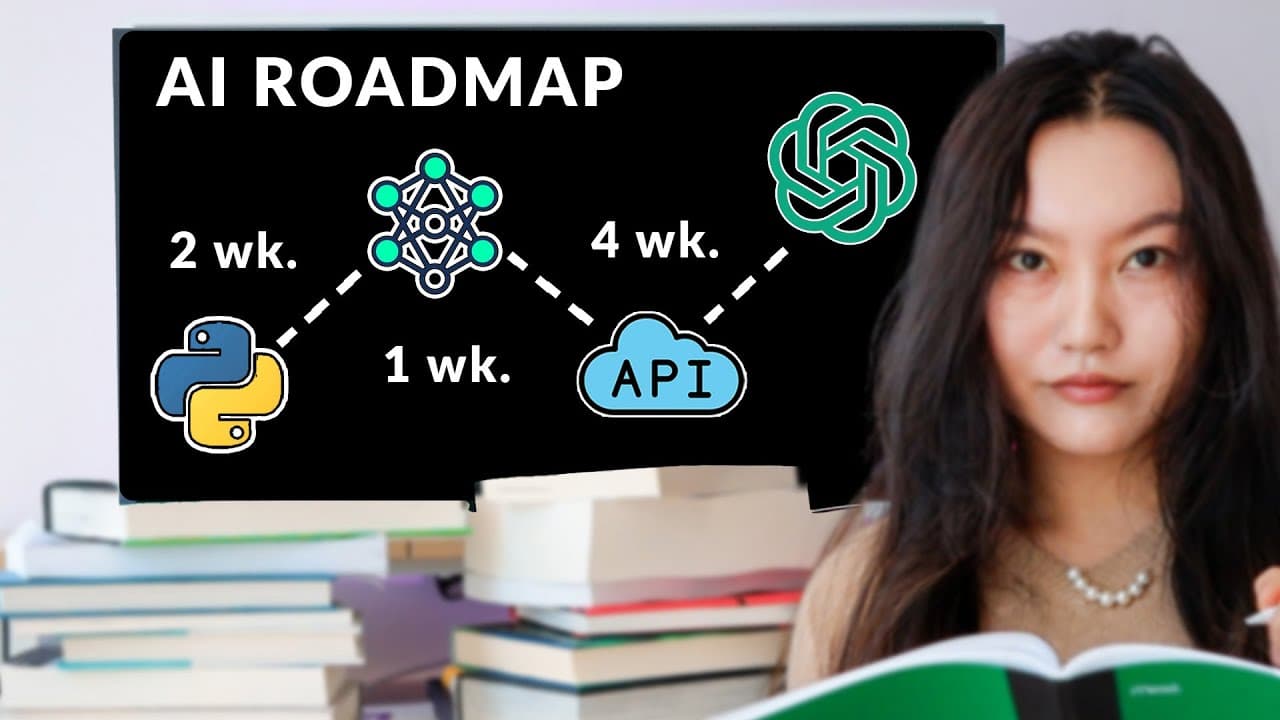
A method to learn AI efficiently using concentric circles.
Transcript
before anybody makes a comment yes I do know that my hair is wet but I got to go somewhere after this video is for my short attention span friends who still want to learn AI so usually when you're trying to learn something new it look something like a straight line first you learn calculus linear algebra probability statistics programming machine l... Read More
Key Insights
- The Renon method, inspired by Naruto's concentric circles, helps learners gradually build AI knowledge by starting with basics and expanding outward.
- Initial AI learning should focus on understanding basic concepts and using Python to build simple projects, fostering motivation through quick wins.
- Machine learning involves teaching computers to recognize patterns, demonstrated by the hot dog identification model using convolutional neural networks.
- Large language models like ChatGPT use vast text data to predict and generate coherent text, demonstrating the power of machine learning in language processing.
- Learning Python basics, including variables, loops, and APIs, is crucial for beginners to start building AI models and applications.
- Resources like Brilliant and FreeCodeCamp offer interactive courses to help learners with short attention spans grasp AI concepts effectively.
- Understanding foundational mathematics and statistics is essential for deeper AI learning, focusing on concepts rather than complex calculations.
- Deep learning, involving layered neural networks, allows for advanced AI applications like computer vision and natural language processing.
Install to Summarize YouTube Videos and Get Transcripts
Explore YouTube Video Summarizer or Get YouTube Transcript Extractor
Questions & Answers
Q: What is the Renon method for learning AI?
The Renon method, inspired by Naruto's concentric circles, is a learning approach that starts with understanding the basics of AI and gradually expands outward. This method encourages learners to quickly apply their knowledge to build simple AI projects, using these successes as motivation to delve deeper into more complex topics.
Q: How does machine learning work in the hot dog model example?
The hot dog model is a machine learning application that uses a convolutional neural network to distinguish between hot dogs and non-hot dogs. It learns by being fed images labeled as either hot dogs or not, recognizing patterns such as shape and color to make predictions. Over time, the model improves its accuracy in identifying hot dogs by adjusting its understanding of these features.
Q: What are large language models and how do they function?
Large language models, like ChatGPT, are machine learning models that use extensive text data to predict and generate coherent language. They analyze patterns in the data to determine the likelihood of word sequences, allowing them to construct sentences that make sense in context. This ability to predict text enables them to perform tasks like text completion and conversation generation.
Q: What Python basics are necessary for beginners in AI?
Beginners in AI should focus on learning Python basics such as variables, data types, loops, and object-oriented programming. Understanding APIs is also crucial, as they enable interaction with pre-built AI models. These foundational skills allow learners to start building simple AI applications and gain practical experience with the technology.
Q: Why is a solid foundation in mathematics important for AI learning?
A solid foundation in mathematics is crucial for AI learning because it provides the necessary background to understand machine learning algorithms and models. Key concepts include calculus, linear algebra, and probability, which are used to develop and refine AI models. Understanding these mathematical principles allows learners to grasp how AI systems operate and improve their functionality.
Q: What role do interactive learning platforms play in AI education?
Interactive learning platforms like Brilliant and FreeCodeCamp play a significant role in AI education by offering engaging, hands-on courses that cater to different learning styles. These platforms help maintain learner interest, particularly for those with short attention spans, by incorporating interactive elements that reinforce understanding and retention of complex concepts.
Q: How can learners apply their AI knowledge to real projects?
Learners can apply their AI knowledge to real projects by starting with basic AI applications using Python and APIs. As they gain confidence and understanding, they can tackle more complex projects, such as building personal AI assistants or developing models for specific tasks. Practical application reinforces learning and provides motivation to explore advanced topics.
Q: What are some recommended resources for learning AI and machine learning?
Recommended resources for learning AI and machine learning include Brilliant for interactive courses, FreeCodeCamp for Python programming, and Josh Starmer's YouTube channel for machine learning content. For deeper understanding, courses from institutions like Stanford and platforms like Coursera offer comprehensive learning paths in specialized fields like deep learning, computer vision, and natural language processing.
Summary & Key Takeaways
-
The video introduces the Renon method for learning AI, emphasizing the importance of starting with basic concepts and gradually expanding knowledge. This method motivates learners by allowing them to quickly apply what they've learned to build projects, fostering a deeper understanding over time.
-
Understanding machine learning and AI involves grasping the basics of Python programming and familiarizing oneself with various learning resources. The video suggests using interactive platforms like Brilliant and FreeCodeCamp to accommodate different learning styles and maintain engagement.
-
Deep learning and advanced AI applications require a solid foundation in mathematics and statistics. The video highlights the importance of understanding fundamental concepts to enable learners to delve into specialized fields like computer vision and natural language processing.
Read in Other Languages (beta)
Share This Summary 📚
Summarize YouTube Videos and Get Video Transcripts with 1-Click
Try YouTube Summary with ChatGPT & Claude or YouTube Transcript Generator
Explore More Summaries from Tina Huang 📚





Summarize YouTube Videos and Get Video Transcripts with 1-Click
Try YouTube Summary with ChatGPT & Claude or YouTube Transcript Generator