Frankenstein by Mary Shelley | Summary & Analysis
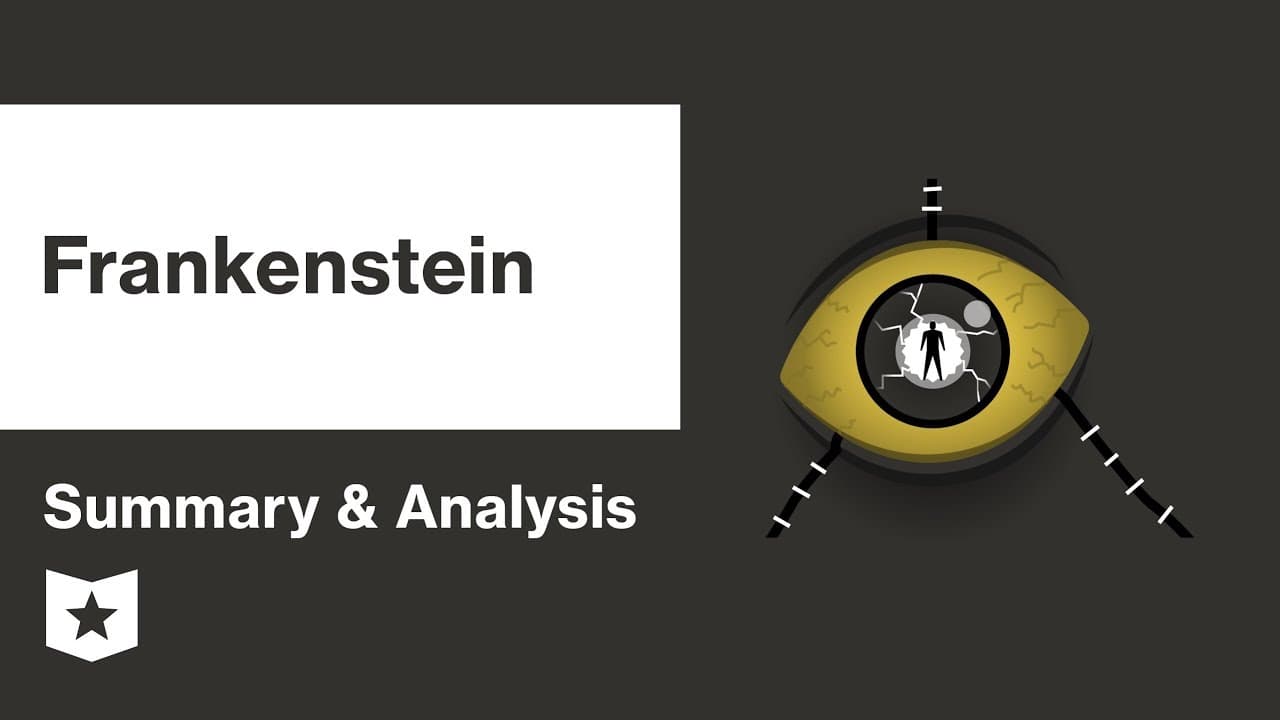
TL;DR
Mary Shelley's Frankenstein is a classic novel that explores the themes of scientific overreach, nature, and the consequences of obsession.
Transcript
in 1823 just five years after the original publication of Frankenstein Mary Shelley saw a staged version of her novel in London the resurgence of interest in it events by the popularity of the play in part prompted her decision to publish a second revised edition with an Augmented introduction in 1831 a century later James Whale created a riveting ... Read More
Key Insights
- 🖐️ The popularity of the play adaptation of Frankenstein prompted Mary Shelley to publish a revised edition.
- 😀 Mary Shelley's personal life, including her relationship with Percy Shelley and the tragedies she faced, influenced the themes of the novel.
- 👹 Frankenstein continues to be referenced in popular culture, with the image of the green-skinned monster becoming iconic.
- 💀 The novel explores the dangers of scientific experimentation and the consequences of playing God.
- 😱 Frankenstein is a prominent figure in the Gothic literary tradition, embodying elements of mystery, horror, and supernatural elements.
- ❓ It also encompasses themes of the Romantic movement, focusing on deep connections with nature and the exploration of human emotions.
- 🙂 Significant symbols in the novel include light and darkness, representing hope and despair respectively.
Install to Summarize YouTube Videos and Get Transcripts
Explore YouTube Video Summarizer or Get YouTube Transcript Extractor
Questions & Answers
Q: What inspired Mary Shelley to write Frankenstein?
Mary Shelley was inspired to write Frankenstein during a friendly contest with her husband Percy and fellow writers Lord Byron and John Polidori. The contest challenged them to create the most terrifying ghost story.
Q: What are some key themes in Frankenstein?
Some key themes in Frankenstein are scientific overreach, the consequences of playing God, the power of nature, and the exploration of human emotions.
Q: How does Frankenstein fit into the Gothic literary tradition?
Frankenstein embodies many characteristics of Gothic literature, such as eerie and isolated settings, mysterious and supernatural elements, and brooding heroes and monsters.
Q: How does Frankenstein explore the Romantic movement?
Frankenstein incorporates elements of the Romantic movement, including the deep connections with nature, the exploration of human emotions, and the rejection of rationality and the pursuit of lofty ideals.
Summary & Key Takeaways
-
Mary Shelley, born in 1797, wrote Frankenstein in 1818, a novel that delves into the consequences of scientific experimentation and obsession.
-
The story follows Victor Frankenstein, a scientist who creates a monster and faces the consequences of his actions.
-
The novel combines elements of Gothic literature and the Romantic movement, highlighting the power of nature and the exploration of human emotions.
Read in Other Languages (beta)
Share This Summary 📚
Summarize YouTube Videos and Get Video Transcripts with 1-Click
Try YouTube Summary with ChatGPT & Claude or YouTube Transcript Generator
Explore More Summaries from Course Hero 📚


Summarize YouTube Videos and Get Video Transcripts with 1-Click
Try YouTube Summary with ChatGPT & Claude or YouTube Transcript Generator