Real Isopod Hours with Coyote Peterson!
TL;DR
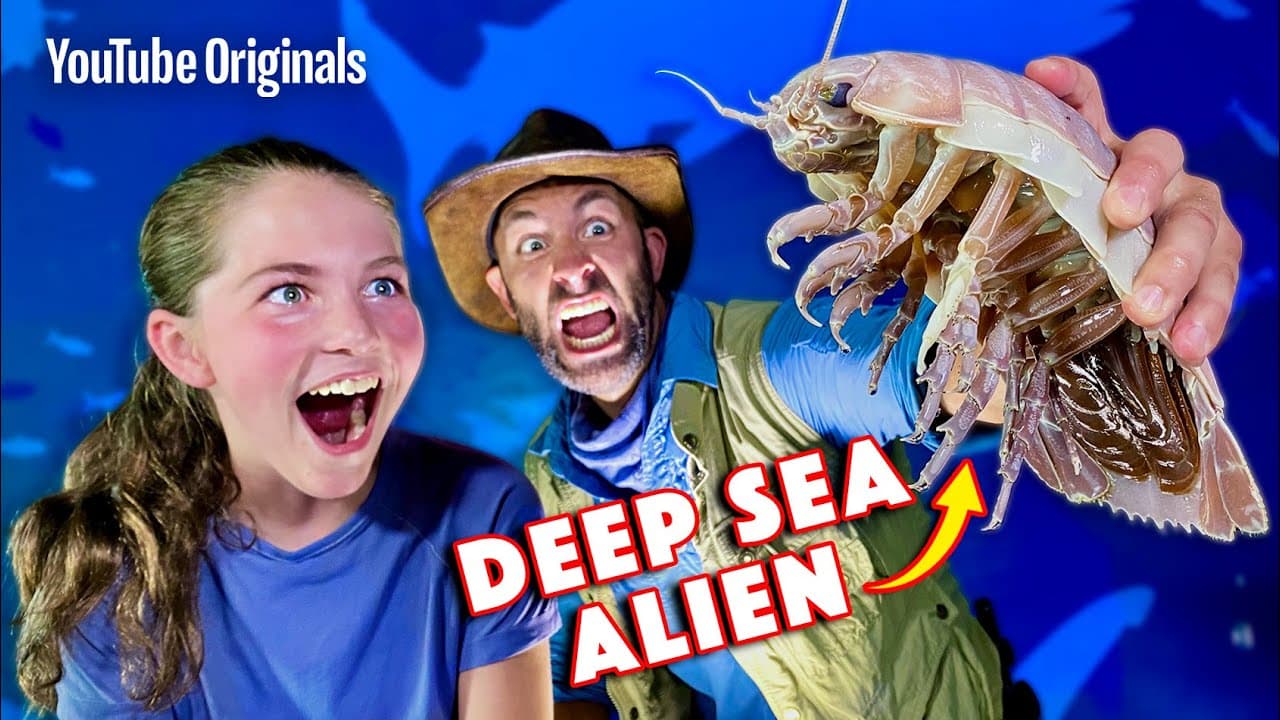
Coyote Peterson and Taycey Harrison embark on an ocean-themed adventure to overcome fears of marine creatures, including sharks, and explore the fascinating world of the ocean.
Transcript
I'm Coyote Peterson, and it's always been my belief that the future of conservation begins with the next generation of animal enthusiasts. That's why each episode, I'm taking kids just like you on the adventure of a lifetime. We'll be going to some of the coolest locations, where we will explore unique habitats and go behind-the-scenes at wi... Read More
Key Insights
- 🤗 The Wild Field Trip series aims to educate and inspire the next generation of animal enthusiasts through hands-on experiences in unique habitats.
- 🛟 The Florida Keys' Aquarium Encounters provides an opportunity to learn about and appreciate the diversity of marine life and the importance of ocean conservation.
- 🌊 The ocean is divided into different zones, each with its own unique species and characteristics.
- 😨 Overcoming fears and understanding the important role marine creatures play in the ecosystem can help promote conservation efforts.
- ❓ Giant isopods and roly-polies share similarities in their physical structures, highlighting the interconnectedness of different species.
- 🖐️ Nurse sharks are often misunderstood and play a vital role in maintaining the balance of the ocean ecosystem.
- 😀 The threats facing our oceans, such as climate change, overexploitation, and pollution, require immediate action and education.
Install to Summarize YouTube Videos and Get Transcripts
Explore YouTube Video Summarizer or Get YouTube Transcript Extractor
Questions & Answers
Q: What is the purpose of the Wild Field Trip series?
The Wild Field Trip series aims to educate and inspire the next generation of animal enthusiasts by taking kids on exciting adventures to explore unique habitats and interact with incredible species.
Q: What is the significance of visiting the Florida Keys' Aquarium Encounters?
The Florida Keys' Aquarium Encounters provides hands-on interactions with ocean species, allowing visitors to learn about and appreciate the importance of marine conservation.
Q: Why is it important to understand the depths and zones of the ocean?
Understanding the different zones of the ocean, from the shallow intertidal pools to the deep abyss, helps us appreciate the diversity of marine life and the importance of protecting these fragile ecosystems.
Q: How are giant isopods and roly-polies related?
Giant isopods and roly-polies are both arthropods and share similar physical structures. They can curl up into a ball to protect themselves from predators.
Q: What are the key features of nurse sharks and how do they contribute to the ocean ecosystem?
Nurse sharks have small eyes and rely on their electroreception senses to detect electrical pulses in the water. They are not aggressive towards humans and play a role in maintaining the balance of the ocean ecosystem.
Summary & Key Takeaways
-
Coyote Peterson and Taycey Harrison visit the Florida Keys' Aquarium Encounters to learn about and interact with ocean species through hands-on experiences.
-
They start by getting up close with giant isopods, learning about their unique features and their role in the ocean ecosystem as scavengers.
-
Next, they explore intertidal pools and encounter various creatures, such as sea stars, horseshoe crabs, slipper lobsters, and conch shells.
-
Finally, they face their fears and interact with nurse sharks and stingrays, gaining a newfound respect and understanding for these often-misunderstood creatures.
Read in Other Languages (beta)
Share This Summary 📚
Summarize YouTube Videos and Get Video Transcripts with 1-Click
Try YouTube Summary with ChatGPT & Claude or YouTube Transcript Generator
Explore More Summaries from Brave Wilderness 📚
Summarize YouTube Videos and Get Video Transcripts with 1-Click
Try YouTube Summary with ChatGPT & Claude or YouTube Transcript Generator