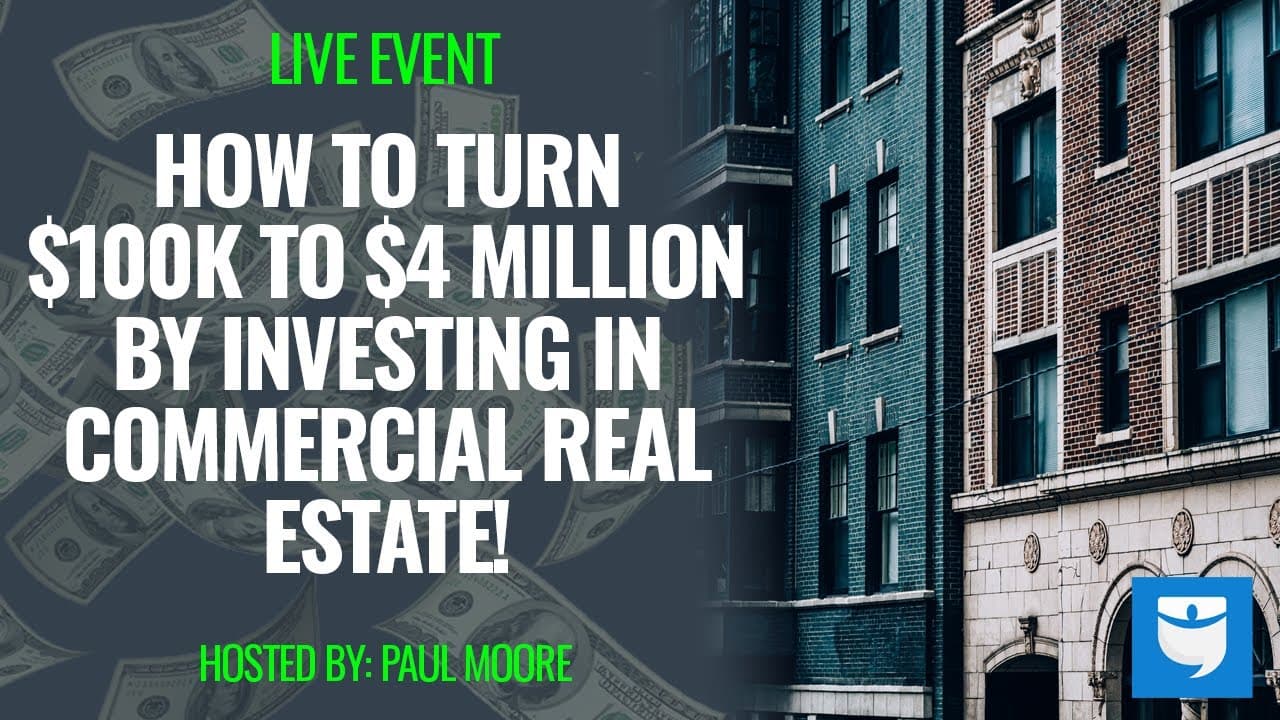
How To Turn $100k Into $4 Million By Investing in Commercial Real Estate
TL;DR
Paul Moore explains turning $100k into $4M via commercial real estate.
Transcript
paulmor here with bigger pockets so excited to be with you today and today we're gonna be talking about how to turn a hundred thousand dollars into four million dollars or more by investing in commercial real estate so welcome I'm glad you're here hey do me a favor if you can hear me let me know I need to know if you can hear me hey let me know whe... Read More
Key Insights
- Commercial real estate allows for forced appreciation, making it possible to significantly increase property value through strategic improvements and management changes.
- Investors can leverage the cap rate to increase property value; compressing the cap rate can significantly boost the equity value.
- The value of commercial real estate is not solely based on comparable sales but rather on net operating income, offering more control over property appreciation.
- Syndication allows investors to pool resources and invest in larger commercial properties, making it accessible even for those with smaller initial capital.
- Fragmented ownership in sectors like self-storage and mobile home parks presents opportunities for acquiring underperforming properties and improving them for higher returns.
- Investing in yourself and gaining knowledge about real estate can be one of the most profitable investments, as highlighted by Warren Buffett.
- The potential for high returns in commercial real estate is significant, with some operators achieving over 40% annual returns historically.
- Crowdfunding platforms have democratized access to real estate investments, allowing smaller investors to participate in large-scale projects.
Install to Summarize YouTube Videos and Get Transcripts
Explore YouTube Video Summarizer or Get YouTube Transcript Extractor
Questions & Answers
Q: How can forced appreciation increase property value in commercial real estate?
Forced appreciation in commercial real estate involves making strategic improvements or operational changes that increase the property's net operating income (NOI). This could include raising rents, improving occupancy rates, or adding additional revenue streams such as storage spaces. By increasing the NOI, the property value increases significantly, especially when leveraged with debt, multiplying the equity gain for investors.
Q: What is the significance of cap rate compression in real estate investing?
Cap rate compression refers to the reduction of the capitalization rate, which is the expected rate of return on a real estate investment. By improving the property and making it more attractive to institutional buyers, the cap rate can be compressed, meaning the property is sold at a lower cap rate than it was purchased. This results in a significant increase in property value and investor equity, as the same income stream is now valued more highly.
Q: Why is commercial real estate considered more advantageous than residential real estate?
Commercial real estate is considered more advantageous than residential because its value is based on net operating income rather than comparable sales. This allows investors to have more control over property appreciation by increasing income through strategic management. Additionally, commercial properties often have higher potential returns and can benefit from economies of scale, making them attractive to institutional investors.
Q: How can syndication make commercial real estate accessible to smaller investors?
Syndication allows multiple investors to pool their resources to purchase larger commercial properties that would be out of reach for individual investors. By joining a syndication, investors can benefit from professional management, diversification, and access to larger deals with potentially higher returns. This structure also allows investors to participate passively, without the need to manage properties themselves.
Q: What opportunities exist in fragmented ownership within commercial real estate?
Fragmented ownership, particularly in sectors like self-storage and mobile home parks, presents opportunities because many properties are owned by small operators or mom-and-pop businesses. These properties often have untapped potential for operational improvements and income growth. Investors can acquire these underperforming properties, implement strategic changes, and significantly increase their value and returns.
Q: How has crowdfunding impacted real estate investing?
Crowdfunding has democratized real estate investing by allowing smaller investors to participate in large-scale projects that were previously accessible only to institutional investors. Through platforms like Fundrise and RealtyMogul, individuals can invest in a diversified portfolio of real estate projects with lower minimum investment requirements, gaining exposure to commercial real estate's potential returns without needing significant capital.
Q: What role does investing in oneself play in real estate success?
Investing in oneself through education and skill development is crucial for success in real estate. Understanding market trends, property management, and investment strategies can significantly enhance an investor's ability to identify and capitalize on opportunities. As Warren Buffett suggests, investing in oneself can yield the highest returns, providing the knowledge and confidence needed to make informed investment decisions.
Q: What are some examples of operational improvements in commercial real estate?
Operational improvements in commercial real estate can include increasing rental rates to market levels, improving property management to boost occupancy, adding additional revenue streams like vending machines or storage units, and implementing cost-saving measures such as energy-efficient upgrades. These changes can enhance net operating income, thereby increasing the property's value and providing higher returns to investors.
Summary & Key Takeaways
-
Paul Moore discusses strategies to turn $100,000 into $4 million through commercial real estate investing. He emphasizes the benefits of forced appreciation and cap rate compression, which can significantly increase property value and investor equity.
-
The presentation highlights the advantages of commercial real estate over residential, such as value based on net operating income and the potential for higher returns. Moore also stresses the importance of investing in oneself and leveraging syndication to access larger deals.
-
Moore provides examples of successful strategies in mobile home parks and self-storage, illustrating how operational improvements can lead to substantial equity growth. He encourages investors to consider syndication and crowdfunding as viable entry points into commercial real estate.
Read in Other Languages (beta)
Share This Summary 📚
Summarize YouTube Videos and Get Video Transcripts with 1-Click
Try YouTube Summary with ChatGPT & Claude or YouTube Transcript Generator
Explore More Summaries from BiggerPockets 📚





Summarize YouTube Videos and Get Video Transcripts with 1-Click
Try YouTube Summary with ChatGPT & Claude or YouTube Transcript Generator