How to Perfect Your Barbell Squat Technique
TL;DR
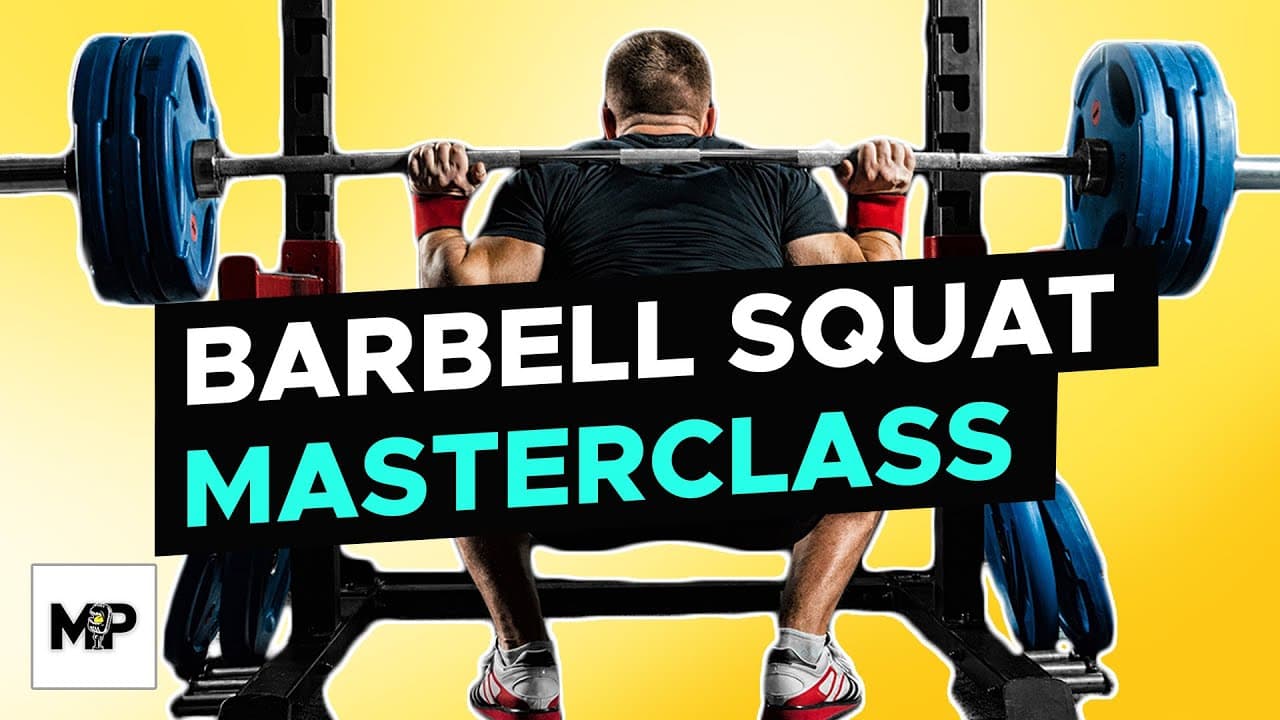
The barbell squat is a foundational exercise for developing lower body strength and improving overall physical performance. It engages multiple muscle groups, including the core, and offers significant benefits for muscle building, fat loss, and athletic performance. Proper form, mobility, and stability are crucial to maximizing its benefits and minimizing injury risk.
Transcript
foreign the king of all exercise the barbell squat it is true this is the king it's phenomenal for developing the lower body but a lot of people also see upper body gains from getting better at the squat so today's episode is all about the barbell squat this is the master class you can't come out and make that statement after I just made the argume... Read More
Key Insights
- Barbell squats are highly effective for developing lower body strength and improving overall physical performance.
- The exercise engages multiple muscle groups, including the core, and offers significant benefits for muscle building, fat loss, and athletic performance.
- Proper form, mobility, and stability are crucial to maximizing the benefits of barbell squats and minimizing the risk of injury.
- Ankle and hip mobility are often limiting factors in achieving proper squat form and should be addressed through targeted exercises.
- Frequency and intensity should be balanced in a squat routine, with most people benefiting from squatting two to three times per week.
- Advanced techniques like pause squats and box squats can help improve strength and technique by focusing on different aspects of the movement.
- Bands and chains can be used to modify resistance throughout the squat, providing different training stimuli and accommodating strength curves.
- Priming exercises, such as the 90/90 stretch and combat stretch, can significantly improve squat performance by enhancing mobility and muscle activation.
Install to Summarize YouTube Videos and Get Transcripts
Explore YouTube Video Summarizer or Get YouTube Transcript Extractor
Questions & Answers
Q: How does the barbell squat benefit overall physical performance?
The barbell squat is a comprehensive exercise that engages multiple muscle groups, including the lower body and core. It improves muscle strength, boosts metabolism, and enhances athletic performance. By strengthening the entire kinetic chain, it provides significant carryover benefits to other physical activities and supports fat loss through increased muscle mass.
Q: What are the key mobility requirements for a proper barbell squat?
Key mobility requirements for a proper barbell squat include good hip and ankle mobility, as well as thoracic spine stability. Ankle mobility is crucial as it allows the knees to move forward during the squat, while hip mobility ensures proper alignment and reduces stress on the lower back. Thoracic stability helps maintain an upright posture.
Q: Why is frequency important in a squat routine?
Frequency is important in a squat routine because it allows for consistent practice and adaptation, leading to improved technique and strength gains. Most individuals respond well to squatting two to three times per week, as it provides enough stimulus for muscle growth and recovery without overtraining. Adjusting intensity across sessions helps balance workload.
Q: How can advanced techniques like pause squats and box squats enhance training?
Advanced techniques like pause squats and box squats enhance training by focusing on different aspects of the squat movement. Pause squats improve strength and control at the bottom of the squat by eliminating momentum, while box squats help develop explosive power and ensure proper form by providing a consistent depth reference.
Q: What role do bands and chains play in squat training?
Bands and chains play a role in squat training by modifying resistance throughout the movement, accommodating the body's natural strength curve. They provide progressive resistance, making the squat heavier at the top and lighter at the bottom. This variation helps improve strength, power, and stability by challenging the muscles differently than traditional weights.
Q: What are effective priming exercises for improving squat performance?
Effective priming exercises for improving squat performance include the 90/90 stretch and combat stretch. The 90/90 stretch enhances hip mobility and stability, while the combat stretch focuses on ankle mobility. These exercises activate and prepare the muscles for squatting, leading to better form, reduced injury risk, and improved overall performance.
Q: How does proper squat form contribute to injury prevention?
Proper squat form contributes to injury prevention by ensuring that the body moves in a biomechanically efficient manner, reducing stress on joints and muscles. Key elements include maintaining a neutral spine, engaging the core, and ensuring knee alignment over the toes. Proper form distributes the load evenly, minimizing the risk of strains and imbalances.
Q: Why is it important to avoid lifting to failure with barbell squats?
Avoiding lifting to failure with barbell squats is important because it reduces the risk of injury associated with compromised form under heavy loads. Squats are a complex movement that requires stability and control; pushing to failure can lead to poor technique, increasing the likelihood of strains or joint stress. Prioritizing form and controlled repetitions ensures safer and more effective training.
Summary & Key Takeaways
-
The barbell squat is a foundational exercise for lower body strength and overall physical performance. It engages multiple muscle groups, including the core, offering benefits for muscle building, fat loss, and athletic performance. Proper form, mobility, and stability are crucial to maximize benefits and minimize injury risk.
-
Addressing ankle and hip mobility is essential for achieving proper squat form. Frequency and intensity should be balanced, with most people benefiting from squatting two to three times per week. Advanced techniques like pause squats and box squats help improve strength and technique.
-
Using bands and chains can modify resistance throughout the squat, providing different training stimuli. Priming exercises, such as the 90/90 stretch and combat stretch, enhance mobility and muscle activation, significantly improving squat performance.
Read in Other Languages (beta)
Share This Summary 📚
Summarize YouTube Videos and Get Video Transcripts with 1-Click
Try YouTube Summary with ChatGPT & Claude or YouTube Transcript Generator
Explore More Summaries from Mind Pump Show 📚



Summarize YouTube Videos and Get Video Transcripts with 1-Click
Try YouTube Summary with ChatGPT & Claude or YouTube Transcript Generator