Building and Deploying a T3 Stack Application
TL;DR
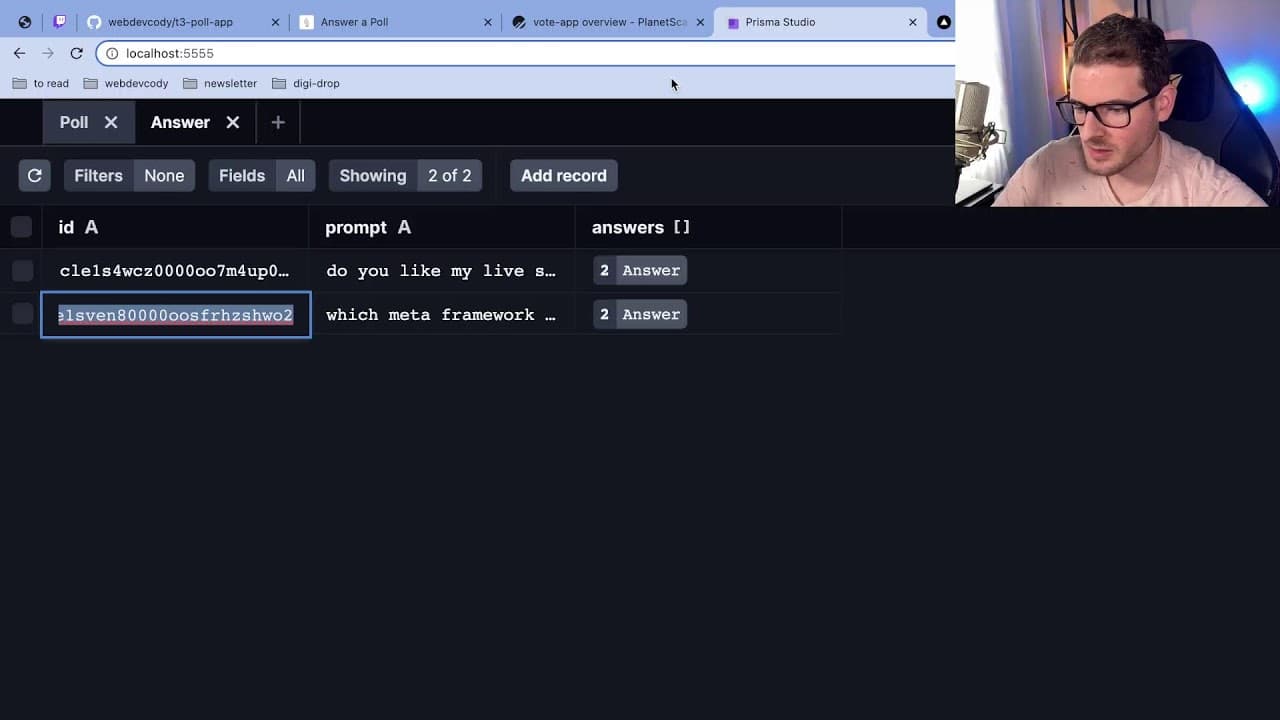
A developer streams the setup of a T3 stack poll app using Railway and PlanetScale.
Transcript
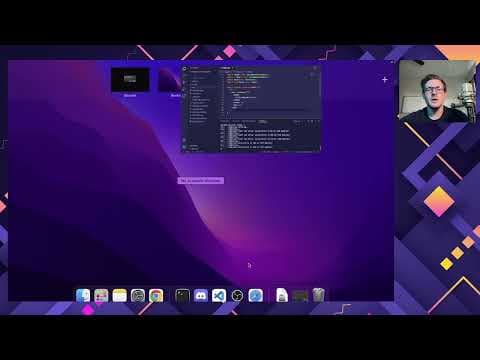
what is up I'm just trying to get my stream set up um yeah I wanted to just do a little bit of a T3 stack um live stream this time get it deployed to railway and get a database set up get a link that you all can play with and I figured doing like a poll application would be a cool thing to try to do on a stream um let me go to my GitHub real quick ... Read More
Key Insights
- 😄 The T3 stack combines popular web technologies, providing a well-rounded framework for developers focused on ease of use and versatility.
- 👻 Utilizing Docker containers for database management simplifies local development, allowing the streamer to switch between various database systems smoothly.
- 👤 User authentication and input validation are critical in securing data integrity and fostering a positive user experience.
- 👤 Effective polling applications require robust architecture for handling multiple users simultaneously while maintaining accurate data rendering.
- 👨💻 The streamer emphasizes the importance of modular code organization, facilitating easier future updates and enhancements to the application.
- 🖐️ Community engagement and feedback play a significant role in shaping the final product, influencing feature development based on user input.
- 😀 Regularly updating users with real-time changes can significantly enhance app engagement, making it essential to consider such features in deployment phases.
Install to Summarize YouTube Videos and Get Transcripts
Explore YouTube Video Summarizer or Get YouTube Transcript Extractor
Questions & Answers
Q: What is the T3 stack, and why did the streamer choose it for this project?
The T3 stack consists of Next.js, Tailwind CSS, TypeScript, and Prisma, which provide an efficient framework for building modern web applications. The streamer prefers this stack for its flexibility, robust community support, and the strong typing benefits of TypeScript, making development more maintainable.
Q: How did the streamer handle database setup during the stream?
The streamer initially set up a local SQLite database and later transitioned to using PostgreSQL via Docker, enabling easier local development. They also discussed using PlanetScale for cloud-based database management, opting for it due to its scalability and ease of integration with Prisma.
Q: Why did the streamer decide against using websockets for the application?
The streamer mentioned they might avoid using websockets due to time constraints. They opted for a simpler solution to gather user responses, focusing instead on regular fetch intervals to update the application state and display poll results dynamically.
Q: What challenges did the streamer face when trying to deploy the app?
Challenges included verifying their GitHub account to deploy on Railway, requiring credit card input due to account newness. The streamer considered alternative hosting options like Vercel and AWS Amplify for deployment, ultimately opting for Vercel for its ease of use.
Q: How does the streamer validate user input in the application?
User input is validated through Zod, a library for defining validation schemas and ensuring that incoming API data matches the expected structure. This helps in preventing erroneous data submissions and provides better error tracking.
Q: What strategies were suggested for managing polling responses effectively?
The streamer discussed incorporating local storage to track whether a user had already voted to prevent multiple submissions. Additionally, they planned to refetch data regularly to ensure the displayed results reflecy accurate and up-to-date information.
Q: What future enhancements were mentioned that could improve the application?
The streamer considered adding websockets for real-time updates and displaying live results as users voted. They also discussed improving the user interface with more visual appeal and preparing instructions or an admin panel for better poll management.
Q: What are some ideal use cases for the T3 stack in real-world applications?
The T3 stack is ideal for building highly interactive web applications that require real-time data handling, easy state management, and user-friendly interfaces. Common use cases include social media platforms, project management tools, and e-commerce websites.
Summary & Key Takeaways
-
The streamer sets up a T3 stack application for a poll feature, covering repository creation and environment configurations using Node.js and TypeScript.
-
Utilizes Prisma for database management with SQLite and PostgreSQL, discussing various libraries and tools strategically chosen for the project.
-
Focuses on user authentication and data submission, highlighting the interaction between the frontend and backend along with deployment challenges.
Read in Other Languages (beta)
Share This Summary 📚
Summarize YouTube Videos and Get Video Transcripts with 1-Click
Try YouTube Summary with ChatGPT & Claude or YouTube Transcript Generator
Explore More Summaries from Web Dev Cody 📚
Summarize YouTube Videos and Get Video Transcripts with 1-Click
Try YouTube Summary with ChatGPT & Claude or YouTube Transcript Generator