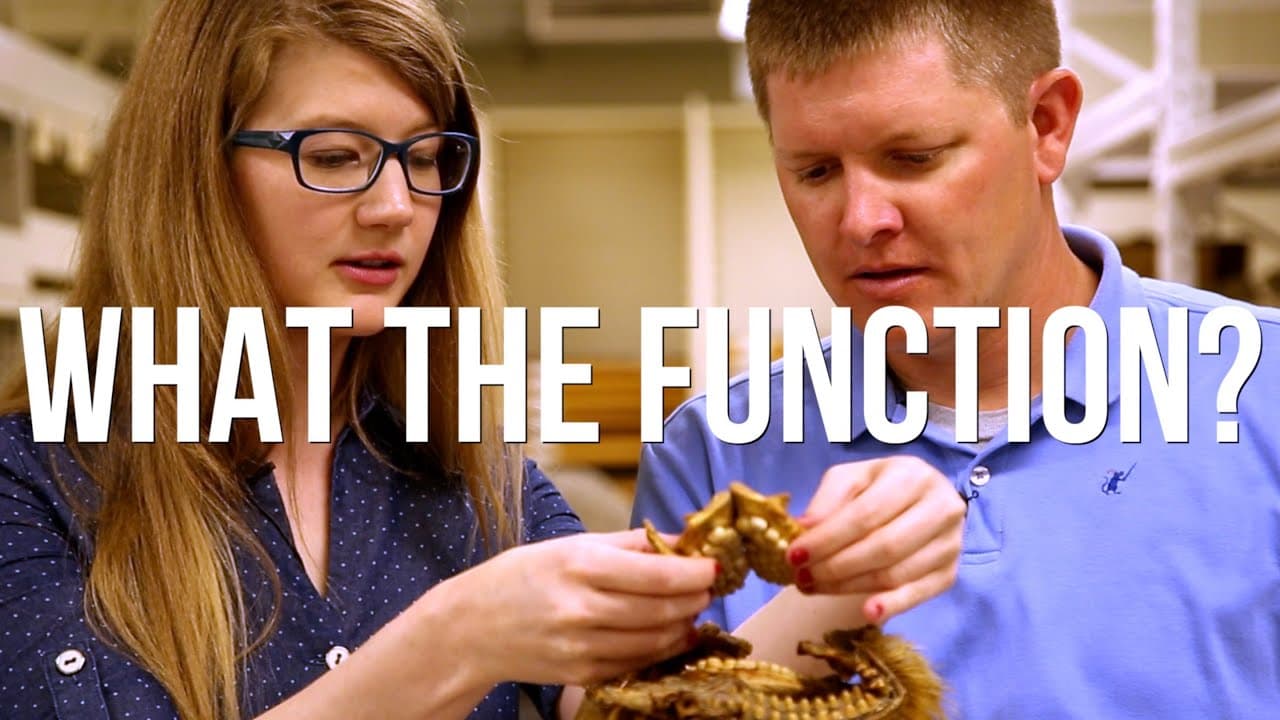
What the Function? with Smarter Every Day!
TL;DR
Smarter Every Day and The Brain Scoop play a game called "What the Function?" where they try to identify the purpose of different animal parts.
Transcript
Hey everybody! Let's welcome Destin from Smarter Every Day. We have a new game show that we're doing here on The Brain Scoop called "What the Function"? There's prizes, Vanna White comes out...
- Really?
- No, not at all. - Okay. Just a bunch of dead stuff.
- You don't win anything. Yep, just dead stuff. I picked these things keeping your backgr... Read More
Key Insights
- 🐟 Some fish have a pharyngeal palate to help them grind up hard-shelled crustaceans.
- 🧗 Flying squirrels have specialized tails and skin for climbing and gliding.
- 🌲 The thorns of the acacia tree provide a home for stinging ants, which protect the tree from herbivores.
- 🥳 Symbiotic relationships in nature can benefit both parties involved.
- 🥳 Different animal parts serve specific functions for survival and adaptation.
- 🫀 Fish and mammals have unique anatomical features suited to their environments.
- 👱 Gliding animals have evolved various mechanisms to move efficiently through the air.
Install to Summarize YouTube Videos and Get Transcripts
Explore YouTube Video Summarizer or Get YouTube Transcript Extractor
Questions & Answers
Q: What is the purpose of the pharyngeal palate in the fish?
The pharyngeal palate helps the fish crush hard-shelled crustaceans. It creates a vacuum to suck in the mollusk, crushes it in the throat, and expels the shelled bits out of the side.
Q: How do flying squirrels use their tails to glide?
Flying squirrels can stick their tails into trees, using them as a mechanical check valve to secure their position while climbing. When gliding, their tails can also act like rudders for steering.
Q: Why do thorns on the acacia tree house stinging ants?
The thorns of the acacia tree provide shelter for stinging ants, creating a symbiotic relationship. The ants protect the tree by stinging any herbivores that attempt to eat its leaves, while the tree secretes nutrients for the ants to consume.
Q: Where can the acacia tree be found?
Acacia trees are commonly found in Africa.
Summary & Key Takeaways
-
In the game, the hosts examine a fish and identify its gills, teeth, and pharyngeal palate which helps it crush hard-shelled crustaceans.
-
They also explore a flying squirrel and discover that its tail acts as a check valve for climbing and gliding, while its tail and skin can function as rudders.
-
Lastly, they analyze a tree with thorns that house stinging ants, creating a symbiotic relationship where the ants protect the tree from herbivores.
Read in Other Languages (beta)
Share This Summary 📚
Summarize YouTube Videos and Get Video Transcripts with 1-Click
Try YouTube Summary with ChatGPT & Claude or YouTube Transcript Generator
Explore More Summaries from thebrainscoop 📚





Summarize YouTube Videos and Get Video Transcripts with 1-Click
Try YouTube Summary with ChatGPT & Claude or YouTube Transcript Generator