Is the European Union Beneficial for Member States?
TL;DR
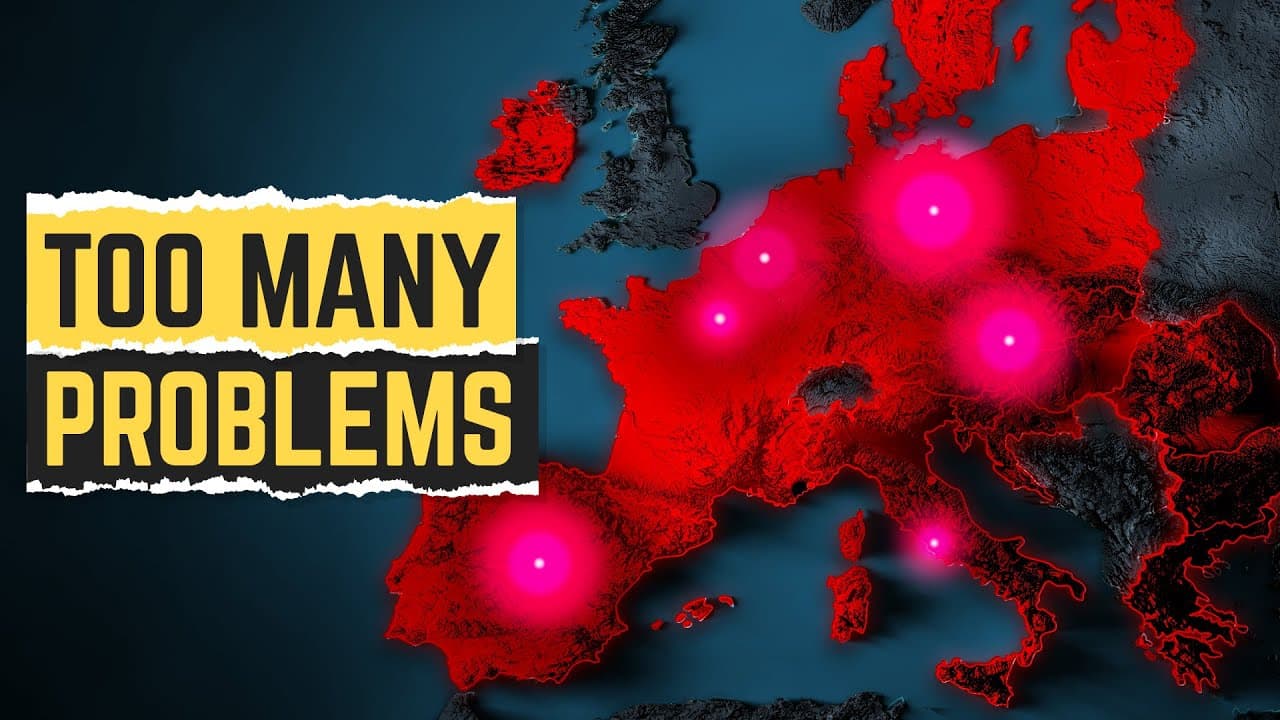
The European Union acts similarly to a federation, sharing currency and policies among 27 states, but lacks some benefits of a true federation. Its $20 trillion output gives it significant global influence, yet its major economies face stagnant growth. While it provides opportunities for free movement and trade, it also imposes regulatory challenges.
Transcript
The European Union is one of the largest, but also one of the strangest economic entities to have ever existed. It has become a policymaker and authority acting in a way not too dissimilar to the federal government of the USA. Economically the similarities are so close that the idea of a European Federation or the United States of Europe has seriou... Read More
Key Insights
- The European Union operates similarly to a federal government, sharing policies and currency among 27 member states.
- Despite its structure, the EU lacks some benefits of a true federation, causing issues for its members.
- The EU's collective output is nearly $20 trillion, making it a significant global economic force.
- Major EU economies face stagnant growth, impacting both large and smaller member states.
- The EU provides opportunities for free movement and trade, benefiting citizens and businesses.
- Regulatory challenges imposed by the EU can hinder global competitiveness, especially in technology.
- The EU's shared currency, the euro, is the world's second most held reserve currency.
- While the EU has its problems, it serves as a stabilizing force within Europe and globally.
Install to Summarize YouTube Videos and Get Transcripts
Explore YouTube Video Summarizer or Get YouTube Transcript Extractor
Questions & Answers
Q: How does the European Union function like a federation?
The European Union functions similarly to a federation by sharing a common currency, the euro, and implementing unified policies among its 27 member states. It collectively makes trade deals and has joint departments, much like a federal government. However, unlike a traditional federation, it allows significant independence for its member states, which can lead to challenges in unified economic management.
Q: What are the economic challenges faced by the EU?
The EU faces economic challenges such as stagnant growth in major economies like Germany, France, and Italy. Smaller developing economies within the union also struggle under the same economic policies. The shared currency, the euro, can exacerbate financial crises, as seen in the Greek financial crisis, due to the inability to adjust currency value independently to stimulate exports and economic recovery.
Q: How do EU regulations impact global competitiveness?
EU regulations, particularly in technology, impose additional compliance requirements for businesses, which can hinder their global competitiveness. These regulations, while often pro-consumer and pro-worker, create barriers for EU-based companies to compete with less regulated international firms. This is evident in the technology sector, where the EU lags behind the USA and developing Asian economies in innovation.
Q: What benefits does the EU provide for its citizens?
The EU provides numerous benefits for its citizens, including the ability to live and work freely across member states, facilitating cross-border employment and residence. It simplifies tourism by eliminating the need for multiple currencies and reducing visa paperwork. The euro, as a shared currency, also eases financial transactions within the EU, promoting economic integration and cooperation.
Q: Why is the euro significant for the EU?
The euro is significant for the EU as it is the world's second most held reserve currency, facilitating trade and financial transactions within and beyond the union. It enhances economic stability and integration among member states, allowing for easier cross-border operations. However, the shared currency also poses challenges, such as limiting individual countries' ability to adjust monetary policy independently during economic crises.
Q: How does the EU influence global trade?
The EU influences global trade through its collective economic power, being the second largest economic entity after the USA. It uses its size as a major global producer and consumer to wield significant control over international trade agreements. The EU's unified trade policies and agreements can impact global markets, benefiting from its large, integrated market and shared currency, the euro.
Q: What are the regulatory challenges within the EU?
Regulatory challenges within the EU arise from the need to comply with both EU-wide and national regulations. This dual layer of regulations can be burdensome for businesses, particularly those in technology, where compliance with pro-consumer and pro-worker laws can hinder competitiveness. These regulations, while beneficial for consumers, can limit the ability of EU-based companies to compete globally.
Q: Is the EU a stabilizing force globally?
Yes, the EU is considered a stabilizing force globally, despite its economic challenges. Its shared currency, policies, and economic integration promote stability within Europe and influence global markets. The EU's regulatory framework, while sometimes seen as restrictive, ensures consumer protection and worker rights, contributing to a balanced global economic environment. Its role in facilitating trade and cooperation among member states further enhances its stabilizing influence.
Summary & Key Takeaways
-
The European Union functions similarly to a federal government, with shared policies and currency among its 27 member states. However, it lacks some benefits of a true federation, posing challenges for its members. Despite these issues, the EU wields significant global influence with its $20 trillion output, though major economies within the union face stagnant growth.
-
The EU provides opportunities for free movement and trade, easing cross-border operations for citizens and businesses. However, it also imposes regulatory challenges, particularly in the technology sector, which can hinder global competitiveness. The euro, as the world's second most held reserve currency, facilitates operations within and beyond the EU.
-
While the EU has its problems, such as stagnant economic growth and regulatory challenges, it remains a stabilizing force within Europe and globally. The union's shared currency and policies provide benefits, though the lack of federation-like advantages and economic stagnation present ongoing challenges for its member states.
Read in Other Languages (beta)
Share This Summary 📚
Summarize YouTube Videos and Get Video Transcripts with 1-Click
Try YouTube Summary with ChatGPT & Claude or YouTube Transcript Generator
Explore More Summaries from Economics Explained 📚




Summarize YouTube Videos and Get Video Transcripts with 1-Click
Try YouTube Summary with ChatGPT & Claude or YouTube Transcript Generator