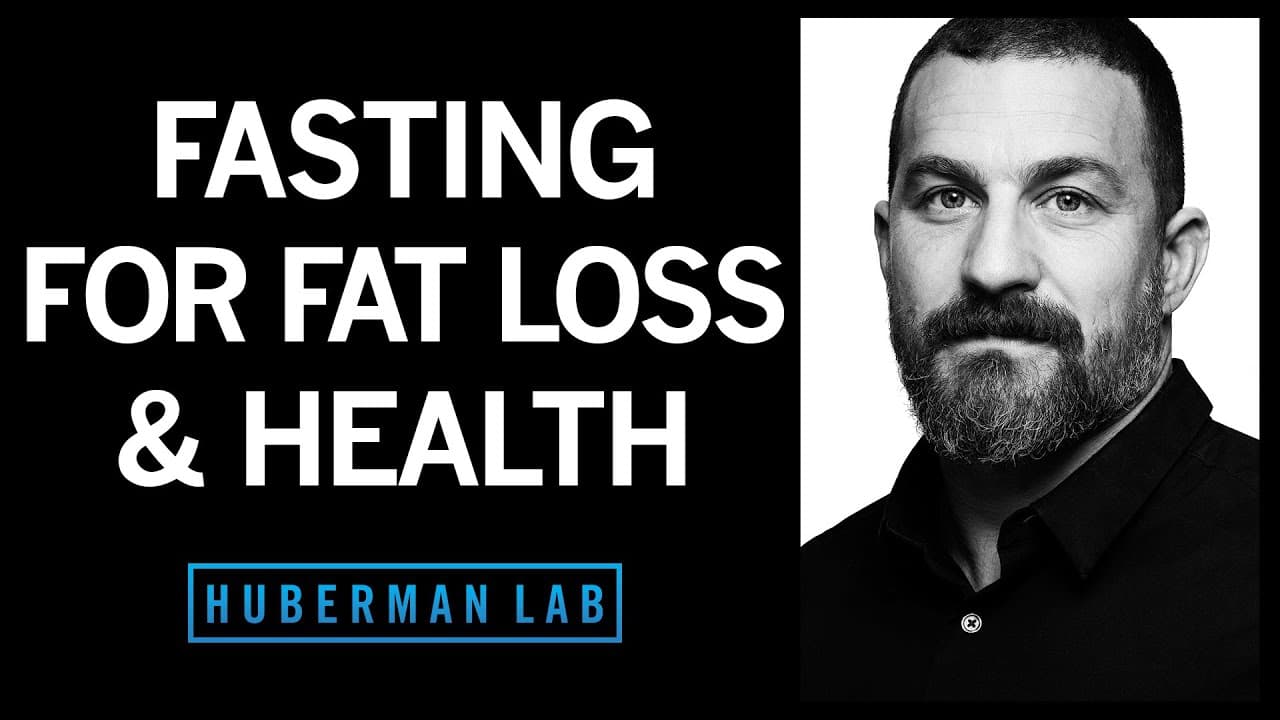
Effects of Fasting & Time Restricted Eating on Fat Loss & Health | Huberman Lab Podcast #41
TL;DR
Time-restricted feeding, also known as intermittent fasting, can have significant effects on weight loss, organ health, and overall well-being by regulating gene expression and metabolic processes.
Transcript
[offbeat uplifting music] - Welcome to the Huberman Lab Podcast, where we discuss science and science-based tools for everyday life. I'm Andrew Huberman, and I'm a Professor of Neurobiology and Ophthalmology at Stanford School of Medicine. Today, we're talking all about fasting. And anytime we're talking about fasting, we are also talking about eat... Read More
Key Insights
- 🍽️ The feeding schedule in time-restricted feeding (intermittent fasting) involves eating during a specific period of each 24-hour cycle and not eating for the rest of the time. Most people already follow intermittent fasting to some extent while sleeping, but optimizing the timing and duration of the feeding window can have various impacts on health and wellbeing.
- 🍎 The timing of when we eat is as important as what we eat. When we eat, our blood glucose and insulin levels go up, and when we don't eat, they go down. The longer it's been since our last meal, the lower our blood glucose and insulin levels are. Every time we eat, it sets certain conditions in our body, and specific schedules of time-restricted feeding can positively impact weight loss, fat loss, muscle maintenance, organ health, inflammation, exercise, cognition, mood, and lifespan.
- 📅 The ideal feeding window should be aligned with our sleep-related fasting period. It's best to extend the fast from sleep into the morning or start it in the evening. Eating during the active phase of the day, such as the early or later part, is beneficial. It maximizes the fasting-related health benefits during sleep and supports proper circadian rhythm and gene expression. ⏰ It's important to establish a feeding window that fits comfortably within our life context and enables us to capitalize on the sleep-related fast. Some recommendations include not eating for at least the first hour after waking up and not ingesting any food or liquid calories for two to three hours prior to bedtime. Selecting an eight-hour or 10-hour feeding window may be ideal, considering real-life constraints and the tendency to slightly underestimate the actual duration of our feeding window.
- 🍽️ There are variations in feeding window lengths, such as four to six hours, which have shown positive health effects. However, determining the ideal duration depends on individual needs and goals, and it's essential to find a schedule that can be comfortably managed on a regular basis.
- 📚 These insights are supported by landmark studies, such as the one by Satchin Panda on time-restricted feeding in mice, and the My Circadian Clock project, which examines the eating patterns of thousands of individuals. Further research and experimentation are necessary to determine the best fasting and feeding schedules for specific cases and exceptions.
Install to Summarize YouTube Videos and Get Transcripts
Explore YouTube Video Summarizer or Get YouTube Transcript Extractor
Questions & Answers
Q: How does restricting the feeding window impact weight loss?
Restricting the feeding window to a certain period each day can lead to weight loss by regulating gene expression, enhancing insulin sensitivity, and improving metabolic processes. By giving the body time to fully digest and utilize the nutrients from food, it can more efficiently burn stored fat for energy.
Q: What are the benefits of time-restricted feeding on organ health?
Time-restricted feeding has been shown to improve organ health, particularly liver health. By allowing the body to enter a fasting state for a certain period each day, it reduces inflammation, supports liver function, and helps maintain healthy bile acid metabolism. This can prevent the development of fatty liver disease and other metabolic disorders.
Q: How does time-restricted feeding affect gene expression?
Time-restricted feeding helps regulate the circadian rhythms of genes, allowing them to be expressed at the appropriate times. This has a positive impact on various processes in the body, including digestion, metabolism, and cellular repair. By aligning feeding patterns with natural biological rhythms, gene expression becomes more stable and health-promoting.
Q: Can time-restricted feeding be beneficial for athletes?
Yes, time-restricted feeding can benefit athletes by enhancing metabolism, supporting muscle maintenance, and improving recovery. By providing the body with an adequate feeding window while still allowing for periods of fasting, athletes can optimize their nutrient absorption, energy utilization, and overall performance.
Q: How does the timing of the feeding window impact sleep?
Timing the feeding window appropriately, such as avoiding late-night eating, can help maintain a proper sleep-wake cycle. By allowing for a fasting period before bedtime, the body can fully enter a fasted state during sleep, promoting deeper and more restorative sleep. It also helps improve circadian rhythm alignment, leading to better overall health and well-being.
Summary & Key Takeaways
-
Fasting and when we eat influence various aspects of our health and well-being, including weight loss, organ health, inflammation, exercise, cognition, mood, and lifespan.
-
Restricting the feeding window to certain phases of the 24-hour cycle has been shown to have positive effects on weight loss, liver health, and gene expression.
-
The ideal feeding window is typically a range of 6-10 hours, with the feeding window starting in the mid-morning or early afternoon and ending a few hours before bedtime.
-
Factors such as food volume, food type, and social constraints need to be considered when implementing a time-restricted feeding schedule.
Read in Other Languages (beta)
Share This Summary 📚
Summarize YouTube Videos and Get Video Transcripts with 1-Click
Try YouTube Summary with ChatGPT & Claude or YouTube Transcript Generator
Explore More Summaries from Andrew Huberman 📚


Summarize YouTube Videos and Get Video Transcripts with 1-Click
Try YouTube Summary with ChatGPT & Claude or YouTube Transcript Generator