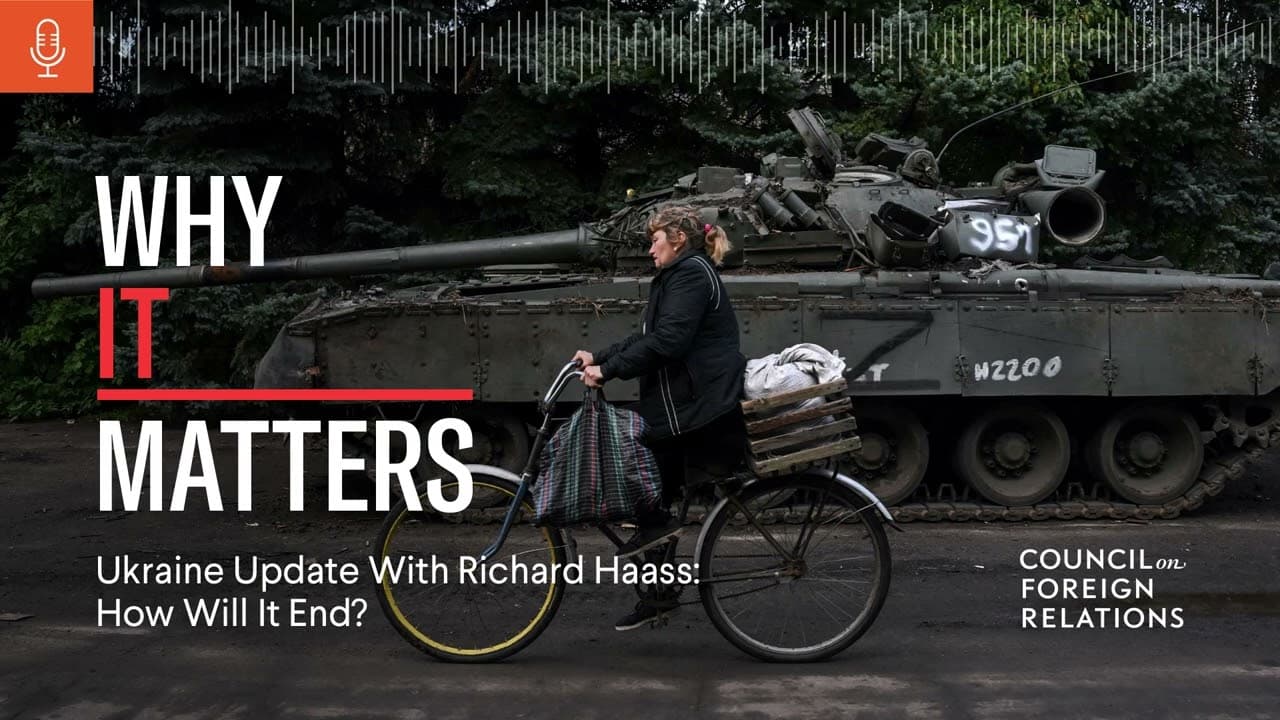
How will the Ukraine War End?
TL;DR
The Ukraine war's end is uncertain and complex.
Transcript
SIERRA: How does a war … end? When the conflict in Ukraine first started, a lot of people predicted that Russia would win. But that hasn’t happened. In fact the Ukrainian army, backed by the West, has succeeded in holding off Russian forces and even reclaiming territory. But as Putin faces losses on the battlefield, he appears to be growing more vo... Read More
Key Insights
- The Ukraine conflict defies early predictions of a swift Russian victory, with Ukraine regaining some territory and maintaining resistance.
- Putin's strategy includes extending the battlefield and leveraging nuclear threats to influence Western involvement.
- The war's continuation is likely, with both sides lacking the ability to completely dominate the other, leading to a potential stalemate.
- Nuclear threats from Russia are more likely a strategic bluff rather than an immediate action, with the U.S. communicating potential consequences.
- Wars often end through negotiations when both sides find continued conflict too costly, but current leaderships in Russia and Ukraine are not disposed to compromise.
- Putin's political strength allows him to negotiate, but fear of a right-wing backlash may deter him from making concessions.
- The U.S. and Europe face challenges in maintaining support for Ukraine as the war drags on, with Putin hoping for Western fatigue.
- Historical precedents show that wars can persist without resolution, and any peace agreement must account for trust issues with Putin.
Install to Summarize YouTube Videos and Get Transcripts
Explore YouTube Video Summarizer or Get YouTube Transcript Extractor
Questions & Answers
Q: How is the current state of the Ukraine war described?
The Ukraine war is described as ongoing, with Ukraine successfully resisting Russian advances and reclaiming some territory. Despite initial predictions of a swift Russian victory, the conflict has become a prolonged struggle, with no clear end in sight. Russia's strategy has shifted to extending the battlefield and leveraging nuclear threats to influence Western involvement.
Q: What is Putin's current strategy in the Ukraine conflict?
Putin's strategy involves extending the battlefield and leveraging nuclear threats to influence Western involvement. He aims to make the war more psychologically and economically challenging for Ukraine by targeting civilian areas and using natural gas as a weapon against Europe. Additionally, he hopes to create doubt in the U.S. about the value of supporting Ukraine, potentially leading to decreased Western involvement.
Q: What are the challenges in negotiating an end to the Ukraine war?
Negotiating an end to the Ukraine war faces significant challenges due to the unwillingness of both Russia and Ukraine to compromise. Leaderships in both countries are not disposed to make concessions, with Putin fearing a right-wing backlash and Ukraine demanding full territorial recovery and reparations. Historical examples show that wars can persist without resolution, and trust issues with Russia further complicate potential peace agreements.
Q: How does the U.S. view the potential use of nuclear weapons by Russia?
The U.S. views the potential use of nuclear weapons by Russia as more of a strategic bluff than an immediate threat. Communication with Russia emphasizes the severe consequences of nuclear use, with suggestions that the U.S. may lift constraints on air power or target Russian military assets. The focus is on deterrence and preventing escalation while maintaining a balanced approach to diplomacy.
Q: What historical precedents are relevant to the Ukraine conflict?
Historical precedents relevant to the Ukraine conflict include situations where wars persisted without resolution, such as the Korean armistice and ongoing Middle Eastern conflicts. These examples show that wars can continue indefinitely without formal peace, often involving complex negotiations and compromises. Any agreement with Russia must account for trust issues and ensure incentives and penalties are in place to maintain peace.
Q: How might the U.S. and Europe maintain support for Ukraine?
The U.S. and Europe face challenges in maintaining support for Ukraine as the war drags on, with Putin hoping for Western fatigue. Strategies to sustain support include emphasizing the importance of deterring aggression, reinforcing alliances, and communicating the broader implications of the conflict for global stability. Balancing domestic pressures with international commitments is crucial to maintaining a united front against Russian aggression.
Q: What are the potential outcomes if the Ukraine war continues?
If the Ukraine war continues, potential outcomes include a prolonged stalemate with ongoing military engagements and no formal peace agreement. The conflict could evolve into a low-intensity war with periodic escalations. The risk of further regional instability and economic repercussions for Europe and the global community remains high. Diplomatic efforts will focus on managing the conflict and preventing escalation while seeking opportunities for negotiation.
Q: What lessons can be learned from the Ukraine conflict?
Lessons from the Ukraine conflict include the importance of maintaining international alliances, the risks of unchecked aggression, and the complexities of modern warfare involving nuclear threats. The conflict underscores the need for a balanced approach to deterrence and diplomacy, highlighting the challenges of negotiating with authoritarian regimes. The situation serves as a reminder of the ongoing potential for conflict in a multipolar world and the necessity of strategic foresight in international relations.
Summary & Key Takeaways
-
The Ukraine war continues with Ukraine resisting Russian advances, despite initial predictions of a quick Russian victory. Putin's strategy now involves extending the conflict and leveraging nuclear threats to influence Western involvement.
-
Negotiations to end the war face significant challenges, as both Russia and Ukraine currently lack the willingness to compromise. Historical examples show that wars can persist without resolution, and any peace agreement must consider trust issues with Russia.
-
The U.S. and Europe must navigate the complexities of supporting Ukraine while managing domestic and international pressures. Putin hopes Western fatigue will weaken support, but maintaining a balance of deterrence and diplomacy is crucial.
Read in Other Languages (beta)
Share This Summary 📚
Summarize YouTube Videos and Get Video Transcripts with 1-Click
Try YouTube Summary with ChatGPT & Claude or YouTube Transcript Generator
Explore More Summaries from Council on Foreign Relations 📚

Summarize YouTube Videos and Get Video Transcripts with 1-Click
Try YouTube Summary with ChatGPT & Claude or YouTube Transcript Generator