Stanford researchers develop brain-controlled typing for people with paralysis
TL;DR
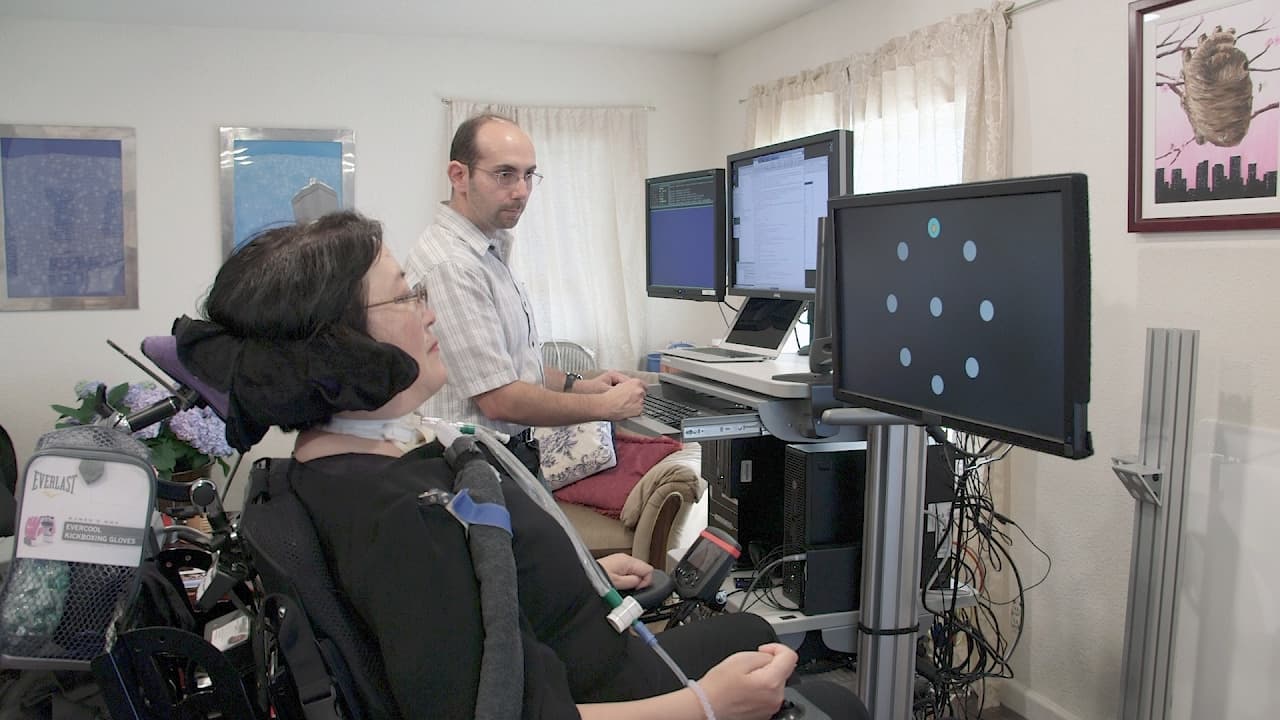
Researchers at Stanford University have developed a neural interface that allows individuals with paralysis to control a cursor and type messages using their thoughts, achieving typing rates of up to 40 characters per minute.
Transcript
[MUSIC PLAYING] Stanford University. The goal of our research collaboration is to restore function to people with paralysis. This can be people who have a spinal cord injury, people who have a neurodegenerative disease like Lou Gehrig's disease. We're able to eavesdrop in on electrical activity and slide a cursor across a keyboard and type out mess... Read More
Key Insights
- 👨🔬 The goal of the research collaboration at Stanford University is to restore function to individuals with paralysis.
- 😒 The neural interface uses a small electrical sensor implanted in the motor cortex to detect and decode electrical signals from active neurons.
- 👻 The interface allows individuals to control a cursor and type messages by imagining specific movements.
- ☠️ Typing rates achieved in the study ranged from 12 to almost 40 characters per minute.
- 🦾 The neural interface has potential applications beyond typing, such as controlling robotic arms or home devices.
- 🦺 The study is focused on safety and feasibility, and the researchers aim to develop implantable and wireless systems that can function autonomously.
- 🧑🤝🧑 The future of this research holds promise for providing assistance to people with paralysis.
Install to Summarize YouTube Videos and Get Transcripts
Explore YouTube Video Summarizer or Get YouTube Transcript Extractor
Questions & Answers
Q: How does the neural interface allow individuals with paralysis to type messages?
The neural interface uses a tiny electrical sensor implanted in the brain's motor cortex to detect signals from active neurons. These signals are then decoded and manipulated using a computer, allowing individuals to control a cursor and type messages by imagining specific movements.
Q: What were the typing rates achieved in the study?
Participants in the study were able to type at rates anywhere from 12 to almost 40 characters per minute, which translates to about 6 to 8 words per minute in the best cases.
Q: Can the neural interface be used for other purposes besides typing?
Yes, besides typing, the neural interface can be used to control other devices and systems. For example, it can be used to control a robotic arm or wirelessly send signals to home devices like thermostats and doors.
Q: What are the future goals for this research?
The current phase one study focused on safety and feasibility. The researchers aim to develop completely implantable and wireless systems that can function autonomously, not requiring technical setup. The ultimate goal is to provide help for people with paralysis.
Summary & Key Takeaways
-
Stanford researchers aim to restore function to people with paralysis using a neural interface.
-
The interface uses a tiny electrical sensor implanted in the brain's motor cortex to detect and decode electrical signals from individual brain cells.
-
Participants in the study were able to type at rates of up to 40 characters per minute, opening the door for potential applications in robotics and home automation.
Read in Other Languages (beta)
Share This Summary 📚
Summarize YouTube Videos and Get Video Transcripts with 1-Click
Try YouTube Summary with ChatGPT & Claude or YouTube Transcript Generator
Explore More Summaries from Stanford 📚




Summarize YouTube Videos and Get Video Transcripts with 1-Click
Try YouTube Summary with ChatGPT & Claude or YouTube Transcript Generator