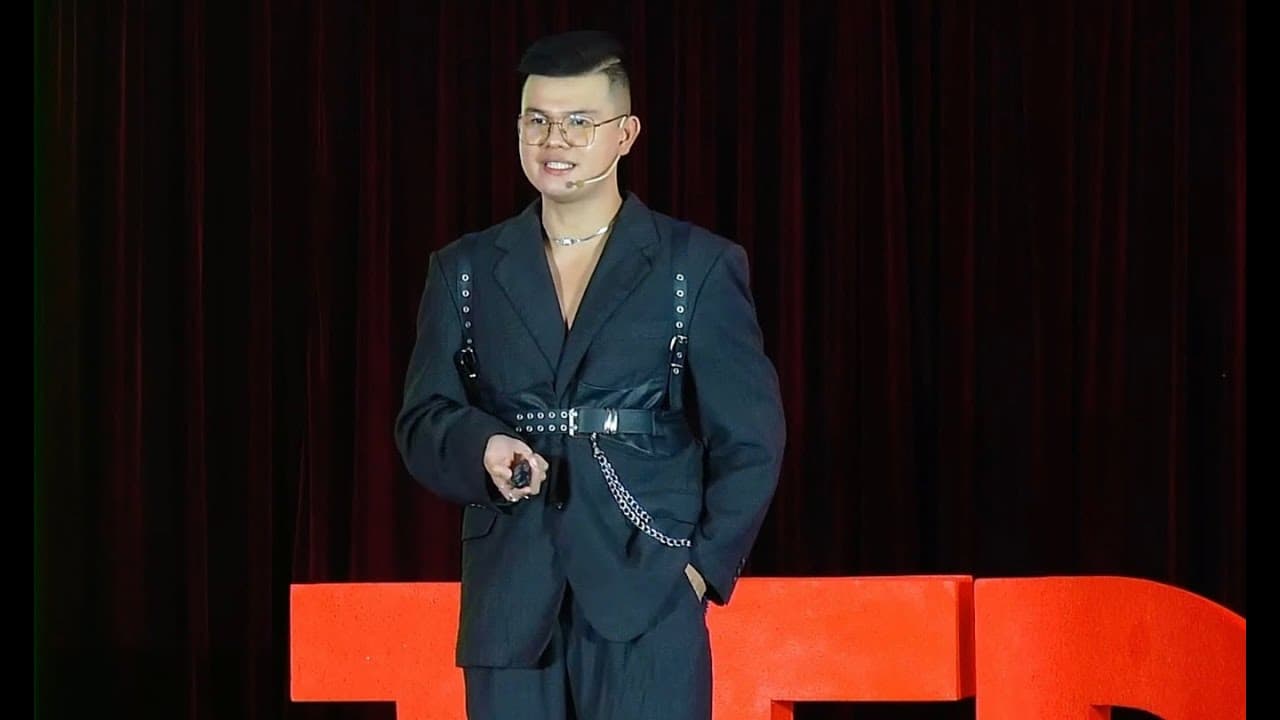
Decolonizing Queerness: Celebrating the Power of My Babaylanic Voice | John Ray Hontanar | TEDxUPV
TL;DR
The essay explores the interconnectedness of the AE identity with femininity and the oppression faced due to patriarchy, highlighting the need to reclaim power and celebrate queerness.
Transcript
a a in English gay gay you have a vagina on your forehead this expression has been passed down across Generations crystallizing the dominance of patriarchy in our society and if we unpack this phrase we can see how Kagan or the nature of being gay in the west ban context is deeply interconnected with femininity thus the A's oppression can be explai... Read More
Key Insights
- 🥺 The AE identity is deeply interconnected with femininity, leading to oppression under patriarchal norms.
- ❓ The normalization of othering and shaming femininity perpetuates misogyny and homophobia.
- 🤬 The babayan, an indigenous queer identity, served as a symbol of power, tradition, and resistance before colonization.
- 🛄 The AE literary movement in Western Visayas aims to decolonize queer narratives and empower the AE persona.
- 🥹 Indigenous knowledge and identities hold power and should be embraced, alongside the fight against colonialism.
- 💠 Cultural practices like animism and banic traditions continue to shape modern Panai society.
- ✊ Reclaiming the power and celebrating queerness through the AE identity is a form of resistance against oppression.
Install to Summarize YouTube Videos and Get Transcripts
Explore YouTube Video Summarizer or Get YouTube Transcript Extractor
Questions & Answers
Q: How does patriarchy contribute to the oppression of the AE and other queer identities?
Patriarchy perpetuates the fear and othering of femininity, leading to the shaming, othering, and marginalization of the AE and other queer identities. This oppression restricts their ability to express themselves fully and live their lives without discrimination.
Q: How do cultural practices and traditions play a role in shaping the AE identity?
Cultural practices and traditions, such as animism and banic practices, shape the AE identity by providing a source of empowerment, connection, and defiance against patriarchal norms. These practices challenge dominant Western ideologies and redefine queerness within a cultural context.
Q: How has colonization affected the perception and treatment of the babayan?
Colonization demonized the babayan as a symbol of pagan ways and sought to eradicate their gender-crossing existence. The arrival of colonialism in 1521 marked a shift in power dynamics, with the babayan being pushed into the shadows and marginalized by the Spanish colonizers.
Q: How can the AE identity serve as a source of emancipation and empowerment for decolonization?
The AE identity challenges patriarchal core values and offers an alternative form of power that veers away from domination. By embracing and celebrating the AE identity, individuals can reclaim their power, fight against colonization, and end all forms of oppression.
Summary & Key Takeaways
-
The AE identity in the Western ban context is deeply intertwined with femininity, leading to oppression and othering due to patriarchy.
-
This oppression is not exclusive to the AE but also experienced by the bakla, bot, and trans sisters.
-
The essay explores the history of the babayan, an indigenous queer identity in Panai, and its empowerment in defying patriarchal norms.
Read in Other Languages (beta)
Share This Summary 📚
Summarize YouTube Videos and Get Video Transcripts with 1-Click
Try YouTube Summary with ChatGPT & Claude or YouTube Transcript Generator
Explore More Summaries from TEDx Talks 📚



Summarize YouTube Videos and Get Video Transcripts with 1-Click
Try YouTube Summary with ChatGPT & Claude or YouTube Transcript Generator