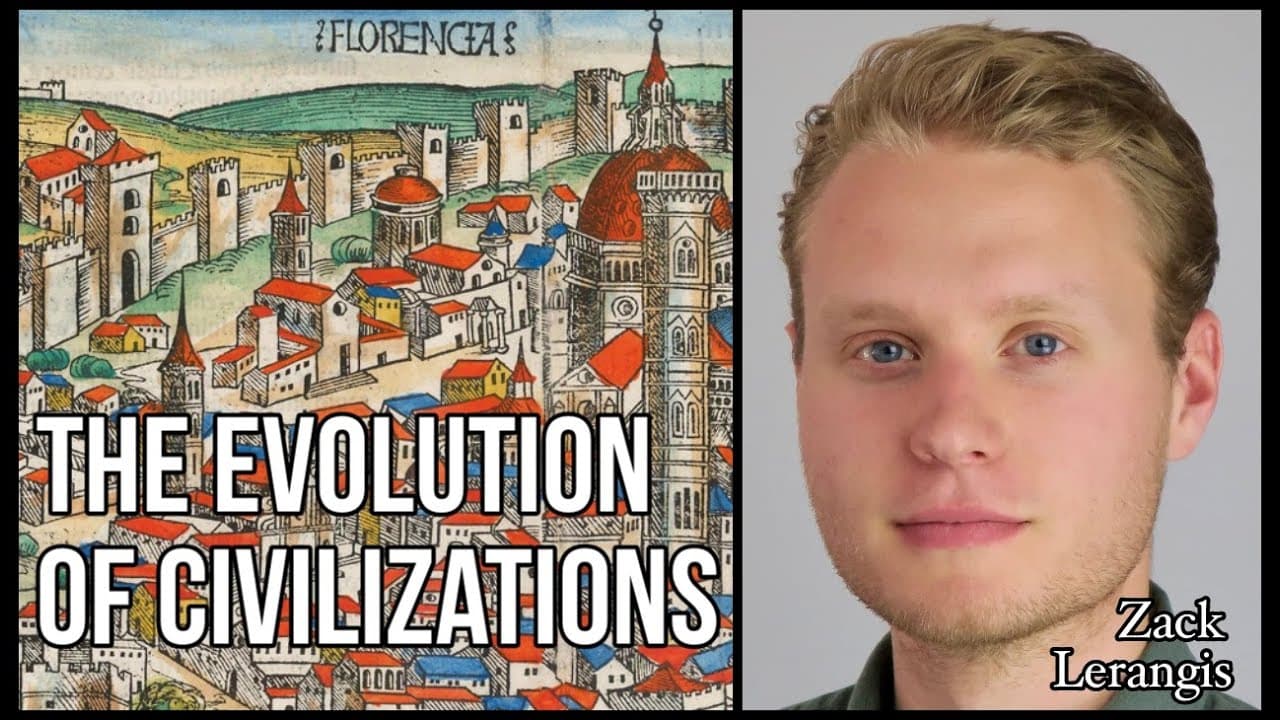
The Evolution of Civilizations
TL;DR
Carroll Quigley's theory proposes that civilizations rise and expand, then decline due to the decay of the instrument of expansion. Crisis periods can be resolved through reform or circumvention.
Transcript
Carroll Quigley was a professor at the Georgetown School of Foreign Service in the second half of the 20th century he was revered by students who included a young Bill Clinton who would in his 1992 acceptance speech at the Democratic National Convention mentioned Quigley in particular as a major influence Quigley's most popular course was called th... Read More
Key Insights
- 😮 Carroll Quigley's theory suggests that civilizations go through a lifecycle of rise, expansion, decline, crisis, and potentially collapse.
- 💨 The decay of the instrument of expansion and redirection of surplus away from innovation and expansion contribute to a civilization's decline.
- ❓ Crisis periods offer the possibility of resolution through either reform or circumvention.
Install to Summarize YouTube Videos and Get Transcripts
Explore YouTube Video Summarizer or Get YouTube Transcript Extractor
Questions & Answers
Q: Who was Carroll Quigley and what was his influence on Bill Clinton?
Carroll Quigley was a professor at the Georgetown School of Foreign Service and greatly influenced Bill Clinton, who mentioned him in his 1992 acceptance speech at the Democratic National Convention.
Q: What is the instrument of expansion in Quigley's theory?
The instrument of expansion is a social organization that accumulates a material surplus, directing it towards innovation and expansion, such as the institution of slavery in classical Greco-Roman civilization.
Q: How does a civilization experience decline and crisis?
When the instrument of expansion starts decaying, surplus is directed away from innovation and expansion, leading to a decline in the civilization's expansion rate. This creates conflict and a period of crisis.
Q: How can a civilization be saved from decline?
A civilization can be saved through either reforming the existing decaying instrument of expansion to redirect surplus towards innovation, or through circumvention, where a new instrument of expansion bypasses the decaying one.
Summary & Key Takeaways
-
Carroll Quigley was a well-respected professor at the Georgetown School of Foreign Service, influencing notable figures such as Bill Clinton.
-
Quigley's popular course, "The Development of Civilizations," served as the basis for his book, "The Evolution of Civilizations," which explores the lifecycle of civilizations.
-
He argues that civilizations decline when the instrument of expansion, a social organization that directs surplus towards innovation and expansion, decays and is redirected towards unproductive purposes.
Read in Other Languages (beta)
Share This Summary 📚
Summarize YouTube Videos and Get Video Transcripts with 1-Click
Try YouTube Summary with ChatGPT & Claude or YouTube Transcript Generator
Explore More Summaries from Samo Burja 📚





Summarize YouTube Videos and Get Video Transcripts with 1-Click
Try YouTube Summary with ChatGPT & Claude or YouTube Transcript Generator