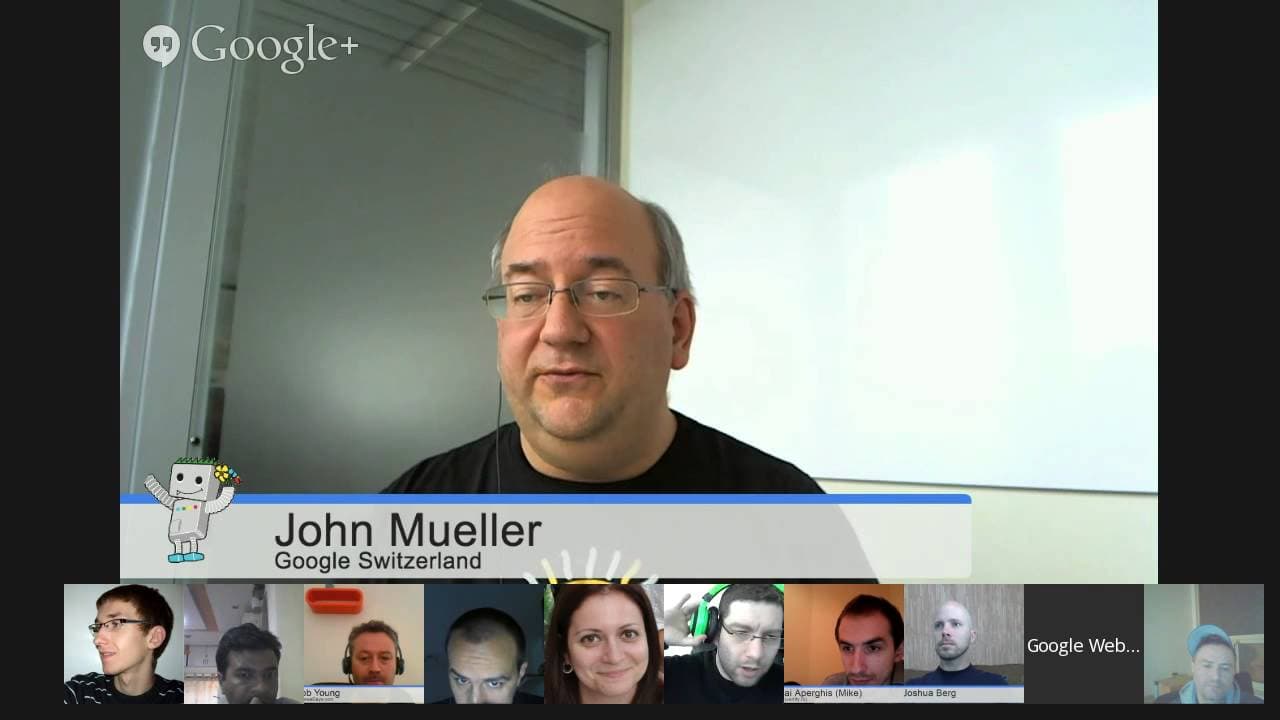
English Google Webmaster Central office-hours hangout
TL;DR
Google discusses SEO practices, link handling, and site quality issues.
Transcript
JOHN MUELLER: OK. Welcome, everyone, to today's Google Webmaster Central Office Hours Hangout. My name is John Mueller. I am a Webmaster Trends Analysts at Google in Switzerland, which means I talk to webmasters and publishers like you all, try to answer any questions you might have, and bring feedback back to our teams here at Google. As always, i... Read More
Key Insights
- Subdomains and subfolders are equivalent for SEO; choose based on infrastructure convenience.
- Use hreflang annotations for multiple ccTLDs to link similar content across different languages.
- 301 redirects are followed immediately, but site size affects crawl frequency and update speed.
- Penguin updates can recover sites, but data reprocessing may delay visible improvements.
- High-quality content is crucial; avoid artificially creating fluff content for SEO benefits.
- Referral spam does not affect Google rankings; focus on user-centric content improvements.
- Disavow tool is a technical solution for unwanted links; not an admission of wrongdoing.
- HTTP to HTTPS migration is a small ranking factor, beneficial for security and future-proofing.
Install to Summarize YouTube Videos and Get Transcripts
Explore YouTube Video Summarizer or Get YouTube Transcript Extractor
Questions & Answers
Q: How does Google view subdomains versus subfolders for SEO?
Google considers subdomains and subfolders to be equivalent in terms of SEO. The choice between using subdomains or subfolders should be based on what is more convenient for your website's infrastructure. Both options can perform well in search results, and there is no inherent advantage to choosing one over the other.
Q: What is the recommended approach for handling multiple ccTLDs?
For websites with multiple ccTLDs targeting different countries, it is recommended to use hreflang annotations to link similar content across different languages. This helps Google understand the relationship between pages and ensures users are directed to the most relevant version of the content in their language.
Q: Why can 301 redirects take time to be reflected in search results?
While 301 redirects are followed immediately by Google, the time it takes for changes to be reflected in search results depends on site size and crawl frequency. Larger sites may have pages that are crawled less frequently, leading to delays. Following Google's site move guidelines can help expedite the process.
Q: Is a single Penguin update sufficient for recovery?
A single Penguin update can be sufficient for recovery, but visible improvements may be delayed due to the time it takes to reprocess all related data. It is important to ensure all issues, especially those related to links, are addressed to facilitate recovery during the next update cycle.
Q: How important is creating content for SEO?
Creating high-quality content is crucial for SEO, but it should be user-focused rather than artificially generated for search engines. Content should provide value to users and align with their needs. Avoid creating fluff content solely for SEO purposes, as it may not improve rankings and could deter users.
Q: Does referral spam affect Google rankings?
Referral spam does not impact Google rankings. It is a form of fake traffic that can appear in analytics but does not influence search engine results. Focus on improving the quality of your content and user experience rather than worrying about referral spam.
Q: What is the purpose of the disavow tool?
The disavow tool is a technical solution for handling unwanted or harmful links that cannot be removed. Using the tool is not an admission of wrongdoing and can help resolve link-related issues when cleaning up a site's link profile. It is a useful resource for maintaining a healthy backlink profile.
Q: Is migrating from HTTP to HTTPS beneficial for SEO?
Migrating from HTTP to HTTPS is a small ranking factor in Google's algorithm. While the impact on rankings is minor, using HTTPS is beneficial for security and future-proofing your site. If your site can be served securely without issues, it is recommended to make the switch to HTTPS.
Summary & Key Takeaways
-
In the Google Webmaster Central office hours, John Mueller addresses various SEO concerns, emphasizing that subdomains and subfolders are equally effective for SEO, and the choice depends on the infrastructure. He suggests using hreflang annotations for sites with multiple ccTLDs to ensure proper language targeting.
-
Mueller discusses the handling of 301 redirects, stating they are processed immediately, but larger sites may experience delays in crawling all pages. He advises following Google's site move guidelines to ensure a smooth transition and warns against relying solely on site queries for status checks.
-
The discussion also covers Penguin updates, where a single update can lead to recovery, but full data reprocessing is necessary for visible improvement. Mueller stresses the importance of high-quality content and warns against creating unnecessary content just for SEO purposes. Referral spam does not impact rankings, and the disavow tool can be used without fear of negative implications.
Read in Other Languages (beta)
Share This Summary 📚
Summarize YouTube Videos and Get Video Transcripts with 1-Click
Try YouTube Summary with ChatGPT & Claude or YouTube Transcript Generator
Explore More Summaries from Google Search Central 📚





Summarize YouTube Videos and Get Video Transcripts with 1-Click
Try YouTube Summary with ChatGPT & Claude or YouTube Transcript Generator