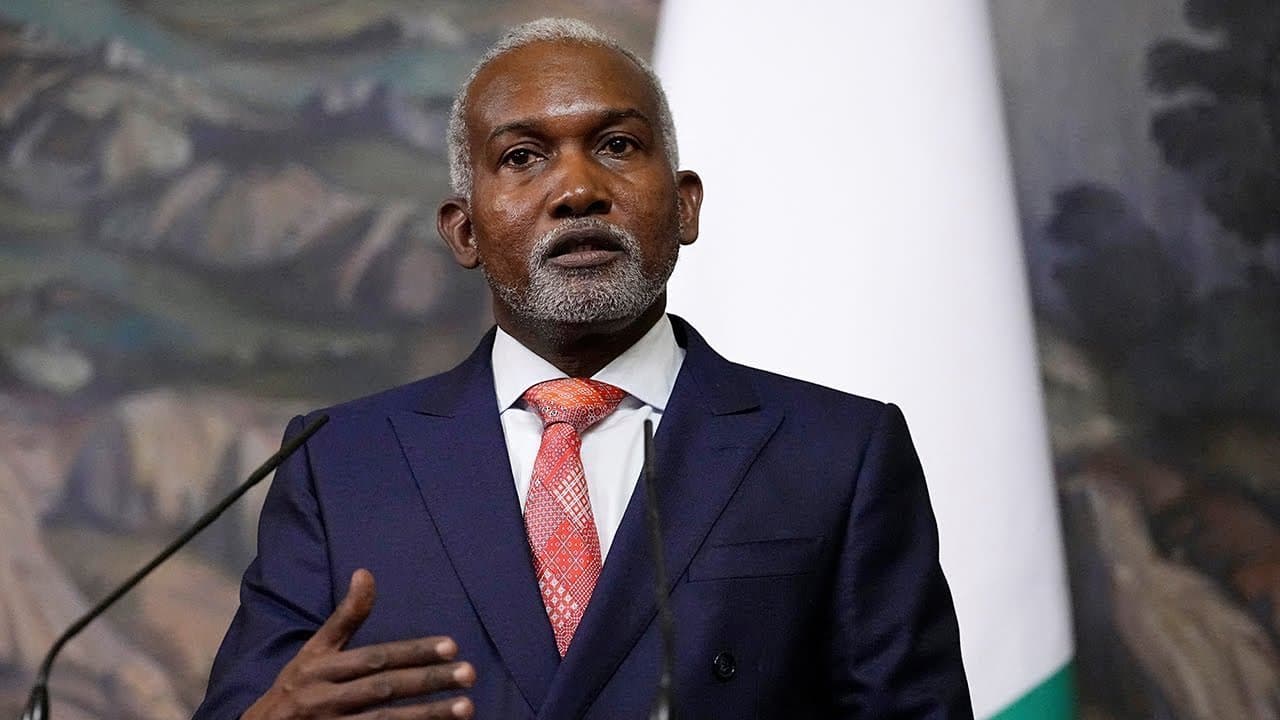
Foreign Minister of Nigeria on the future of African politics
TL;DR
Nigeria's foreign policy and regional challenges amid global shifts.
Transcript
Council on Foreign Relations
“A Conversation With Foreign Minister Yusuf Tuggar of Nigeria”
Speaker: Yusuf M. Tuggar, Foreign Minister, Nigeria
Presider: Ebenezer Obadare, Douglas Dillon Senior Fellow for Africa Studies, Council on Foreign Relations
Location: Council on Foreign Relations, New York City, New York
Time... Read More
Key Insights
- Nigeria maintains a strategic non-aligned stance in global politics, emphasizing its autonomy and diverse cultural heritage while engaging with major powers like the US and China.
- The potential split in ECOWAS is not seen as permanent by Nigeria, which is actively working to maintain unity and address challenges posed by breakaway states.
- Nigeria is concerned about external influences, such as Russia, in West Africa and is actively engaging with global powers to ensure regional stability.
- The Nigerian government is advocating for a reimagined global political and financial architecture that better reflects 21st-century realities, including a more significant role for Nigeria in global decision-making bodies.
- Nigeria's foreign policy under President Tinubu focuses on democracy, development, demography, and diaspora, aiming to leverage its growing population for economic growth and global influence.
- The country is committed to climate change mitigation and adaptation, leading initiatives in green bonds and national climate change policies.
- Nigeria is actively pursuing economic reforms, including currency exchange liberalization, to attract foreign investment and stabilize its economy.
- Cultural diplomacy, through Nollywood and other creative industries, is a significant soft power tool for Nigeria, enhancing its global influence and promoting its cultural heritage.
Install to Summarize YouTube Videos and Get Transcripts
Explore YouTube Video Summarizer or Get YouTube Transcript Extractor
Questions & Answers
Q: What is Nigeria's stance on the potential split in ECOWAS?
Nigeria does not view the potential split in ECOWAS as permanent. Foreign Minister Tuggar emphasized that only three out of fifteen countries have expressed the desire to leave, and ECOWAS statutes require a year-long process for formal withdrawal. Nigeria is actively using diplomatic means to maintain ECOWAS unity and address the concerns of the breakaway states.
Q: How is Nigeria addressing external influences in West Africa?
Nigeria is very concerned about West Africa becoming a theater for external power contestations, particularly by Russia and groups like the Wagner Group. The Nigerian government has engaged directly with Russia to express its disapproval of such influences and has also sought clarity from China on its commitment to ECOWAS unity. Nigeria is actively monitoring these influences and their impact on regional stability.
Q: What are Nigeria's views on the current global political architecture?
Nigeria believes that the current global political and financial architecture is outdated and needs to be revamped to reflect 21st-century realities. The country advocates for expanding the United Nations Security Council to include more countries like Nigeria, which is expected to become the third-largest country by population by 2050. Nigeria also seeks a place in the G-20 to have a say in global economic decisions.
Q: What are the key components of Nigeria's foreign policy under President Tinubu?
Under President Tinubu, Nigeria's foreign policy is centered around four cornerstone principles: democracy, development, demography, and diaspora. The policy aims to engage with democratic nations, leverage Nigeria's growing population for economic growth, and enhance the role of the Nigerian diaspora in national development. The policy also focuses on establishing Nigeria as a leader in regional and global governance.
Q: How is Nigeria addressing climate change challenges?
Nigeria is actively addressing climate change through initiatives like green bonds and a national climate change law. The country has established a national office on climate change, chaired by the president, to coordinate efforts. Nigeria is experiencing the effects of climate change, such as increased flooding, and is committed to its nationally defined contributions to mitigate and adapt to climate impacts.
Q: What economic reforms is Nigeria implementing to attract foreign investment?
Nigeria has embarked on significant macroeconomic reforms, including the removal of fuel subsidies and the unification of multiple exchange rates for the naira. The government is also addressing issues related to opaque crypto exchanges that undermine the currency's value. These reforms aim to stabilize the economy and create a more favorable environment for foreign investment.
Q: How does Nigeria use cultural diplomacy as a soft power tool?
Nigeria utilizes its vibrant cultural industries, such as Nollywood, music, and art, as significant soft power tools. These industries enhance Nigeria's global influence and promote its cultural heritage. The government is committed to protecting intellectual property rights to support the growth of its creative sectors and leverage them in diplomatic engagements.
Q: What role does Nigeria see for itself in addressing regional security challenges?
Nigeria sees itself as a responsible leader in regional security, using its military capabilities to restore peace and democracy in West Africa. The country advocates for a stronger ECOWAS force and seeks international support to acquire necessary equipment. Nigeria emphasizes a balanced approach, using both diplomatic and military means to address security threats and governance issues in the region.
Summary & Key Takeaways
-
Foreign Minister Yusuf Tuggar of Nigeria discusses the country's strategic autonomy in global politics, emphasizing non-alignment and engagement with major powers like the US and China. Nigeria's diverse cultural heritage and geopolitical position require careful navigation of complex international relations.
-
The discussion highlights Nigeria's efforts to maintain unity within ECOWAS amid potential splits and external influences. Tuggar addresses concerns about Russia's presence in West Africa and Nigeria's diplomatic efforts to ensure regional stability and adherence to democratic principles.
-
Nigeria advocates for a reimagined global political and financial architecture, seeking a more prominent role in decision-making bodies like the UN Security Council and G-20. The country's foreign policy focuses on democracy, development, demography, and diaspora, leveraging its population for economic growth and global influence.
Read in Other Languages (beta)
Share This Summary 📚
Summarize YouTube Videos and Get Video Transcripts with 1-Click
Try YouTube Summary with ChatGPT & Claude or YouTube Transcript Generator
Explore More Summaries from Council on Foreign Relations 📚

Summarize YouTube Videos and Get Video Transcripts with 1-Click
Try YouTube Summary with ChatGPT & Claude or YouTube Transcript Generator