Inter Process Communication
TL;DR
IPC is necessary for cooperating processes to share information, speed up computation, enhance modularity, and provide convenience. Methods of IPC include shared memory and message passing.
Transcript
click the Bell icon to get latest videos from akira hello friends today we are going to discuss about the inter process communication between processes known as IPC what are the needs of the process cooperation and how we can achieve them to process communicate processes that are executing concurrently in the system can be of two types one is indep... Read More
Key Insights
- 💁 IPC is necessary for cooperating processes to communicate and share information in operating systems.
- 💁 Needs for cooperating processes include information sharing, computation speed up, modularity, and convenience.
- 🧭 Two common methods of IPC are shared memory and message passing.
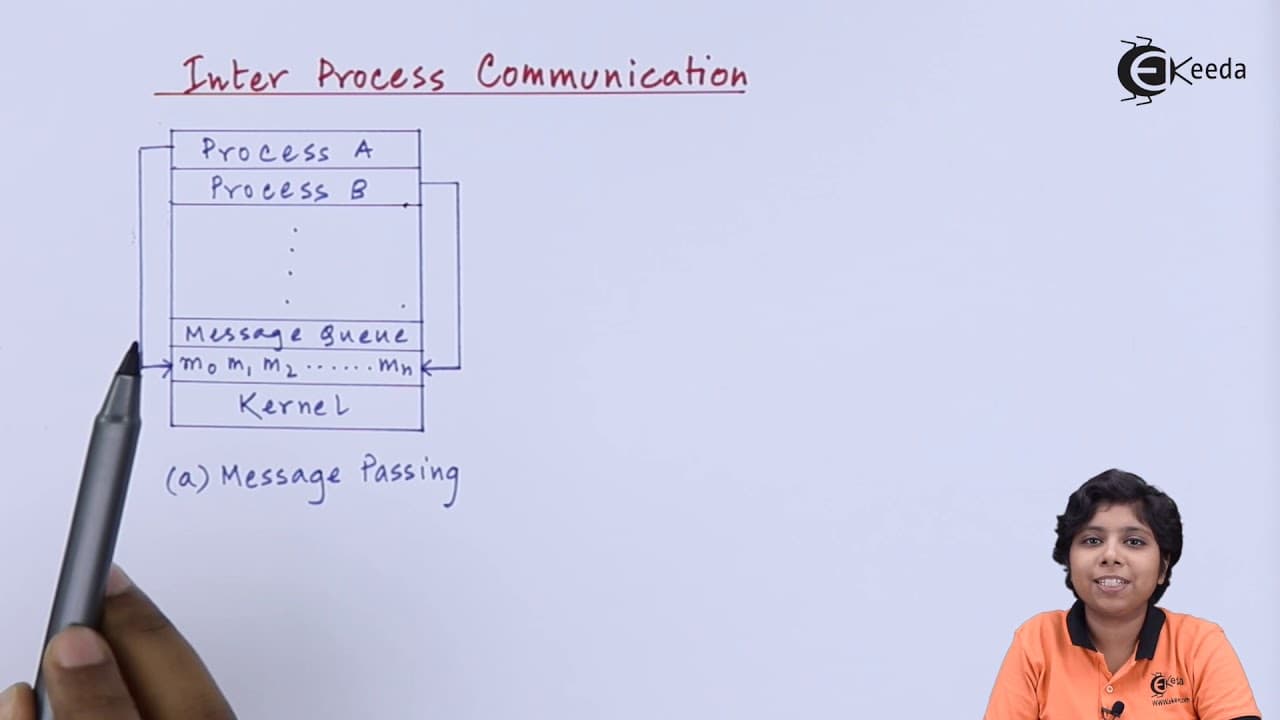
- 💁 Shared memory allows direct access to shared information, while message passing involves sending packets of information.
- 💨 Message passing is more suitable for distributed systems, while shared memory provides faster access in a single system.
- ❓ Shared memory may involve cache coherency issues in a multiprocessor architecture.
- 🤙 The message passing model involves system calls and kernel interaction, making it slower than shared memory.
Install to Summarize YouTube Videos and Get Transcripts
Explore YouTube Video Summarizer or Get YouTube Transcript Extractor
Questions & Answers
Q: What is the purpose of IPC in operating systems?
IPC is necessary for cooperating processes to exchange information, speed up computation, enhance modularity, and provide convenience.
Q: What are the needs of cooperating processes?
The needs of cooperating processes include information sharing, computation speed up, modularity, and convenience.
Q: How can cooperating processes communicate using shared memory?
Shared memory allows processes to establish a shared region in their memory, enabling them to read and write data to exchange information.
Q: What is the difference between shared memory and message passing in IPC?
Shared memory allows direct access to shared information, while message passing involves sending packets of information between processes.
Summary & Key Takeaways
-
Independent processes do not affect or get affected by other processes, while cooperating processes share data and information.
-
The needs for cooperating processes include information sharing, computation speed up, modularity, and convenience.
-
IPC allows cooperating processes to communicate, and two common methods of IPC are shared memory and message passing.
Read in Other Languages (beta)
Share This Summary 📚
Summarize YouTube Videos and Get Video Transcripts with 1-Click
Try YouTube Summary with ChatGPT & Claude or YouTube Transcript Generator
Explore More Summaries from Ekeeda 📚






Summarize YouTube Videos and Get Video Transcripts with 1-Click
Try YouTube Summary with ChatGPT & Claude or YouTube Transcript Generator