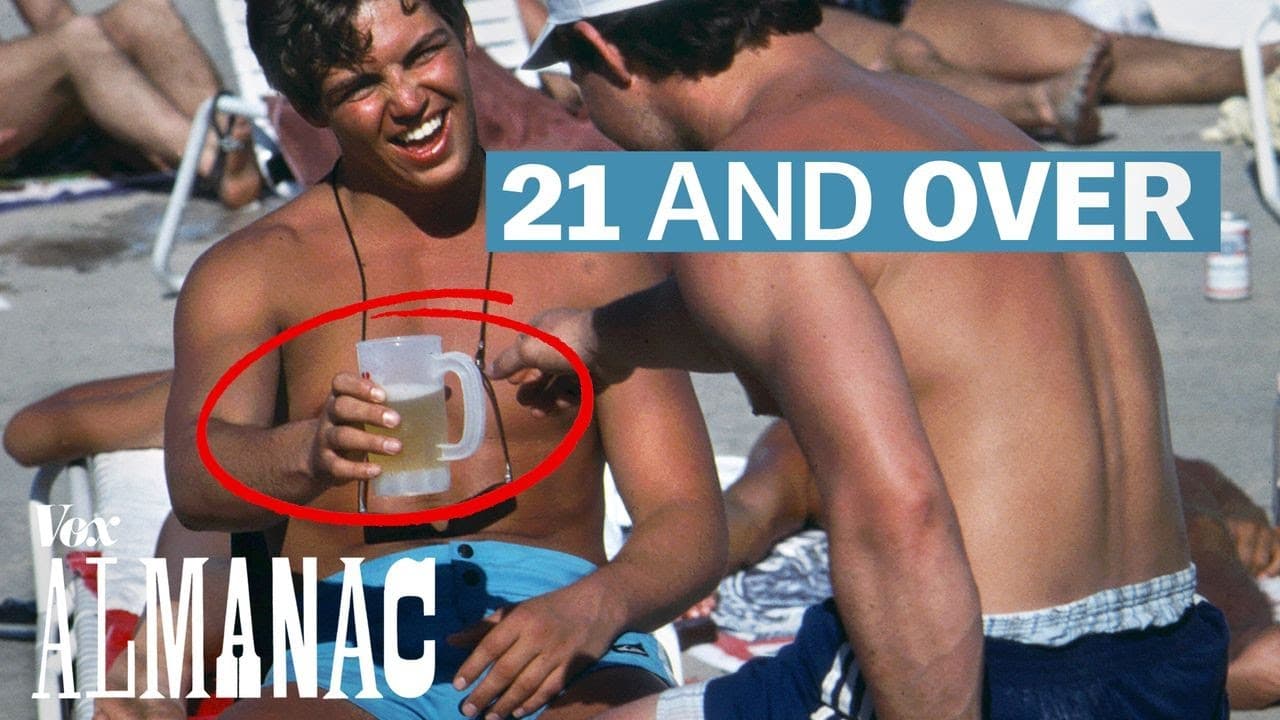
Why Is the Legal Drinking Age in the US 21?
TL;DR
The legal drinking age in the US is 21 due to federal pressure on states to raise the age in exchange for highway funds. Following a rise in drunk driving fatalities, President Reagan's administration, influenced by groups like MADD, conditioned federal highway funding on states enforcing the higher drinking age. This change has been credited with reducing alcohol-related deaths among teenagers.
Transcript
“Michael, welcome to the White House.” This is the 40th president of the United States, Ronald Wilson Reagan, and Michael Joseph Jackson. 1984 Michael Jackson. “For Michael Jackson brings a thrill a minute to his millions of fan.” “We have quite a few young folks in the White House who all wanted me to give you the same message - they said to tell ... Read More
Key Insights
- The drinking age of 21 in the US was influenced by federal leverage over state highway funds, pressuring states to comply.
- Initially, many states set the drinking age at 21 post-prohibition, but it was lowered in the 1970s after the voting age was reduced to 18.
- Activist groups like MADD played a crucial role in advocating for a higher drinking age to reduce drunk driving fatalities.
- President Reagan, despite his usual stance against federal intervention, supported the strategy of withholding highway funds to enforce the drinking age.
- The Supreme Court upheld the federal government's power to influence state law through conditional funding, affirming the 21-year-old drinking age.
- The change in drinking age is credited with reducing alcohol-related fatalities among teenagers, though some argue broader cultural shifts also contributed.
- Michael Jackson's involvement in anti-drunk driving campaigns highlighted the cultural impact and awareness efforts of the time.
- The history of the US drinking age reflects the complex interplay between federal authority, state rights, and public safety concerns.
Install to Summarize YouTube Videos and Get Transcripts
Explore YouTube Video Summarizer or Get YouTube Transcript Extractor
Questions & Answers
Q: What role did President Reagan play in changing the drinking age?
President Reagan played a pivotal role in changing the drinking age by supporting legislation that leveraged federal highway funds to pressure states into adopting a minimum drinking age of 21. Despite his usual stance against federal intervention, he recognized the need to address drunk driving fatalities and used federal power to influence state policies.
Q: How did activist groups influence the drinking age policy?
Activist groups like MADD (Mothers Against Drunk Drivers) significantly influenced the drinking age policy by raising awareness about the dangers of drunk driving and lobbying for a higher minimum drinking age. Their efforts highlighted the correlation between lower drinking ages and increased drunk driving incidents, contributing to the push for a standardized drinking age of 21.
Q: What was the Supreme Court's stance on the federal government's influence over state drinking laws?
The Supreme Court upheld the federal government's influence over state drinking laws by ruling that Congress could condition the receipt of highway funds on states adopting a 21-year-old drinking age. This decision confirmed the federal government's ability to use financial incentives to promote public welfare, in this case, reducing youth drinking and driving.
Q: How did the 1970s changes in voting and drinking ages affect state policies?
In the 1970s, the voting age was lowered to 18, prompting many states to also reduce their drinking ages to align with the new voting and military draft age. This led to a patchwork of state laws with varying drinking ages, which by the 1980s was seen as problematic, contributing to cross-border drinking and increased drunk driving incidents.
Q: What arguments exist against the effectiveness of the 21-year-old drinking age?
Some argue against the effectiveness of the 21-year-old drinking age, suggesting that broader cultural changes, rather than the law itself, contributed to the reduction in drunk driving fatalities. Critics, including those from libertarian perspectives, believe that societal shifts in attitudes towards drinking and driving played a more significant role than the legal age change.
Q: How did federal highway funds become a tool for changing state drinking laws?
Federal highway funds became a tool for changing state drinking laws when the federal government, under President Reagan, decided to withhold a portion of these funds from states that did not comply with the 21-year-old drinking age. This financial pressure was effective in compelling states to change their laws to avoid losing crucial infrastructure funding.
Q: What was the impact of Michael Jackson's involvement in anti-drunk driving campaigns?
Michael Jackson's involvement in anti-drunk driving campaigns brought significant public attention to the issue. His participation in public service announcements helped raise awareness and support for the movement to increase the drinking age. Jackson's influence as a cultural icon amplified the message and contributed to the broader campaign against drunk driving.
Q: What was the historical context for the original establishment of the drinking age at 21?
The original establishment of the drinking age at 21 followed the repeal of Prohibition with the 21st Amendment. Many states set the age at 21, aligning with the age of majority and other legal responsibilities. This age was seen as a standard for full adulthood, including the ability to consume alcohol legally, until changes in the 1970s began to lower it in some states.
Summary & Key Takeaways
-
The US drinking age of 21 was established through federal leverage over state highway funds, pressuring states to comply for financial reasons. Activist groups like MADD were instrumental in advocating for this change to reduce drunk driving fatalities.
-
Initially, many states set the drinking age at 21 post-prohibition, but it was lowered in the 1970s after the voting age was reduced to 18. By the 1980s, a patchwork of laws prompted federal intervention to standardize the age at 21.
-
The Supreme Court upheld the federal government's power to influence state law through conditional funding, affirming the 21-year-old drinking age. The change is credited with reducing alcohol-related fatalities among teenagers, though some argue broader cultural shifts contributed.
Read in Other Languages (beta)
Share This Summary 📚
Summarize YouTube Videos and Get Video Transcripts with 1-Click
Try YouTube Summary with ChatGPT & Claude or YouTube Transcript Generator
Explore More Summaries from Vox 📚

Summarize YouTube Videos and Get Video Transcripts with 1-Click
Try YouTube Summary with ChatGPT & Claude or YouTube Transcript Generator