Why does Japan work so hard? | CNBC Explains
TL;DR
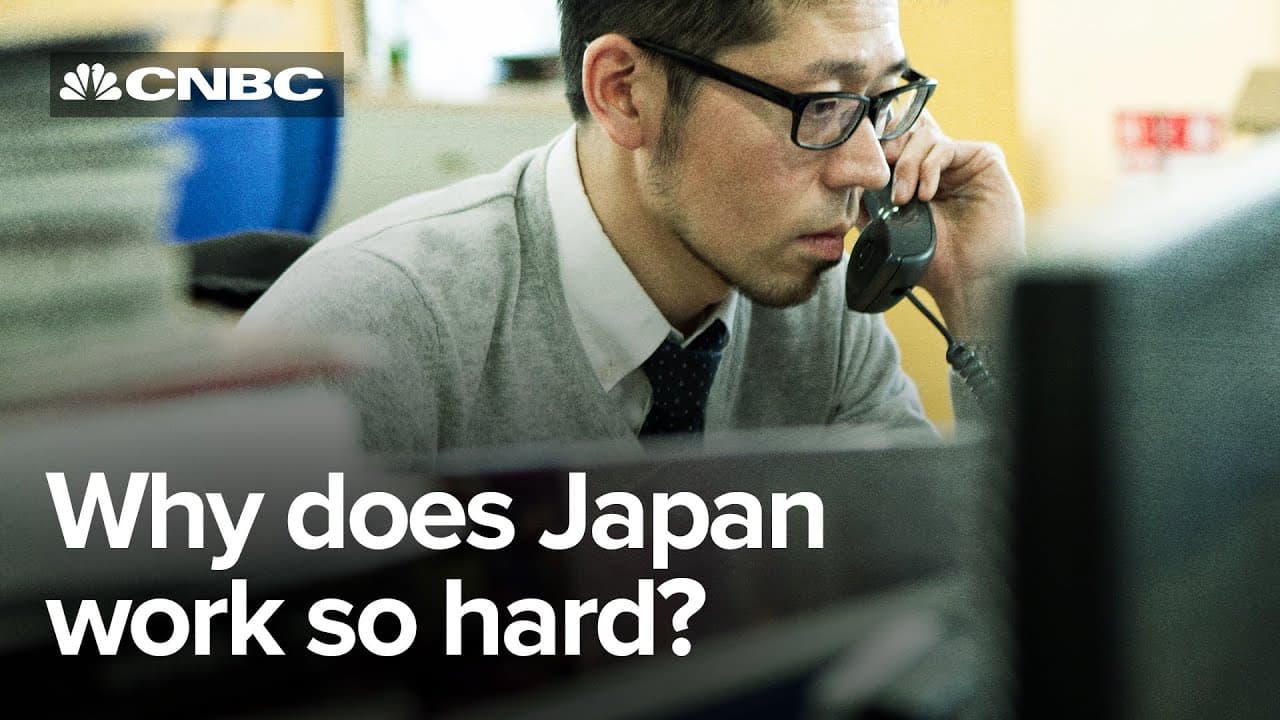
Japan's long working hours and intense work culture, driven by loyalty to companies and social pressure, have led to cases of death by overwork, known as karoshi.
Transcript
Working long hours is a way of life in Japan. So much so, that some occasionally die from it. Karoshi is a term that means death by overwork. So why are people working so hard? And can it be fixed? Japan has some of the longest working hours in the world. Nearly a quarter of Japanese companies have their employees work more than 80 hours of overtim... Read More
Key Insights
- 😳 Japan has one of the longest working hours in the world, with employees often working more than 80 hours of unpaid overtime per month.
- 😓 The salaryman, a loyal and hardworking employee, is expected to spend his entire career at the same company and participate in after-work activities like drinking with colleagues.
- 🗓️ Japanese workers leave 10 out of their entitled 20 days of leave unused, surpassing every other country in a survey.
- ♂️ Japan's work culture is intense, with employees working long hours and feeling guilty for taking paid leave.
- 💡 Despite long work hours, Japan has the lowest productivity among G7 nations.
- 💔 Death by overwork or "karoshi" is a significant issue in Japan, with hundreds of reported cases annually and a potential underreporting of up to 10 times.
- ⚖️ The government and companies are actively trying to reduce working hours, but cultural challenges persist, and less than 4% of employees left early on the first Premium Friday.
- 🤖 With a labor crisis due to an aging population and declining birth rate, Japan is turning to robotics to compensate for the labor shortage.
Install to Summarize YouTube Videos and Get Transcripts
Explore YouTube Video Summarizer or Get YouTube Transcript Extractor
Questions & Answers
Q: What is the cultural mindset behind Japan's intense work culture?
Japan's work culture is shaped by the belief that the company's success is more important than individual well-being, leading to a sense of guilt when taking paid leave and pressure to work long hours.
Q: What are the consequences of Japan's work culture?
Japan has reported cases of karoshi, death by overwork, marked by heart attacks, strokes, and suicides due to stress. These cases may be underreported, and long work hours have also resulted in low productivity.
Q: How are the Japanese government and companies trying to reduce working hours?
The government has proposed initiatives such as mandatory vacation days and Premium Fridays, where employees can leave early. However, cultural challenges still exist, as leaving the office early is perceived negatively.
Q: How is Japan addressing its labor crisis?
Japan's aging population and declining birth rate have created a labor shortage. The country is considering either attracting more immigrants or relying on robotics to fill in the gap. However, the impact of technology on work-life balance remains to be seen.
Answer: Japan's long working hours and intense work culture, driven by loyalty and social pressure, have led to cases of death by overwork, known as karoshi. The salaryman culture and the emphasis on company success over individual well-being result in guilt for taking leave and pressure to work long hours. Despite government initiatives, cultural challenges remain. Additionally, Japan faces a labor crisis due to its aging population and declining birth rate, and it is looking to robotics as a potential solution.
Summary & Key Takeaways
-
Japan has one of the longest working hours in the world, with many employees working more than 80 hours of unpaid overtime per month.
-
The salaryman culture, where loyalty to the company is valued, drives long office hours and after-work activities.
-
Japanese workers do not take enough time off, with surveys showing they leave 10 out of their entitled 20 vacation days unused.
Read in Other Languages (beta)
Share This Summary 📚
Summarize YouTube Videos and Get Video Transcripts with 1-Click
Try YouTube Summary with ChatGPT & Claude or YouTube Transcript Generator
Explore More Summaries from CNBC International 📚






Summarize YouTube Videos and Get Video Transcripts with 1-Click
Try YouTube Summary with ChatGPT & Claude or YouTube Transcript Generator